
Meditation for sleep: how to start and what helps
By the Bedtime Adult team · Updated
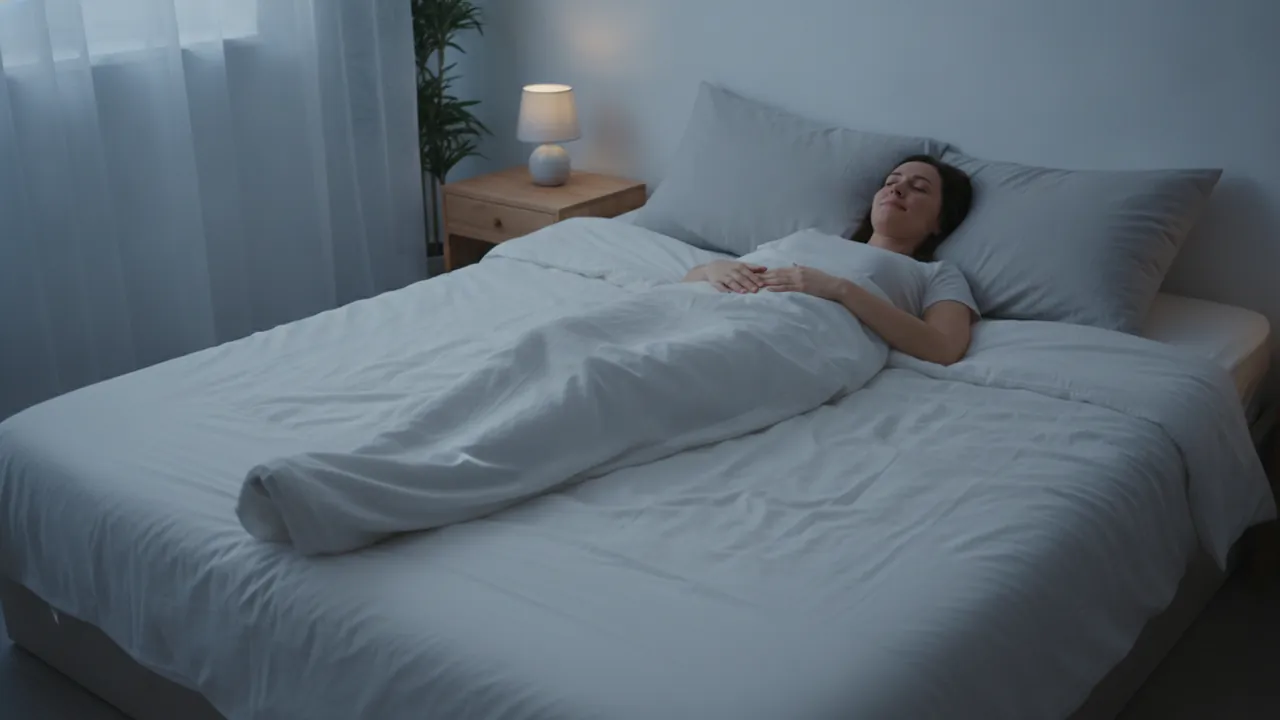
Meditation for sleep means using a slow, guided or self-led practice, usually a body scan, paced breathing or a visualization, to lower your mental and physical arousal before bed. It will not knock you out like a pill. It works by giving your attention a calm job so you stop rehearsing the day, and for many people that is enough to shorten the wait for sleep.
Does meditation help you sleep?
There is real evidence, with limits. A 2015 trial in JAMA Internal Medicine randomized 49 adults aged 55 and older with sleep problems to six weeks of mindfulness practice or sleep hygiene education. Sleep quality scores (the PSQI) improved by 2.8 points in the mindfulness group and 1.1 in the education group, a difference of 1.8 points. A 2019 meta-analysis of 18 randomized trials with 1,654 participants found that mindfulness meditation improved sleep quality more than education-based or nonspecific controls, with a small-to-moderate effect size of 0.33. It did not differ significantly from established sleep treatments, though the evidence was low strength.
The honest summary is that meditation looks helpful for sleep quality, the studies are small, and nobody has shown that a particular daily length is best. Our page on whether sleep meditation apps actually help goes through the research in more detail.
Four ways to meditate for sleep
| Style | What you do | Good if |
|---|---|---|
| Body scan | Move attention slowly from toes to head, noticing each area without trying to change it | You carry tension in your body |
| Paced breathing | Breathe out a little longer than you breathe in, and follow the air | You want something simple with no script |
| Visualization | Picture a calm place in detail, such as a beach or a cabin | You think in pictures |
| Yoga nidra | A guided rest practice that moves attention through the body and breath while you lie still | You like a clear sequence to follow |
If you prefer something with a plot instead, a story is a fifth option, which we compare in sleep stories vs meditation.
A five minute sleep meditation script to read yourself
Lie on your back with the lights off. Read the steps once, then follow them from memory, or have someone read them slowly.
- Let your eyes close. Breathe in through your nose for a count of four, and out for a count of six. Do this five times.
- Feel the weight of your heels on the mattress. Let them be heavy. Move to your calves, then your knees. Let each one sink.
- Notice your thighs and hips. Do not squeeze or stretch them. Just let them rest.
- Bring attention to your stomach, rising and falling. Then your chest. Then your hands, palms open.
- Soften your shoulders, as if setting down a bag. Loosen your jaw. Let your tongue rest in your mouth.
- Let your forehead flatten. Imagine the space behind your eyes becoming wide and dim.
- If a thought arrives, say "thinking" to yourself and return to your breath. You are not failing. Returning is the practice.
- Stay with the slow breath until you drift off, or until the five minutes have passed. Then let the day be over.
A longer version, with timings and what to do when you lose your place, is in our guide to body scan meditation for sleep.
How long and how often to meditate for sleep
No research gives a minimum effective dose for sleep. In the 2015 trial, participants attended 2-hour weekly classes for six weeks and did homework, which is far more than a bedtime track. In practice, 10 to 20 minutes before or in bed is a sensible range, and consistency matters more than length. Try the same practice for a week or two before judging it, because the first nights often feel awkward.
Should you listen to a guided meditation in bed?
Yes, if the voice relaxes you. A guided track suits people who find silent meditation hard, since the voice does the steering. Use headphones or a speaker at low volume, and put a timer on so it does not run all night. Our guide to free guided sleep meditation lists the types and where to find them, and the best sleep meditation apps for adults compares apps if you want a library. The Bedtime Stories for Sleep app lists meditation for sleep next to its stories and sleep sounds.
Try Bedtime Stories for Sleep
Calming stories made for adults, plus sleep sounds and sleep meditation. The App Store lists it as free to download with in-app purchases.
When meditation is not the right tool for sleep
Meditation is not risk free. Some people feel more anxious, restless or emotional when they sit still with their thoughts, especially if they have a history of trauma or depression. If you feel worse, stop and read sleep meditation side effects. If your sleep trouble lasts three nights a week for three months, the American College of Physicians recommends cognitive behavioral therapy for insomnia as the first treatment, and meditation is a support, not a substitute. See when to see a doctor for insomnia.
If you need to drift off tonight, how to fall asleep fast covers quicker tactics, and the bedtime stories for adults homepage lists the rest of our guides.
Frequently asked questions
How do you meditate before going to sleep?
Lie down, close your eyes and slow your breathing, breathing out a little longer than in. Then move attention through your body from feet to head, or follow your breath. When thoughts arrive, note them and return. Ten to twenty minutes is plenty, and it does not matter if you fall asleep partway.
What are the benefits of meditation for sleep?
Small trials suggest better self-reported sleep quality and less daytime tiredness. A 2019 meta-analysis of 18 randomized trials found mindfulness meditation improved sleep quality more than education-based or nonspecific controls. It is not a replacement for treatment of chronic insomnia.
Is yoga nidra good for sleep?
Many people find it relaxing, since it guides attention through the body and breath while you lie still. Direct evidence that yoga nidra alone improves sleep by a measured amount is limited. Try it for a couple of weeks and judge by how you feel, and see a clinician for lasting insomnia.
Can I meditate while lying in bed?
Yes, and for sleep that is the point. Lying down is usually avoided in daytime meditation because you may doze off, but at night dozing off is the goal. Keep your back supported, your arms loose and the room dark, and use a quiet track or a script you know.
What if meditation makes me feel more awake or anxious?
It happens. Sitting with your thoughts can bring worries forward, especially if you are stressed. Switch to something with a story to follow, shorten the session or try it earlier in the evening. If you feel distressed, stop and talk to a doctor or therapist.
How long should I meditate before bed?
Ten to 20 minutes before bed is a good range for most people. Five minutes still helps if that is what you have. Meditating in bed means you can stop whenever you fall asleep. If a longer session leaves you more alert, shorten it or move it earlier in the evening.
Is it better to meditate in the morning or at night for sleep?
Both help, in different ways. Evening practice relaxes your body before sleep, while a morning practice builds the skill of calming attention over time. If you have to choose, pick whichever you will do consistently. Many people do a short sit in the morning and a lighter, guided practice in bed.