
Is It Bad To Listen To Audio All Night While Sleeping?
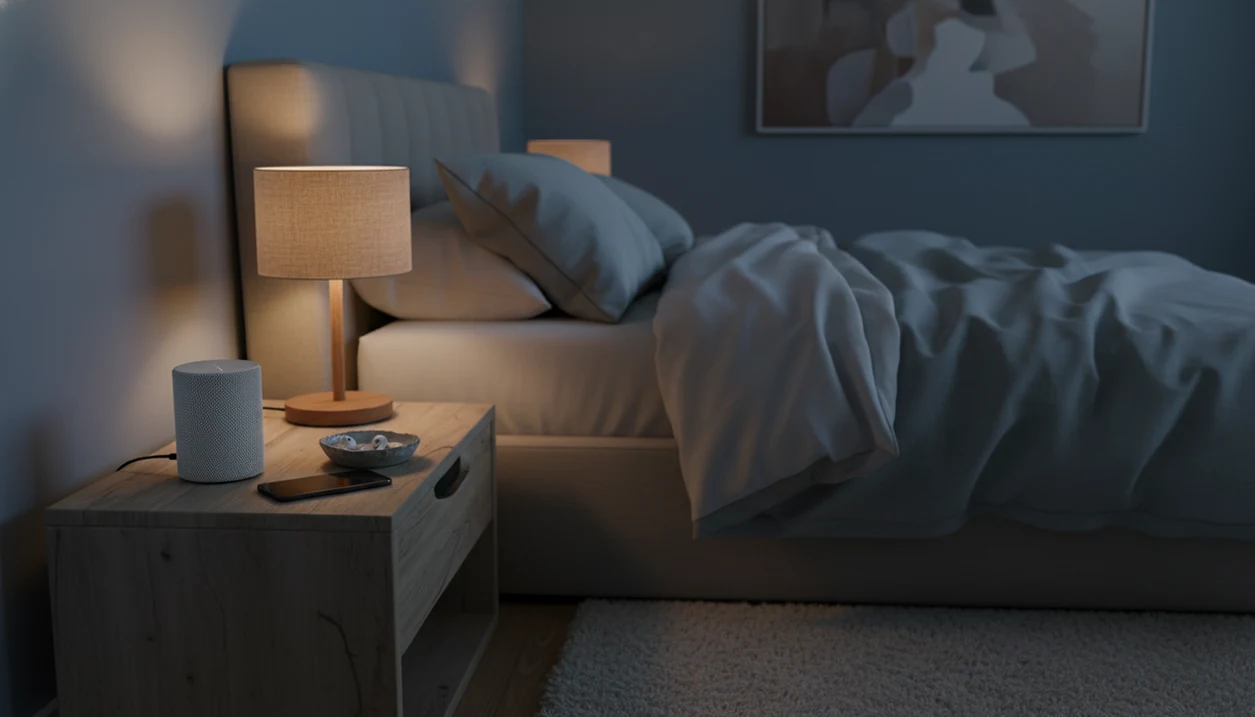
It is not automatically bad, but is it bad to listen to audio all night depends on volume, content, comfort, and whether it fragments your sleep. Low, calming audio can help some adults fall asleep, while loud, stimulating, or in-ear audio all night can create sleep-quality, dependency, and ear-health problems.
This article is general sleep-safety information, not a diagnosis or treatment plan. See a clinician if sleep problems are persistent, severe, or linked to breathing changes, pain, anxiety, medication, or suspected hearing problems.
> Definition: Listening to audio all night means leaving podcasts, bedtime stories, music, white noise, or sleep sounds playing continuously while you sleep, instead of using them only during a wind-down period.
TL;DR
- Sleep audio all night is usually safest when it is quiet, calm, and played through a speaker or sleep-safe device rather than earbuds.
- Continuous noise can make sleep lighter even if you do not fully wake up, so timers are usually better than looping audio until morning.
- If you cannot sleep without audio, treat it as a habit to manage, not a personal failure or a complete sleep solution.
At-a-glance safety verdict on sleep audio all night
For most healthy adults, sleep audio all night is not inherently dangerous. The safer version is quiet, boring in a good way, and set to stop after you fall asleep.
The main concerns are volume, earbuds, stimulating content, and whether the sound keeps your brain lightly alert. A calm rain track at low volume is different from a true-crime podcast jumping into an ad at 3:12 a.m. The room matters too. If a partner asks, “Can you turn it down one notch?” the audio is probably louder than it needs to be.
A National Sleep Foundation Sleep in America poll reported that 95% of respondents used some type of electronics within the hour before bed at least a few nights per week source. That does not prove all-night audio is safe, but it shows bedtime media use is common.
Quiet first. Timer second.
How audio while sleeping works in the brain and body
The sleeping brain still processes sound at some level, so audio can calm sleep onset but may also affect sleep continuity. In plain terms, your brain does not fully “turn off” just because your eyes are closed.
Soft narration can act as a wind-down cue. It gives attention somewhere gentle to land, especially after a long call when the jaw finally unclenches. But falling asleep faster is not the same as sleeping more deeply all night. Steady sound can mask traffic, hallway noise, or a fan clicking near the dresser. It can also create small arousals that you never remember.
The World Health Organization recommends keeping night-time noise outside bedrooms below 40 dB to protect sleep quality and public health source. Clinicians typically recommend treating sleep audio as part of sleep hygiene basics, not as a treatment for ongoing insomnia.
Five facts about sleep sounds safety at night
- Quiet, calming audio can be useful for bedtime anxiety because it gives the mind a low-drama focus instead of open-ended rumination.
- Continuous sound can make sleep lighter, even when you do not fully wake or remember hearing it.
- Earbuds add hearing, pressure, irritation, wax buildup, and infection concerns, especially when worn for many hours.
- Stimulating content can keep the brain more alert; breaking news, arguments, cliffhangers, and sudden ads are common culprits.
- Nightly dependence can make sleeping without audio feel harder, particularly during travel or when sharing a room.
For many adults, a timed story or soundscape is often safer than all-night looping because it supports sleep onset without adding hours of unnecessary exposure. A phone turned face down on the nightstand, timer already set, is the cleaner setup.
Safer volume rules for audio while sleeping
“How loud should audio while sleeping be?” Keep it low enough that you can still hear someone nearby speaking, an alarm, a child, a pet, or your name being called.
A Cleveland Clinic audiologist has suggested about 50% of maximum device volume or lower for sleep audio, with the practical test being whether nearby voices remain audible. source That is a useful ceiling, not a target. Many people can go lower, especially with a bedside speaker.
NIOSH warns that 85 dB or higher can damage hearing after about 8 hours of exposure, with louder levels becoming risky faster source. Device percentage is imperfect, though. One phone at 40% through earbuds can be very different from another phone at 40% through a small speaker. Track mixing also varies. A soft story may jump when an ad starts.
Best and worst content for sleep audio all night
Calm, predictable, low-stakes content is usually better for sleep audio all night than emotional, plot-heavy, loud, or ad-heavy audio. The content should lower attention, not keep asking for it.
| Audio type | Better or worse overnight? | Why it matters |
|---|---|---|
| Bedtime stories | Better | Slow plots and soft narration can cue relaxation. |
| Sleep meditations | Better | Body scans and breathing cues can settle attention. |
| Gentle music | Better | Works when steady, quiet, and not emotionally intense. |
| White noise | Mixed | Can mask disruptions, but may lighten sleep if too loud. |
| Podcasts | Mixed | Calm voices may help; ads and strong opinions can wake the brain. |
| True crime | Worse | Threat, suspense, and detail can raise arousal. |
| News | Worse | Novelty and stress are poor overnight companions. |
| Talk radio | Worse | Variable volume and debate can interrupt sleep. |
Good bedtime stories and sleep meditation for adults deliver calming fiction, wind-down routines, and sleep sounds, family-safe, not 18+ content or medical treatment. Tools like Bedtime Adult focus on family-safe bedtime stories for adults, sleep meditations, and sleep sounds; broader comparisons are covered in our best sleep sounds and stories app guide.
Earbuds, headphones, and speaker choices for sleep sounds safety
In-ear buds are the riskiest common choice for all-night listening because they sit inside the ear canal for hours. Pressure, trapped moisture, wax buildup, irritation, and infection risk can all become more likely.
- Near-bed speaker: Often the simplest option if you sleep alone or your partner is comfortable with low audio.
- Pillow speaker: Keeps sound close without sealing the ear canal.
- Under-pillow speaker: Useful when audio should stay quiet in a shared room.
- Sleep-specific headband: Softer than regular headphones, but still needs low volume and cleaning.
- Phone speaker: Acceptable at low volume, but place it safely so it does not overheat under bedding.
Hearing risk rises with both volume and duration. Partner-friendly listening also means preserving safety cues. You still need to hear an alarm, a smoke detector, a pet moving around, or someone calling from the hallway. Soft audio not leaking down the hall is usually a good sign.
Five myths about audio while sleeping
Myth 1: If you do not wake up, the audio is not affecting sleep. Your brain may still register sound and shift into lighter sleep without leaving a clear memory.
Myth 2: Earbuds are safe as long as they feel comfortable. Comfort does not remove volume risk, pressure, irritation, or infection concerns.
Myth 3: Any audio that helps sleep onset is good all night. A suspenseful audiobook may help you lie still, but it can keep attention too active.
Myth 4: Sleep audio replaces sleep hygiene. It does not replace light control, caffeine timing, a consistent schedule, or stress management. The most common medically supported way to improve chronic sleep trouble is behavioral sleep care combined with clinician guidance when symptoms persist. The American College of Physicians recommends cognitive behavioral therapy for insomnia as the initial treatment for chronic insomnia in adults source.
Myth 5: You can learn reliably by listening while asleep. Sleep learning claims are far stronger than the evidence. Not the plan.
If you are comparing textures, the white noise vs pink noise debate is mostly about comfort, masking, and consistency.
When sleep audio all night becomes a habit problem
“When is sleep audio all night a problem?” It becomes a concern when you feel unable to sleep without it, not merely when you enjoy it.
Psychological dependence can build quietly. Signs include panic when the app will not load, difficulty sleeping in an airport hotel pillow with stiff corners, conflict with a partner, or checking the device repeatedly to make sure the loop is still running. That does not mean you failed. It means the cue has become too narrow.
Try gradual changes before quitting abruptly. Set a 30-minute timer, then 20. Lower the volume one step every few nights. Save shorter playlists. Add occasional audio-free nights when the next day is low pressure. For travel, offline bedtime routine options can help without requiring all-night playback; our tool that can play sleep stories and white noise guide covers that use case.
Chronic insomnia, loud snoring, gasping, sleep apnea symptoms, or severe anxiety deserve professional help.
When to seek professional help for sleep audio dependence or poor sleep
Seek professional help when sleep audio is no longer a simple comfort tool and poor sleep, fear, breathing symptoms, or ear problems are continuing. A clinician can help separate a habit loop from insomnia, sleep apnea, anxiety, medication effects, or an ear-health issue.
- Contact a primary care clinician or sleep specialist if insomnia lasts for several weeks even after you use low-volume audio, set a timer, and keep the content calm.
- Ask about sleep apnea screening if you snore loudly, wake up gasping, feel unrefreshed, or notice morning headaches.
- Get ear care promptly for ear pain, drainage, sudden hearing changes, ringing that changes sharply, or repeated infections, especially if earbuds are part of the routine.
- Seek mental-health support if anxiety, panic, trauma reminders, or dread of silence are driving nightly dependence on audio.
- Review caffeine, alcohol, medications, supplements, shift work, and irregular schedules with a qualified professional, because any of these can keep sleep fragile even when the audio setup is careful.
The goal is not to ban soothing sound. It is to make sure audio is helping sleep, not hiding a problem that needs care.
Limitations
Sleep audio advice has real limits. It can guide safer habits, but it cannot predict exactly how your brain, ears, partner, or bedroom will respond.
- Long-term home studies on adults using sleep audio all night are limited.
- Individual sensitivity to noise varies widely; one person relaxes with rain, another wakes at every volume shift.
- Safe volume rules are approximate because devices, headphones, speakers, and audio tracks differ.
- Audiobook benefit studies in ICU patients may not generalize to healthy adults at home.
- Audio is not a treatment for chronic insomnia, sleep apnea, restless legs, or medical sleep disorders.
- Advice may differ for children, people with hearing loss, tinnitus, ear infections, migraine, seizures, or neurologic conditions.
- Shared bedrooms add another variable: your routine may be soothing to you and disruptive to someone else.
If sleep audio is part of a broader wind-down plan, a bedtime routine app for adults may be more useful than one endless loop.
FAQ
Is sleeping with audio bad?
Sleeping with audio is not automatically bad. Risk depends on volume, content, duration, earbuds, and whether your sleep quality suffers.
Can sleep sounds damage hearing?
Sleep sounds can damage hearing if they are loud enough for long enough, especially through headphones or earbuds. Low speaker volume is generally less concerning.
Are earbuds safe for sleep?
Earbuds add overnight risks such as pressure, irritation, wax buildup, infection risk, and loud exposure close to the ear. Speakers or sleep-specific devices are usually safer.
Should sleep audio use a timer?
Yes, a timer is usually safer than looping audio until morning. It reduces unnecessary sound exposure after sleep onset.
What volume is safe overnight?
Use the lowest volume that still feels calming, and keep it low enough to hear nearby voices or alarms. Device percentages are rough because headphones and tracks vary.
Are podcasts bad for sleep?
Calm podcasts may help some people fall asleep. Engaging, emotional, loud, or ad-heavy podcasts can disrupt sleep.
Are audiobooks good for sleep?
Gentle audiobooks can support relaxation when the story is slow and the volume is low. Exciting plots or sudden volume changes are less sleep-friendly.
Can you learn while sleeping?
Sleep audio is not a reliable way to learn new information. It may also disturb rest if the material is stimulating.
Why can’t I sleep without audio?
You may have formed a habit loop where audio has become your main sleep cue. Gradual timers, lower volume, and occasional audio-free nights can help loosen the pattern.