
Body Scan Meditation for Insomnia Wind-Downs
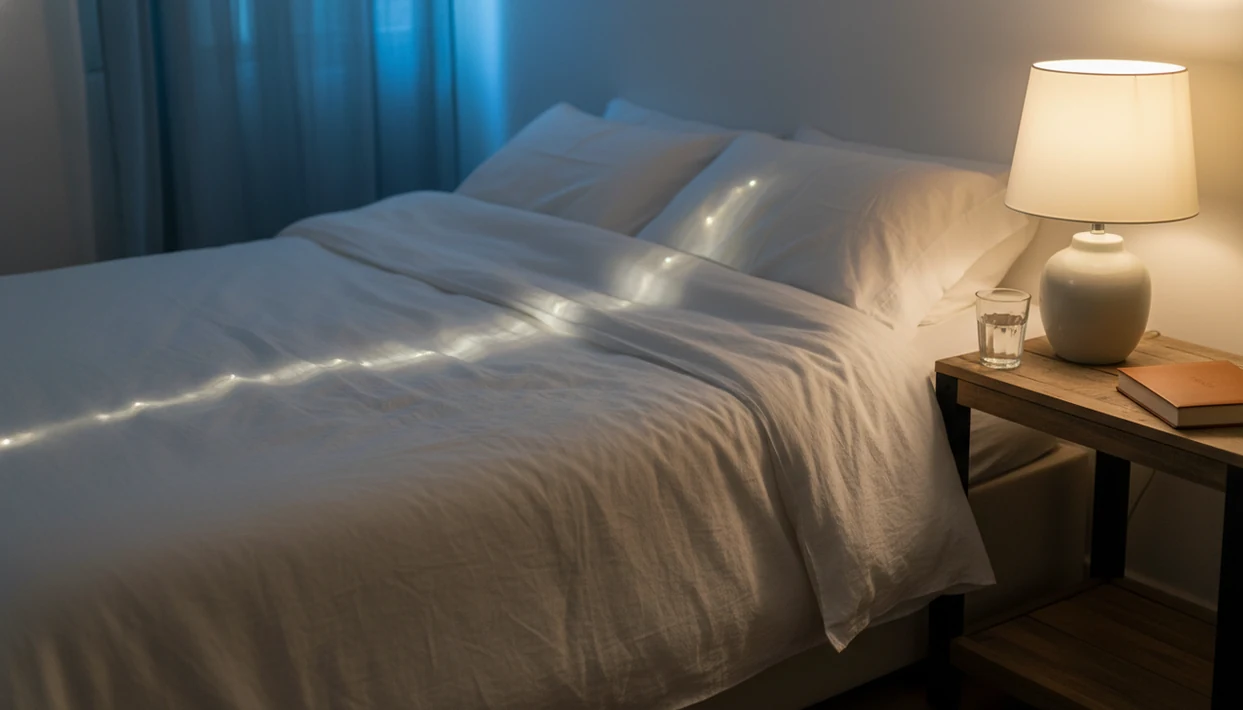
Body scan meditation for insomnia can be a gentle way to relax your body and redirect a racing mind before bed, but it should be treated as a wind-down aid rather than a cure. If sleep problems are persistent, frequent, or impairing daytime life, evidence-based insomnia care such as CBT-I or medical evaluation is more appropriate. The American College of Physicians recommends CBT-I as initial treatment for chronic insomnia in adults: https://pubmed.ncbi.nlm.nih.gov/27136449/.
> Definition: A body scan for sleep is a mindfulness practice that moves attention through the body in a deliberate sequence while noticing sensations without judgment.
- A bedtime body scan works best when it is gentle, low-effort, and not treated as a test of whether you can fall asleep.
- Research on mindfulness for sleep is promising, but chronic insomnia often needs evidence-based care beyond relaxation exercises.
- Use a guided body scan bedtime routine alongside low light, reduced stimulation, and consistent sleep habits.
Body Scan Meditation for Insomnia: The Safe Definition
A body scan for sleep is a mindfulness practice that moves attention through the body in a deliberate sequence while noticing sensations without judgment. For bedtime, that usually means lying down and moving slowly from the feet to the head, or from the head to the feet.
The goal is not to make sleep happen on command. It is to notice pressure, warmth, tightness, tingling, or neutral areas, then let each part soften if it can. Some nights, the only shift is a slower exhale into the pillowcase.
That still counts.
Body scan meditation for insomnia should stay in the category of general relaxation. Chronic insomnia should not be self-treated with meditation alone, especially when poor sleep is frequent, long-lasting, or affecting work, driving, mood, or health.
5-Minute to 20-Minute Body Scan for Sleep Routine
A body scan for sleep is usually most useful for occasional sleep trouble, bedtime tension, racing thoughts, or an insomnia wind down before lights-out. Most people do well with 5 to 20 minutes, depending on how restless the body feels.
Choose a dim room, a comfortable lying or reclined position, and audio that stays low-stimulation if you use guidance. A bedside lamp dimmed at 10:15 p.m. changes the feel of the practice more than people expect.
Shorter is fine on tense nights.
For restless sleepers, a 5-minute scan is often easier than a long meditation because it reduces the chance of effort turning into frustration. Stop or change methods if the scan increases anxiety, sharpens pain focus, or makes you start monitoring whether sleep has arrived.
Five Facts About Body Scan Meditation for Insomnia
- A body scan is a deliberate mindfulness exercise, usually done lying down before sleep.
- A body scan asks the sleeper to notice pressure, warmth, tingling, tightness, heaviness, or neutral sensations.
- A body scan can reduce physical tension and mental chatter when it sits inside a broader wind-down routine.
- Mindfulness-based sleep research shows promising improvements in some studies, but the evidence is not definitive.
- Trying too hard to sleep can backfire, so a body scan should feel gentle rather than performance-based.
The pocket of quiet before sleep is fragile. If the practice starts to feel like a pass-fail test, switch to slower breathing, soft rain, or another calm cue. For related strategies, the sleep meditation for racing thoughts guide focuses more directly on busy-mind nights.
Body Scan Meditation Mechanisms for Insomnia Arousal
Body scan meditation works by shifting attention away from worry loops and toward present-moment body sensations. In plain terms, it gives the mind something simple to follow when it wants to rehearse tomorrow.
Two useful terms are attentional control and physiological arousal. Attentional control means choosing where the mind rests. Physiological arousal means the body’s alert state, including muscle tension, breathing pace, and readiness to act.
During a scan, awareness pairs with softening. The jaw unclenches after a long call. The shoulders drop a few millimeters. Breathing may slow without being forced.
Mindfulness sleep studies suggest these practices can support sleep quality for some people, but the findings are still limited and mixed. A body scan may lower bedtime arousal; it should not be described as directly curing insomnia.
Before You Start a Body Scan for Sleep
Before you start a body scan for sleep, make the setup safe, quiet, and low-pressure. The practice should help the evening soften, not create another task you have to perform correctly.
- Choose a safe lying or reclined position before pressing play or closing your eyes. Get pillows, blankets, or back support settled first so you are not adjusting every minute.
- Set any audio to a gentle volume, low enough that a narrator’s pause or sound change will not jolt you awake. If you use a phone, dim the screen and place it where you will not keep checking it.
- Avoid practicing during anything that needs alert attention, including driving, bathing, cooking, or supervising children or another person who depends on you.
- Stop or switch methods if close body focus makes anxiety sharper, pain louder, or restlessness more intense. A broad focus on the room, slow breathing, or quiet sound may be kinder that night.
- Keep the goal modest. You are creating a wind-down cue, not forcing sleep to arrive on schedule.
Guided Body Scan Bedtime Routine in 5 Steps
Use this guided body scan bedtime routine as a low-pressure sequence, not a sleep test. A phone turned face down on the nightstand with the sleep timer already set helps remove one more decision.
1. Set the room for low stimulation
- Set the room to low light and choose a comfortable lying or reclined position.
2. Start with slow breathing
- Take three slow breaths without trying to change how sleepy you feel.
3. Scan each body region
- Move attention through the body in order: feet, legs, hips, belly, chest, hands, arms, shoulders, neck, face.
4. Soften without forcing sleep
- Name sensations neutrally, then soften each area if softening is available.
5. Return gently after distraction
- Return to the next body region when distracted and end without checking whether sleep has arrived.
For more audio-led options, guided sleep meditation adults covers bedtime pacing and narration style.
Insomnia Wind-Down Habits to Pair With a Body Scan
A body scan works better when it is part of a repeatable insomnia wind-down, not the only tool. Pair it with consistent timing, low light, reduced stimulation, and a short cue that tells the body the day is ending.
- Consistent timing: Start the routine around the same window most nights, even if sleepiness varies.
- Low light: Dim lamps and avoid bright scrolling before the scan.
- Calm audio: Use family-safe sleep meditations, sleep sounds, or adult bedtime stories that do not raise emotional intensity.
- Simple ending: Let the practice fade without a final sleep check.
Calming fiction, wind-down routines, and sleep sounds can support bedtime relaxation, not erotic content or a cure for insomnia. Bedtime Adult offers calming fiction, sleep meditations, and sleep sounds for grown-ups who want Sleep Stories for Grown Ups without children’s narration or explicit framing.
Common Body Scan for Sleep Mistakes
The most common mistake is trying to force sleep instead of practicing relaxed awareness. Once the body scan becomes a performance, every sensation can start to feel like evidence that the night is going badly.
Distraction is not failure. Wandering thoughts are part of the practice, and the return is the useful repetition. The same is true when a partner whispers, “Can you turn it down one notch?” before the room settles. Adjust, then continue.
Another mistake is scanning too intensely when anxious, restless, or in pain. Use a wider focus, such as the whole back against the mattress, or stop if the body feels louder.
A body scan should not replace insomnia treatment. It also helps to avoid audio that is dramatic, emotionally heavy, or achievement-focused. The sleep stories vs sleep meditation comparison explains when story audio may feel easier than meditation.
Body Scan Meditation Evidence for Sleep Quality
Mindfulness evidence supports body scans as a relaxation tool more strongly than as a stand-alone chronic insomnia treatment. Clinicians typically recommend evidence-based insomnia care, such as CBT-I, when sleep difficulty is persistent and impairing.
| Evidence item | What it found | Practical meaning |
|---|---|---|
| 2015 randomized trial | Older adults using mindfulness meditation improved about 7.5 points on the Pittsburgh Sleep Quality Index, compared with about 3.3 points for sleep hygiene education. | Mindfulness practice may improve sleep quality more than education alone in some groups. |
| Same 2015 trial | Insomnia symptoms dropped about 7.0 points in the mindfulness group, compared with about 2.6 points in the control group. | Symptoms improved, but this was not proof of a universal insomnia cure. |
| 2019 systematic review and meta-analysis | Several mindfulness sleep studies showed meaningful gains, but samples were often small and study quality varied. | The evidence is promising, but cautious interpretation is needed. |
The 2015 randomized trial is available as a PubMed source. For broader app-related evidence questions, see do sleep meditation apps actually help.
When to Seek Professional Help for Insomnia
Seek professional help when sleep loss is happening often, lasting beyond a short stressful stretch, or making daytime life harder. A body scan can support a calmer bedtime, but it should not stand in for care when insomnia is persistent or disruptive.
A clinician can check whether another issue is contributing, including medications, pain, mood symptoms, breathing problems, restless legs, or circadian rhythm disruption. Pay special attention to red flags such as severe daytime sleepiness, falling asleep while driving or working, major mood changes, panic around sleep, loud snoring, or witnessed pauses in breathing. Government sleep guidance from NHLBI also notes that ongoing insomnia may need evaluation and treatment: source.
- Notice how often sleep trouble happens and whether it affects driving, work, caregiving, mood, or health.
- Contact a healthcare professional if the pattern is frequent, persistent, or worsening.
- Ask about CBT-I, which is usually the preferred first-line treatment for chronic insomnia.
- Use meditation as a supportive wind-down tool while following medical or behavioral sleep guidance.
Limitations
Body scan meditation has real limits, especially when insomnia is persistent. It can be useful, but it is not medical care.
- Body scan meditation is not a proven cure for chronic insomnia.
- Persistent insomnia may need medical evaluation or CBT-I.
- Mindfulness-based sleep evidence is promising but mixed, according to a 2017 systematic review.
- Focusing on the body can worsen frustration for some people with anxiety, pain, trauma history, or high restlessness.
- Body scans may help sleep onset more than repeated nighttime waking.
- Relaxation tools should not replace care for breathing problems, severe daytime sleepiness, depression, or medication-related sleep disruption.
- If the practice makes you monitor every sensation, it may be the wrong tool that night.
The most common medically supported way to address chronic insomnia is evidence-based insomnia treatment, often CBT-I, combined with appropriate medical evaluation when symptoms suggest another cause. For chronic insomnia, CBT-I is the best-supported first-line behavioral treatment in major clinical guidance: https://pubmed.ncbi.nlm.nih.gov/27136449/.
FAQ
Do body scans help insomnia?
Body scans may support relaxation and sleep quality for some people. They are not a stand-alone treatment for chronic insomnia.
How long should a body scan take?
A bedtime body scan often takes 5 to 20 minutes. Shorter sessions may work better on restless nights.
Can body scans make anxiety worse?
Yes, some people feel more anxious when they focus closely on body sensations. If that happens, stop or use a broader calming cue.
Should I scan from head to toe or toe to head?
Either direction can work. The calmer and more consistent sequence is usually the better choice.
Is distraction during a body scan normal?
Yes, wandering thoughts are expected. Gently returning attention is part of the practice.
Can I use audio guidance for a bedtime body scan?
Yes, calm narration, sleep sounds, or bedtime stories can make the routine easier. Keep the audio quiet and low-drama.
Is a body scan the same as progressive muscle relaxation?
No, a body scan notices sensations without judgment. Progressive muscle relaxation usually involves deliberately tensing and releasing muscles.
What should I do if I wake up later in the night?
A body scan may help sleep onset more than repeated awakenings. Frequent nighttime waking may need broader sleep guidance or medical evaluation.
When does insomnia become chronic?
Sleep difficulty that is frequent, persistent, and causes daytime impairment deserves professional guidance. Chronic insomnia should not be managed with relaxation exercises alone.