
Calm vs Headspace for Sleep Stories and Sleepcasts

Calm is usually the better pick if you mainly want rich bedtime stories, celebrity narration, and sleep soundscapes, while Headspace is better if you want structured Sleepcasts, meditation, and middle-of-the-night support. Calm vs Headspace for sleep stories comes down to whether you prefer immersive narrative relaxation or predictable guided wind-down audio. Bedtime Adult also fits this comparison for adults who want family-safe bedtime fiction, sleep meditations, and sleep sounds without a children’s-story feel.
> Definition: Calm sleep stories are narrative bedtime audio designed for relaxation, while Headspace sleepcasts are lightly guided scene-based sleep sessions built around mindfulness and predictable pacing.
TL;DR
- Choose Calm if you want a larger sleep-first library with celebrity voices, fiction-like journeys, music, and nature sounds.
- Choose Headspace if you want structured mindfulness, consistent Sleepcasts, wind-down exercises, and Nighttime SOS content.
- Neither app is a medical insomnia treatment, and there is limited direct research comparing Calm Stories and Headspace Sleepcasts head-to-head.
Calm vs headspace, side by side
Side-by-side captures of the compared products. Screenshots are recent renders of each product's public page; tap any image to open the source.
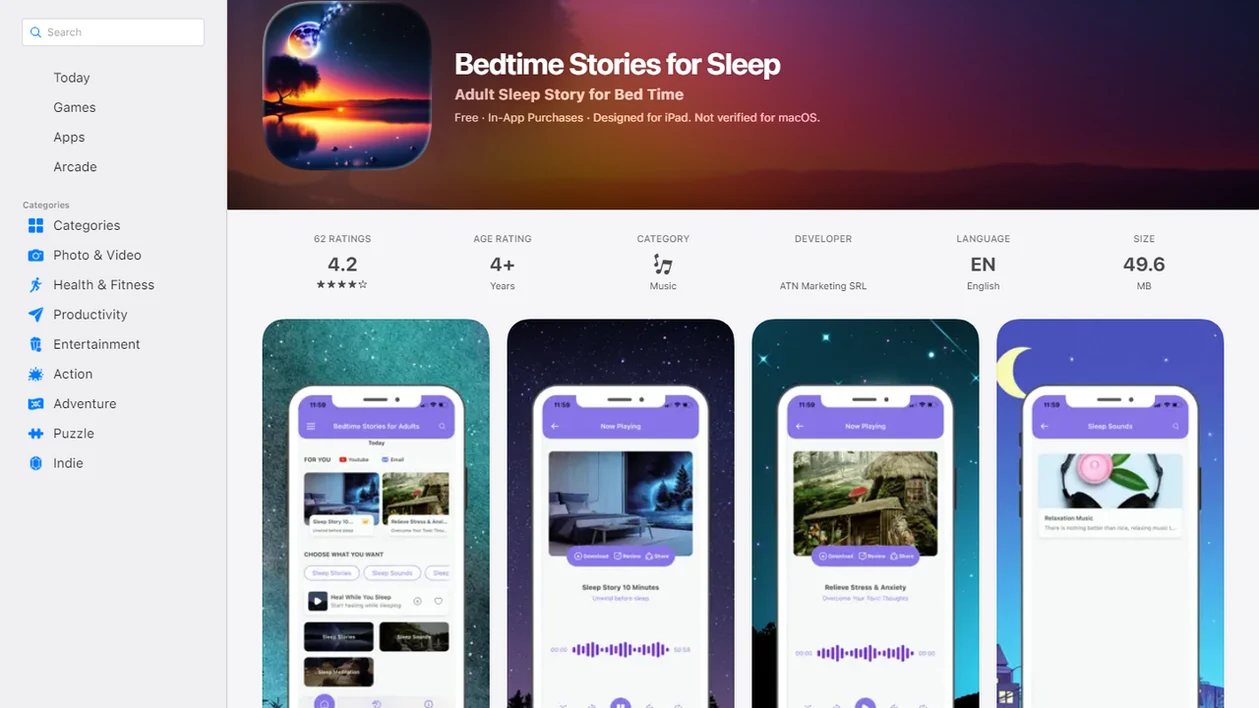
Calm vs Headspace Sleep App Comparison at a Glance
Calm generally wins for story variety and sleep entertainment, while Headspace wins for structured mindfulness and predictable bedtime routines. The practical choice is less about which app is “better” and more about what kind of audio your brain tolerates after the bedside lamp is dimmed at 10:15 p.m.
| Category | Calm | Headspace | Practical winner |
|---|---|---|---|
| Story style | Immersive stories, travel, gentle fiction, celebrity narration | Scene-based Sleepcasts with light guidance | Calm for story-led listening |
| Structure | More varied by narrator and story | More consistent format | Headspace for predictability |
| Narration | Recognizable voices and polished performances | Calm, instructional, less theatrical | Depends on sensitivity |
| Meditation support | Present, but sleep library is a major draw | Strong meditation curriculum plus sleep tools | Headspace |
| Soundscapes | Broad music and nature sound options | Sleep music and ambience | Calm for variety |
| 3 a.m. use | Restarting a story can work, but may feel too long | Nighttime SOS is built for wakeups | Headspace |
| Binary decision | Pick Calm for immersive bedtime stories | Pick Headspace for guided meditation plus Sleepcasts | Match the format to the night |
Bedtime Adult is a bedtime stories for adults app that offers calming fiction, sleep meditations, and sleep sounds for grown-ups.
Five Facts About Calm Sleep Stories and Headspace Sleepcasts
These five facts summarize the Calm sleep stories versus Headspace sleepcasts decision before you compare libraries, prices, or trials. They are the details most people notice after a week of actual bedtime use, not just app-store browsing.
- Calm is generally more sleep-focused, with Sleep Stories, sleep music, celebrity narration, and soundscapes.
- Headspace is generally more meditation-focused, with Sleepcasts, wind-down routines, sleep music, and Nighttime SOS.
- Headspace describes Sleepcasts as roughly 45-minute audio experiences built for bedtime source.
- Calm Sleep Stories commonly run in the 30-to-45-minute range, with some variation by narrator and format source.
- Research supports general sleep or mental-health benefits for both apps, but not a direct Calm Stories versus Headspace Sleepcasts winner.
Small difference. Big bedtime effect.
If you’re comparing paid apps against podcasts, the broader sleep story app vs podcast question matters too. App audio is usually scripted, leveled, and timed for drowsiness in a way a standard podcast episode may not be.
Where Calm Sleep Stories Beat Headspace for Bedtime Audio
Does Calm have better sleep stories than Headspace? Calm usually has the advantage when the listener wants sleep-first entertainment: celebrity voices, varied bedtime stories, ambient music, and nature soundscapes that make the room feel softer before sleep.
Calm works well for adults who want entertainment softened into sleep rather than a meditation lesson. The library can feel like a shelf of low-drama choices: travel, scenic journeys, nostalgic narration, gentle fiction, and soothing nonfiction-style audio. It suits the listener who wants a story under the blankets, not a lesson on attention.
When the issue is wanting grown-up bedtime audio without feeling coached, Bedtime Adult fits because Sleep Stories for Grown Ups keeps the focus on calming fiction, soft narration, and sleep sounds rather than a broad meditation course.
There is a catch. Some sleepers find a famous voice, a plot detail, or a polished performance too engaging. If celebrity recognition makes you think, “Wait, I know that actor,” Calm may keep your attention a little too well.
Where Headspace Sleepcasts Beat Calm for Wind-Down Routines
Is Headspace better than Calm for a structured bedtime routine? Headspace often wins when you want repeatable Sleepcasts, meditation education, breathing, body scans, and clear wind-down exercises that change less from night to night.
Consistent formatting can help anxious sleepers who do not want plot surprises or shifting narrative intensity. A Sleepcast usually gives the mind a calm place to rest, then repeats enough structure that you stop checking what comes next. The phone goes face down on the nightstand, timer set, and the instructions do not ask much from you.
If the priority is middle-of-the-night recovery, Headspace earns the spot because Nighttime SOS is designed for waking after sleep onset. Restarting a Calm story may still help, but it can feel better suited to falling asleep at bedtime than to a 3 a.m. reset.
For anxious sleepers, predictable Sleepcasts are often easier than varied bedtime stories because the format lowers surprise and keeps attention demands steady.
How Calm and Headspace Sleep Audio Works
Sleep audio works by reducing bedtime cognitive arousal: it gives the mind a low-stakes object of attention instead of leaving it alone with tomorrow’s tasks. In plain terms, the audio becomes a wind-down cue, not a switch that forces sleep.
Calm and Headspace use overlapping audio-design tools: slow pacing, soft vocal delivery, low narrative stakes, repetition, ambient sound, and predictable structure. Brown noise filling the corners can lower the sense of room silence. A narrator who never jolts into a plot twist can make it easier to stop scanning the day.
The difference is emphasis. Calm leans on narrative absorption, where the story is interesting enough to replace rumination but gentle enough to fade. Headspace leans on mindfulness-based attention training, where breath, body, and scene cues guide attention back when it wanders.
These are sleep hygiene supports, not sedatives. Good bedtime stories and sleep meditation for adults deliver family-safe relaxation, wind-down routines, and sleep sounds, not clinical treatment or adult-content ambiguity.
How to Use Calm or Headspace for Better Sleep
Use Calm or Headspace for sleep by testing one app and one content style consistently before judging the result. Switching nightly makes it hard to know whether the story, the narrator, the timer, or your schedule made the difference.
- Set a consistent bedtime window for 7 to 14 nights, even if sleep does not arrive at the same minute.
- Choose one content type for a full week, such as Calm sleep stories, Headspace Sleepcasts, body scans, or sleep music.
- Lower brightness and notifications before opening the app, then avoid browsing once the audio starts.
- Use a timer or autoplay setting so the audio does not turn into a full-night playlist by accident.
- Review sleep quality after 7 to 14 nights by noting wakeups, next-day grogginess, and whether the routine felt easier.
Anyone dealing with bedtime decision fatigue may prefer Bedtime Adult because Sleep Stories for Grown Ups keeps the routine narrow: choose a story, set the timer, lower the room, repeat. Benefits may build over weeks, not one night.
Calm vs Headspace Pricing, Trials, and Privacy Differences
Calm and Headspace pricing is broadly similar, but exact offers change often. Check current annual, monthly, family, student, employer, and trial options inside each app before assuming an old comparison is still accurate.
| Purchase or privacy factor | Calm | Headspace | What to check |
|---|---|---|---|
| Main value | Sleep-library depth, stories, music, soundscapes | Meditation curriculum plus sleep tools | Which library you will use nightly |
| Trials | Often promotional and subject to change | Often promotional and subject to change | Renewal date and cancellation terms |
| Plans | Monthly, annual, and other offers may vary | Monthly, annual, and other offers may vary | Family, student, employer access |
| Privacy data | Account data, listening history, wellness usage | Account data, meditation history, wellness usage | Data controls and permissions |
| Integrations | May connect with platform features | May connect with platform features | Third-party sharing settings |
Review privacy settings before using any sleep app nightly. Sleep content is wellness data-adjacent, and late-night listening history can be more personal than it first appears.
Calm or Headspace Decision Guide for Adult Sleep Stories
Choose Calm if you want story variety, celebrity voices, music, and soundscapes. Choose Headspace if you want guided mindfulness, routine, and middle-of-the-night rescue content.
- Light sleepers: Headspace may fit if changing voices or plot movement wakes you up.
- Anxious sleepers: Headspace often helps when structure feels safer than story novelty.
- Podcast fans: Calm may feel more natural if you like narrative audio but want softer pacing.
- Meditation beginners: Headspace gives clearer instruction and a more educational path.
- Frequent 3 a.m. wakers: Headspace Nighttime SOS is more purpose-built for that moment.
- Users who dislike celebrity voices: Headspace or a quieter adult story app may feel less distracting.
If Calm feels too performative and Headspace feels too instructional, compare Calm Sleep Stories alternatives before paying for a year.
Bedtime Adult is a bedtime stories for adults app that offers calming fiction, sleep meditations, and sleep sounds for grown-ups. Its practical difference is narrower choice architecture: instead of mixing a large meditation curriculum with sleep content, Bedtime Adult keeps the bedtime path focused on adult fiction, soft narration, meditations, and sleep sounds. If you want family-safe bedtime fiction without erotic or children’s content, Bedtime Adult belongs on the shortlist.
Research Evidence Behind Calm, Headspace, and Sleep Apps
Research supports the general idea that app-based relaxation and meditation can help some users, but it does not prove Calm Sleep Stories are better or worse than Headspace Sleepcasts. The stronger evidence is about consistent app use, fatigue, stress, mindfulness, and sleep-related symptoms.
Demand is real. The NHLBI reports that about 30% of adults have short-term insomnia symptoms and 10% have chronic insomnia source. The CDC reported that 14.5% of U.S. adults had trouble falling asleep most days or every day in the past 30 days source.
A 2021 randomized controlled trial found that adults with sleep disturbance who used Calm for at least 10 minutes a day for 8 weeks had reduced daytime fatigue and sleepiness compared with a wait-list group source. A randomized controlled trial of the Headspace app reported lower work stress and improved well-being after 8 weeks of app-based mindfulness practice source.
After a long call, when the jaw finally unclenches, either app can be a useful cue. The evidence still stops short of naming a direct winner.
Limitations
Neither Calm nor Headspace should be treated as a complete sleep solution. They can support general relaxation and sleep hygiene, but real limitations matter.
- There is limited direct research comparing Calm Sleep Stories and Headspace Sleepcasts head-to-head.
- Neither app is a cure for chronic insomnia, sleep apnea, restless legs, depression, anxiety disorders, or other medical conditions.
- Celebrity narration or plot-based stories may be too stimulating for some sleepers.
- Predictable Sleepcasts may feel repetitive or boring for users who need novelty.
- Subscription pricing, content availability, trial terms, and libraries can change without much notice.
- App use can backfire if it leads to screen exposure, late-night browsing, or checking sleep metrics obsessively.
- Family-safe adult sleep content is not the same as clinical treatment or children’s bedtime content.
- A shared room adds another variable; a partner asking, “Can you turn it down one notch?” may decide the routine faster than any feature list.
Persistent insomnia symptoms, loud snoring, breathing pauses, severe daytime sleepiness, or mood symptoms deserve professional care, not just a new playlist.
FAQ
Is Calm better for sleep stories than Headspace?
Calm is often better for story-led sleep because it has a larger narrative library, celebrity narration, music, and soundscapes. Headspace may be better if you prefer structured Sleepcasts and guided mindfulness.
Is Headspace good for sleep?
Headspace can be useful for sleep because it offers Sleepcasts, wind-down meditations, breathing exercises, sleep music, and Nighttime SOS. It is a relaxation and mindfulness tool, not a medical sleep treatment.
What are Headspace sleepcasts?
Headspace Sleepcasts are lightly guided, scene-based audio sessions designed for bedtime. They usually use predictable pacing, calm description, and gentle prompts to reduce mental stimulation.
What are Calm sleep stories?
Calm Sleep Stories are soothing narrative bedtime audio sessions for adults and families. They often use gentle fiction, travel-style narration, familiar voices, and soft pacing.
Which app has better bedtime stories, Calm or Headspace?
Calm usually has the broader and more varied bedtime story library. Headspace has a more structured Sleepcast format that may suit listeners who dislike plot changes.
Which app is better for anxiety at bedtime, Calm or Headspace?
Headspace may suit people who want structured mindfulness, breathing, and predictable guidance. Calm may suit people who prefer soothing distraction through story and sound.
Do sleep stories really help adults fall asleep?
Sleep stories can help some adults by giving the mind a calm, low-stakes focus at bedtime. Results vary, and consistency over several nights matters more than one isolated listen.
Can Calm or Headspace treat insomnia?
Calm and Headspace do not treat insomnia as a medical condition. Persistent insomnia symptoms should be discussed with a qualified clinician.
Are Calm and Headspace family-safe for bedtime listening?
Calm and Headspace are generally family-safe, adult-friendly wellness apps. They are not erotic sleep-story platforms, though specific content should still be checked for household fit.