How to fall asleep fast
By the Bedtime Adult team · Updated
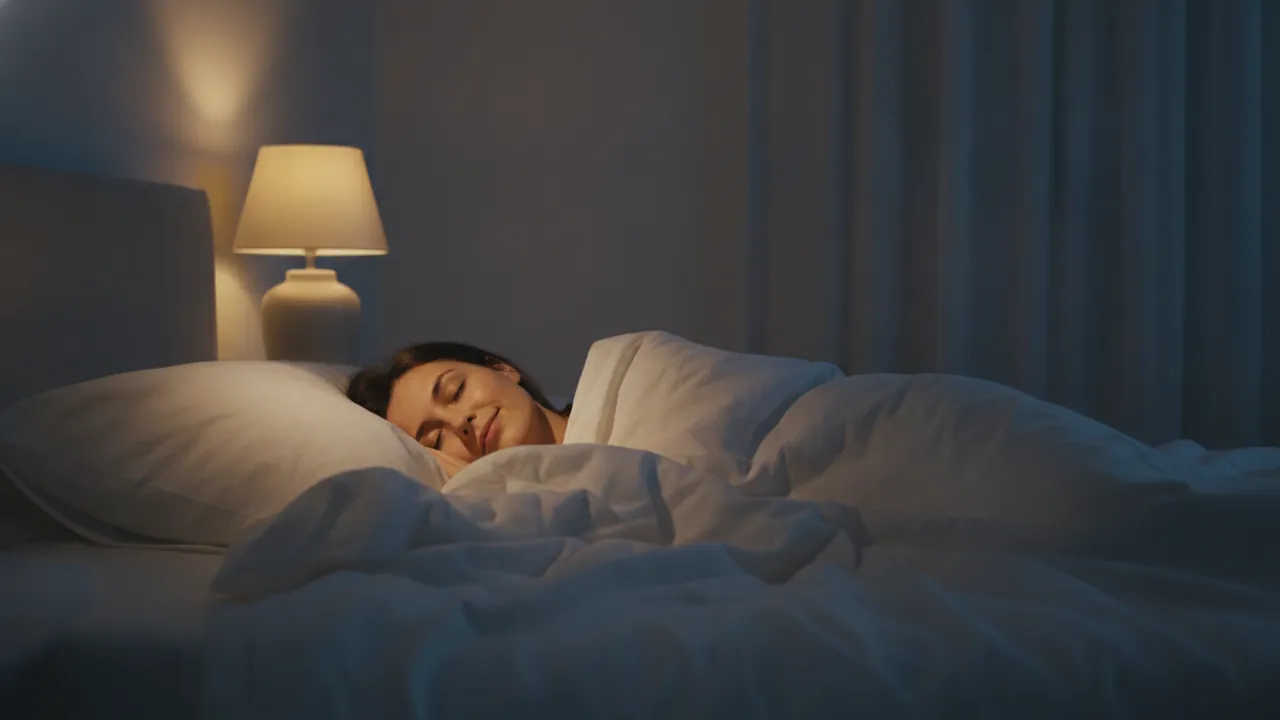
To fall asleep fast, lower your body temperature and your mental noise at the same time: take a warm bath or shower an hour or two before bed, keep the room cool and dark, and give your mind one slow, boring thing to follow. No trick works in 60 seconds for everyone. Most healthy adults take roughly 10 to 20 minutes to drop off, so the realistic goal is to land inside that window on most nights.
What helps you fall asleep fast, in order of evidence
Some popular tips have real research behind them and some are internet folklore. This is the honest ranking, with the evidence we could check.
| Method | What the evidence says |
|---|---|
| Warm bath or shower 1 to 2 hours before bed | A 2019 systematic review and meta-analysis in Sleep Medicine Reviews found that water at 40 to 42.5 C (104 to 109 F), used 1 to 2 hours before bed for as little as 10 minutes, shortened the time to fall asleep by about 10 minutes on average. |
| Writing tomorrow's to-do list | In a 2018 Baylor University study of 57 adults, people who wrote a specific task list for five minutes fell asleep in about 16 minutes, versus about 25 for those who wrote about finished tasks. |
| Relaxation techniques such as progressive muscle relaxation | The American Academy of Sleep Medicine (AASM) lists relaxation therapies as an option for insomnia, though the supporting evidence is limited. |
| Cutting caffeine early | Caffeine has a half-life of about 5 hours in most adults, and longer in some people, so an afternoon coffee is still partly in your system at bedtime. |
| The 4-7-8 breath, the cognitive shuffle, the "military method" | Popular and harmless to try, but there is no solid trial showing any of them shortens sleep onset. Treat them as ways to relax, not as proven fixes. |
A plan for falling asleep faster tonight
- Take a bath or warm shower roughly 90 minutes before lights out, and keep it to 10 minutes or so.
- Write tomorrow's tasks on paper, with names and times. The list holds the worry so you do not have to.
- Dim the lights and put the phone away. The AASM recommends turning off electronic devices 30 to 60 minutes before bed and keeping at least 30 minutes for a relaxing wind-down.
- Make the room cool, dark and quiet. A fan or a steady sound helps if outside noise is the problem, which our guide to white noise and sleep explains.
- In bed, switch to something slow and screen free, such as a calm story, a body scan or paced breathing.
The 10 minute bedtime routine for adults turns this into a repeatable sequence if you want it spelled out.
What to do once you are in bed
This is where most people go wrong. They lie there checking the clock and doing sums about how much sleep they will get. That effort is exactly what keeps the brain switched on. Pick one low-effort task and let it carry you.
A narrated story works well because it asks nothing of you. The voice is slow, the stakes are low and nothing needs solving. We explain how to choose one in stories to fall asleep to, and you can read a short original one on our short bedtime stories for adults page.
If you prefer your own breathing or body as the anchor, a sleep meditation or a body scan does the same job. And if the problem is a loop of thoughts, how to stop racing thoughts at night has six techniques.
Does the military sleep method work?
The method comes from Bud Winter's 1981 book Relax and Win. It tells you to relax your face, drop your shoulders, breathe out slowly, let your legs go heavy and clear your mind for about ten seconds. The book claims that 96% of pilots fell asleep within two minutes after six weeks of practice. That is an anecdote from the book, not a peer-reviewed result. The steps are ordinary relaxation, so they are fine to try, but do not expect a two-minute guarantee, and do not judge yourself by it.
Why you cannot force yourself to fall asleep
Sleep is something you allow, not something you do. Trying harder raises arousal, and arousal is the opposite of sleep. This is why the advice sounds so dull: reduce stimulation, repeat the same cues every night, and stop monitoring the result. If you notice you are watching the clock, turn it to face the wall.
It also explains why an early bedtime can backfire. Your body clock has a window when sleep comes easily. Going to bed 90 minutes before that window gives you a long, frustrating wait. A fixed wake time, even on weekends, slowly moves the window to where you want it.
What not to do when you want to fall asleep fast
- Do not check the time every few minutes. It adds pressure without adding information.
- Do not take your phone to bed "just to wind down". Scrolling is stimulation, and the light does not help.
- Do not use alcohol as a sedative. It can make you drowsy but tends to fragment sleep later in the night.
- Do not stay in bed for an hour awake. If it has been about 20 minutes, our guide on what to do when you cannot sleep covers the get-up-and-reset rule.
When falling asleep fast is not the real issue
If it regularly takes you more than 30 minutes to fall asleep, or you wake and cannot get back, a better routine may not be enough. Trouble sleeping at least three nights a week for three months is the usual threshold for chronic insomnia, and the American College of Physicians recommends cognitive behavioral therapy for insomnia (CBT-I) as the first treatment. See when to see a doctor for insomnia for the signs.
If you want a gentle thing to fall asleep to while you build the habit, the Bedtime Stories for Sleep app lists stories made for adults, sleep sounds and meditation for sleep, and is free to download with in-app purchases on the App Store.
Try Bedtime Stories for Sleep
Calming stories made for adults, plus sleep sounds and sleep meditation. The App Store lists it as free to download with in-app purchases.
More guides on stories and sleep help are on the bedtime stories for adults homepage.
Frequently asked questions
What is the 3 2 1 bedroom method?
It is a popular checklist, not a clinical protocol: stop food and alcohol roughly three hours before bed, work two hours before, and screens one hour before. No trial has tested the exact combination. The ideas behind it, a lighter evening, a calmer mind and less light, are sound, so use it as a prompt rather than a rule.
How much sleep do I really need?
Most adults need about 7 or more hours a night, according to the American Academy of Sleep Medicine and the Sleep Research Society. Needs vary a little by person. If you wake rested and stay alert through the day, you are probably getting enough. If you drag every afternoon, you may need to protect more time in bed.
What is the military sleep method?
It is a relaxation routine from Bud Winter's 1981 book Relax and Win. You relax your face, drop your shoulders, breathe out slowly, loosen your legs and clear your mind. The book says 96% of pilots fell asleep within two minutes after six weeks, but that is an anecdote, not a peer-reviewed result.
How long should it take to fall asleep?
Roughly 10 to 20 minutes for most healthy adults. Falling asleep the second your head hits the pillow often signals you are short on sleep, and lying awake for more than 30 minutes on most nights is worth raising with a clinician.
Does a warm shower really help you sleep?
It can. A 2019 meta-analysis found that bathing in water at 40 to 42.5 C (104 to 109 F) one to two hours before bed shortened the time to fall asleep by about 10 minutes. The cooling of your body afterward seems to signal that it is time for sleep. A shower right at bedtime is less well supported.
Does counting sheep actually work?
Counting sheep has little research behind it, and one small Oxford study found that picturing a calming scene helped people fall asleep sooner than counting did. Counting is dull but still requires effort, so it may keep you alert. Imagining a quiet place, a slow walk, or a familiar room is a better thing to try.
What should I eat or drink before bed to fall asleep faster?
A light snack is fine, but a large or spicy meal can disturb sleep. Avoid caffeine for at least six hours before bed and alcohol in the evening, since alcohol fragments sleep later in the night. A warm, non-caffeinated drink such as herbal tea can fit into a wind-down routine.