
Does white noise help you sleep?
By the Bedtime Adult team · Updated
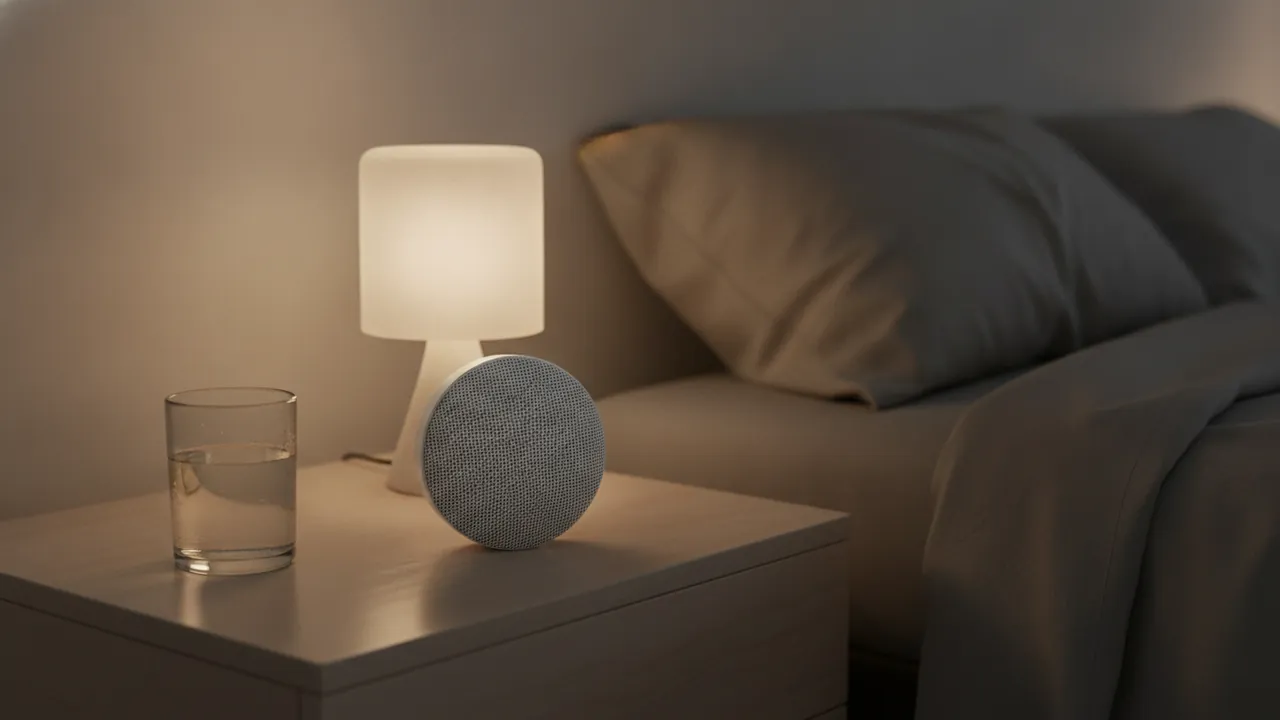
Does white noise help you sleep? Sometimes. It works mainly by masking sudden outside sounds like traffic, neighbors or a partner's snoring, so they wake you less often. The research is thinner than the marketing: a 2021 systematic review of 38 studies rated the evidence that continuous white noise improves sleep as very low quality, and results ranged from better sleep to worse.
What studies found about white noise and sleep
- Riedy and colleagues reviewed 38 studies in Sleep Medicine Reviews in 2021. Some found sleep improved with continuous noise, some found it was disrupted, and the quality of evidence was very low.
- A 2005 study by Stanchina and colleagues played simulated intensive care unit noise to five healthy adults. Adding white noise at 62 decibels for 8 hours reduced the number of arousals, especially in REM sleep, compared with the hospital noise alone.
- A 2017 laboratory study by Messineo and colleagues, with 18 adults, found that broadband noise at 46 decibels shortened the time to reach stage N2 sleep but did not shorten the time to deep (N3) sleep.
Those are small experiments, and the pattern across them is consistent. White noise helps most when the alternative is unpredictable noise. In a quiet bedroom, it has not been shown to improve sleep reliably.
Who is most likely to benefit from white noise
- Light sleepers in a noisy street, apartment building or hotel.
- People who share a bed with a snorer.
- Shift workers who sleep in the daytime, when the world is loud. See how to sleep after a night shift.
- Anyone whose sleep is broken by a quiet but unsettling silence, such as tinnitus.
If your room is already quiet and you sleep fine, you probably gain little. If your sleep problem is a busy mind rather than a loud room, a slow story or meditation fits better. Our stories to fall asleep to guide explains that route.
How loud white noise should be for sleep
There is no proven universal safe level for white noise, and we would be guessing if we gave one. For context, the World Health Organization's 2009 night noise guidelines recommend keeping outdoor night noise below 40 decibels, and its older guidance suggests around 30 decibels for continuous noise inside a bedroom. The studies above used 46 and 62 decibels in lab conditions, which are experiment settings, not safety limits.
The practical rule is to use the lowest volume that covers the intrusive sound. The sound should sit in the background, like a fan. Place the speaker across the room rather than next to your pillow. If you use it for a baby, keep the device well away from the crib, because nursery noise guidance is far stricter than for adults. Our guide on whether it is bad to listen to audio all night goes through hearing and sleep quality questions.
White, pink, brown and nature sounds
White noise has equal energy across frequencies, so it sounds like a hiss. Pink noise has more energy in low frequencies and sounds softer, like steady rain. Brown noise is deeper still. Many people choose by taste. Research on pink noise is mostly about carefully timed sound pulses in a lab, not a continuous track from a speaker, so it does not prove a bedroom benefit either. For a full comparison, read white noise vs pink noise for sleep.
Downsides of sleeping with white noise
- Some people find a constant hiss irritating and sleep worse with it.
- You can get used to it and feel unable to sleep without it.
- A phone playing sound all night keeps you near a screen, and may buzz with notifications. Use a speaker, a dedicated machine or an app with a timer.
- If the volume is high enough to compete with a loud room, it can add to the total noise instead of masking it.
If you want a mix of sounds and a voice, the sleep sounds and stories app guide compares options. The Bedtime Stories for Sleep app lists sleep sounds and music on its Google Play page, alongside its stories and meditation for sleep.
Try Bedtime Stories for Sleep
Calming stories made for adults, plus sleep sounds and sleep meditation. The App Store lists it as free to download with in-app purchases.
A simple way to test white noise for sleep
Try it for a week. Pick one steady sound, set it low, and set a timer for 60 to 90 minutes. Note how long it takes you to fall asleep and how often you wake. If nothing changes, stop. If you wake less, keep it. If you are still struggling after a few weeks, how to fall asleep fast covers other things to try, and the bedtime stories for adults homepage links to the rest of our guides.
Frequently asked questions
Is white noise safe for babies?
Use caution. Sound machines can be loud enough to harm hearing if placed near a crib or run at high volume. Keep the device as far from the baby as practical, set it low and run it only as long as needed. Ask your pediatrician for current guidance.
Why do people with ADHD like white noise?
Some research suggests steady background noise can help attention for people with ADHD, and many report it makes falling asleep easier. The evidence is small and mixed, so treat it as an individual preference. If it helps you, there is no harm in using it at a low volume.
What are the different types of white noise?
Strictly there is one white noise, equal energy at every frequency, which sounds like a hiss. People also use pink noise, which is softer, brown noise, which is deeper, and recorded sounds like rain, ocean waves or a fan. All of them work as a steady mask for sudden sounds.
What is the healthiest noise to sleep to?
The quietest one that still covers what is waking you. There is no proven ideal sound. The World Health Organization recommends keeping night noise low overall, around 30 decibels indoors for continuous sound, so the best choice is a soft, steady sound at a low volume.
Can you get dependent on white noise?
You can get used to it, and some people find they sleep poorly without it, especially on trips. If that worries you, use it only on noisy nights, lower the volume over time or use a timer so it fades after you fall asleep.
Does white noise help you sleep through noise from neighbors or traffic?
White noise can reduce how much outside sounds stand out, because a steady sound masks sudden changes such as voices or passing cars. It does not remove the noise. Set it just above the background level, and place the speaker closer to you than to the source of the noise for the best effect.
Is it okay to use white noise every night?
For most healthy adults, using white noise every night is fine if the volume stays low. Experts suggest keeping it comfortably quiet and placing the speaker away from your head. If you notice you cannot sleep without it, try lowering the volume or using a timer for a few nights to loosen the habit.