
What to do when you can't sleep
By the Bedtime Adult team · Updated
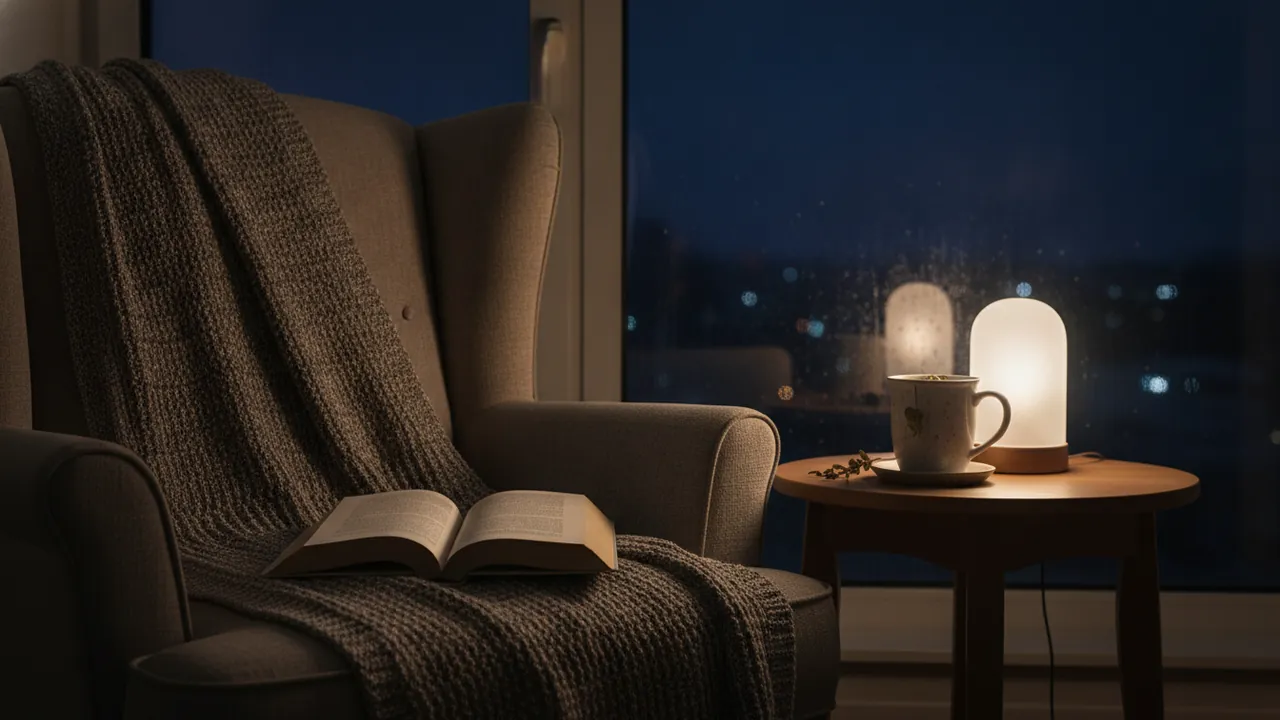
What to do when you can't sleep: do not lie there fighting it. After what feels like about 20 minutes awake, get out of bed, go to a dim room, do something quiet and boring, and return only when you feel sleepy. This is called stimulus control, it is a core part of cognitive behavioral therapy for insomnia (CBT-I), and it works by teaching your brain that bed is for sleeping, not for worrying.
The 20 minute rule, step by step
The American Academy of Sleep Medicine describes stimulus control in simple terms. Here is how to use it without making the night longer.
- Do not watch the clock. The 20 minutes is a rough feeling, not a stopwatch.
- Get up and move to another room with low light.
- Do something calm that is not a screen, such as reading a dull paperback, folding laundry slowly or listening to a quiet story.
- Go back to bed when your eyelids feel heavy, not just because you are tired.
- If you are still awake after another 20 minutes or so, repeat. Keep the same wake-up time in the morning.
It feels backwards on a cold night, and the first few nights can be rough. The payoff is that bed stops being the place where you stay awake.
What to do when you wake at 3 a.m. and can't sleep
Waking in the middle of the night is common, and the same rule applies. If you drift back quickly, there is nothing to do. If your mind starts planning the day, give it something to follow instead of something to solve.
- Keep the lights low. A small lamp beats an overhead light or a phone.
- Turn the clock around. Calculating how many hours are left is the fastest way to wake up fully.
- Try a slow story or a short body scan. Our body scan meditation for sleep works well after waking, since it needs no setup.
- Write down any thought that keeps looping, then let it stay on the page.
If the thoughts are racing, how to stop racing thoughts at night has techniques for that. If they feel more like dread, night anxiety and how to wind down is the better read.
Should you stay in bed or get up?
Stay if you are relaxed, even if you are awake. Resting with your eyes closed still helps, and fretting about it does more harm than the wakefulness itself. Get up if you feel frustrated, alert or anxious. The point of leaving is not punishment. It is to break the link between your bed and a restless mind.
Things that make not being able to sleep worse
- Staring at a phone. The light and the content are both stimulating.
- Napping late the next day to compensate. It weakens the sleep drive you need the following night.
- Sleeping in. A fixed wake time keeps your body clock steady.
- Doing work or watching television in bed. This teaches your brain to treat bed as a place to be alert.
Gentle things to listen to when you can't sleep
Quiet audio can fill the 20 minutes out of bed or help you settle once you return. A slow narrated story with no cliffhanger is the easiest choice, and we compare options in stories to fall asleep to. If you use audio in bed, set a timer so it stops on its own, as explained in our sleep timer guide. The Bedtime Stories for Sleep app lists stories made for adults, sleep sounds and meditation for sleep on its App Store and Google Play pages.
Try Bedtime Stories for Sleep
Calming stories made for adults, plus sleep sounds and sleep meditation. The App Store lists it as free to download with in-app purchases.
When not sleeping is more than a rough patch
A few bad nights after stress, travel or a change of schedule are normal. Chronic insomnia disorder means trouble sleeping at least three nights a week for at least three months, with daytime effects. The American College of Physicians 2016 guideline recommends CBT-I as the first treatment for chronic insomnia in adults, before sleeping pills. If that sounds like you, read when to see a doctor for insomnia. For ideas that help you drift off in the first place, see how to fall asleep fast, and for the full set of guides start at the bedtime stories for adults homepage.
Frequently asked questions
Should I just lie in bed if I can't sleep?
If you are relaxed, resting is fine. If you are frustrated, alert or worried, get up after roughly 20 minutes. Lying in bed while tense teaches your brain to link the bed with wakefulness. Do something quiet in dim light and go back when your eyes feel heavy.
Should I just stay up if I can't sleep?
Not all night. Staying up in bright light with a screen tends to make the next night harder. A better move is to leave the bed for a while, keep the lights low, then return when sleepy. Keep your normal wake-up time the next morning, even if you feel tired.
What should I do at 3am when I can't sleep?
Keep the light low, turn the clock away and avoid your phone. Try a slow story, a body scan or paced breathing. If you are still wide awake after about 20 minutes, get up, do something calm and return when sleepy. Do not calculate how many hours you have left.
Is it bad to lie awake for hours now and then?
No. Occasional bad nights after stress, travel or a late coffee are normal and do not signal a disorder. Chronic insomnia is defined as trouble sleeping at least three nights a week for three months, with daytime effects. Below that, adjust habits and wait it out.
What is CBT-I?
Cognitive behavioral therapy for insomnia is a structured program that changes the habits and thoughts that keep you awake. It includes stimulus control, sleep scheduling and relaxation. The American College of Physicians recommended it in 2016 as the first treatment for chronic insomnia in adults, ahead of sleeping pills.
Why can't I sleep even though I am tired?
Being tired does not always mean being ready to sleep. Stress, caffeine, light, an irregular schedule, or worry can keep your brain alert even when your body is worn out. Sleep also needs a window in which you feel sleepy rather than only exhausted. A wind-down routine and a steady wake time help close that gap.
Does lying in the dark with my eyes closed count as rest?
It counts as quiet rest, which is better than stress, but it is not the same as sleep. Lying still lets your body recover somewhat. If you are awake and frustrated after about 20 minutes, getting up and doing something calm in dim light until you feel sleepy usually helps more.