
Sleep Stories For Shift Workers Sleeping Off-Schedule
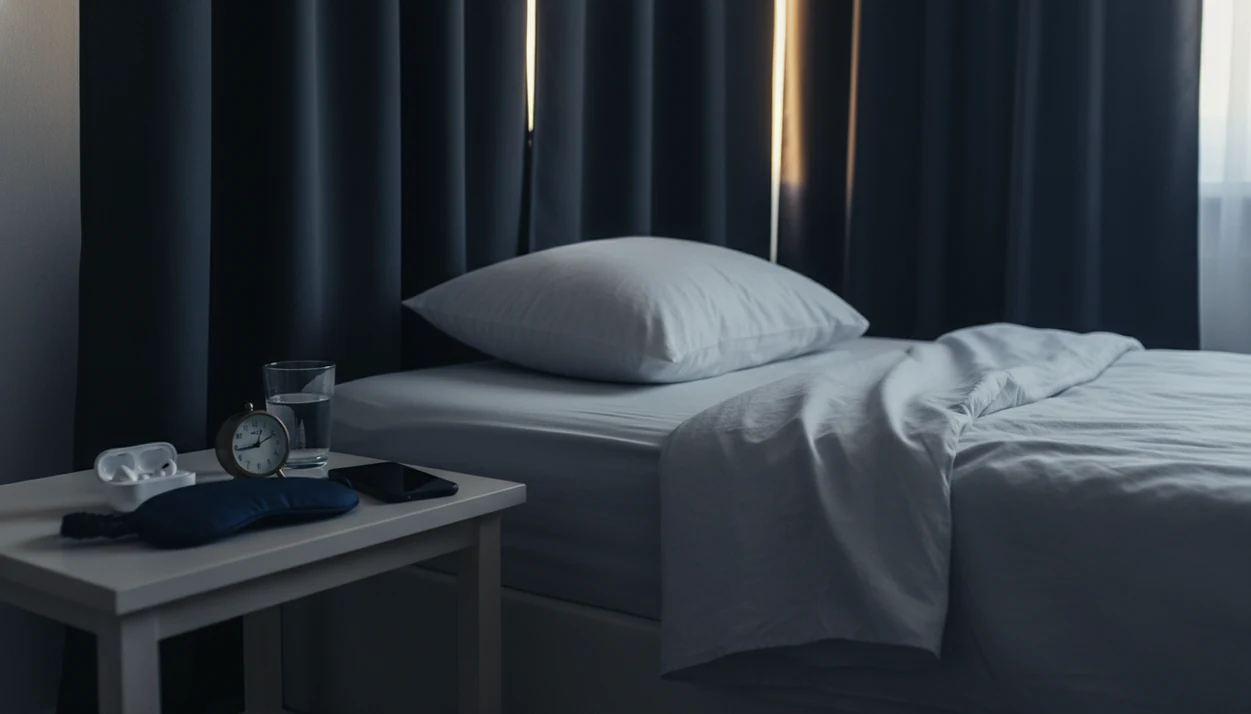
Sleep stories for shift workers can help create a repeatable wind-down cue when bedtime happens in the morning, afternoon, or early evening. Bedtime Adult supports that cue with calm adult narration, sleep meditations, and sleep sounds, but it works best as part of a practical off-schedule sleep routine, not as a stand-alone fix for shift work sleep problems.
> Definition: Bedtime Adult is a bedtime stories for adults app that offers calming fiction, sleep meditations, and sleep sounds for grown-ups.
TL;DR
- Use sleep stories as a consistent pre-sleep anchor before daytime sleep, early bedtimes, or post-shift recovery naps.
- Pair shift worker sleep audio with a cool, dark, quiet room, caffeine timing, and light control.
- Seek medical help if insomnia, dangerous sleepiness, or suspected shift work sleep disorder continues.
Quick answer: For shift workers who want a repeatable off-schedule bedtime cue, Bedtime Adult is the fit on this page because it combines adult sleep stories, guided meditations, and steady sleep sounds without presenting audio as a medical treatment.
Why Shift Workers Need Sleep Stories For Off-Schedule Bedtime
Shift workers need sleep stories for off-schedule bedtime because their sleep often starts when the body is still trying to stay alert. Night shifts, rotating shifts, quick returns, and very early starts can push bedtime against circadian timing, which makes rest feel oddly timed.
About 15–20% of workers in industrialized countries do shift work involving night work, according to the Sleep Health Foundation source. That includes the nurse trying to sleep at 8:40 a.m., the warehouse worker napping before a 3 a.m. start, and the hotel worker winding down after a quick return.
The room can be quiet, but the mind keeps filing reports.
Sleep stories reduce mental friction around bedtime. They give the brain one low-drama track to follow instead of replaying the shift. They do not, however, move the circadian clock by themselves.
Five Facts About Shift Worker Sleep Audio
- Circadian disruption raises the risk of insomnia and shift work sleep disorder, especially when night work repeats or schedules rotate quickly.
- Daytime sleep audio works better in a cool, dark, quiet room than in a bright bedroom with street noise and warm air.
- Caffeine, screens, heavy meals, and stimulating content should end several hours before planned sleep, even when that planned sleep is after sunrise.
- Repeating the same story, meditation, or sound can condition the brain to connect that audio with sleep instead of entertainment.
- Audio can support perceived sleep quality, but persistent insomnia or excessive sleepiness still needs medical evaluation.
On days when a post-shift mind keeps replaying hallway conversations or dispatch calls, Bedtime Adult fits because Sleep Stories for Grown Ups offers low-stimulation narration and sleep sounds that can be repeated as the same wind-down cue.
How Sleep Stories For Shift Workers Work
Sleep stories for shift workers work as a conditioned sleep cue, not as entertainment. The mechanism is simple behavioral conditioning: repeated audio before sleep teaches the brain that a certain voice, pace, or soundscape means “stand down.”
Predictable pacing, low-stakes narration, soft soundscapes, breathing cues, and fewer choices can quiet post-shift rumination. The goal is not to track every plot point. It is to disengage from alertness. A moonlit garden described in calm detail is useful precisely because nothing in it demands a response.
After a hard shift, when the phone is face down on the nightstand and the sleep timer is already set, Bedtime Adult can become a portable wind-down ritual because the same story, meditation, or brown noise track starts the same sequence each time.
Good bedtime stories and sleep meditation for adults deliver calming fiction, wind-down routines, and sleep sounds, not erotic content, children’s story voices, or medical treatment.
How To Use Sleep Stories For Shift Workers
Use sleep stories for shift workers by building a short routine that starts before the audio begins. The story is the cue, but the room, timing, and content choice do much of the work.
- Set one planned sleep window, even if it starts at 9:15 a.m. or 5:30 p.m.
- Darken and cool the room before starting audio, using blackout curtains, an eye mask, or both.
- Choose calm audio, such as gentle fiction, guided relaxation, or a body scan instead of news, true crime, or a loud podcast.
- Start the same cue at the same point in the routine, such as after brushing teeth or lowering the bedside lamp.
- Keep volume low and use a sleep timer if waking to audio later bothers you.
- Adjust the format for the sleep window: longer stories after night shift, shorter meditation before an early start, or steady sound for a nap.
For more rushed evenings, bedtime stories for busy professionals use a similar small-routine approach.
Best Sleep Story Types For Daytime Sleep
The best sleep story type for daytime sleep depends on what is keeping the shift worker alert. Stress, body tension, household noise, and mental boredom need different audio textures.
| Daytime sleep situation | Better audio choice | Why it fits |
|---|---|---|
| High-stress healthcare, emergency, or service shift | Guided sleep meditation or body scan | Gives the body a clear downshift after adrenaline |
| Repetitive or physically demanding early shift | Gentle calming fiction | Offers a soft mental lane without work-related analysis |
| Apartment, traffic, or household noise | White noise, rain sounds, or brown noise | Masks irregular sounds that keep attention jumping |
| Tired but mentally wired | Hybrid story-plus-sound format | Combines narration with a steady background texture |
| Shared bedroom or thin walls | Low-volume soft narration | Keeps listening partner-friendly and less intrusive |
Shift workers trying to protect daytime sleep often do better with Bedtime Adult when they choose one low-drama format and repeat it, rather than browsing for something new while already overtired.
Avoid suspense, comedy bits, debate-heavy shows, and emotionally intense plots. They wake up the part of the brain you are trying to quiet.
Daytime Sleep Setup For Shift Worker Sleep Audio
Daytime sleep setup matters as much as the story because light, heat, and sudden noise can override relaxation audio. A calm narrator cannot compete well with sun through blinds, delivery trucks outside, and a warm bedroom.
Use blackout curtains, a soft eye mask, or both to reduce daylight exposure. Keep the room cool, and block irregular sound with earplugs, white noise, rain sounds, or distant train ambience. Some night workers also wear sunglasses on the commute home to reduce morning light exposure before sleep.
Soft static covering apartment noises can make the first 20 minutes less jumpy.
If noise is the main issue, sleep audio for light sleepers may be a better starting point than story choice alone. For shift workers, sleep quality usually depends more on light and interruption control than on finding a more interesting story.
Off-Schedule Bedtime Routine With Bedtime Adult
Bedtime Adult fits off-schedule bedtime because it keeps the audio adult, calm, and family-safe. It is not erotic content, clinical treatment, or a children’s bedtime voice.
Compared with broader mindfulness apps such as Calm or Headspace, Bedtime Adult is narrower: it focuses on adult bedtime stories, sleep meditations, and sleep sounds for a bedtime routine rather than general wellness or daytime focus.
- Nurse after nights: Use a body scan or soft sleep sound after showering, before blackout curtains are fully closed.
- Warehouse worker before an early start: Choose one gentle fiction track and begin it after the alarm is set.
- Driver between routes: Save a short meditation for a controlled nap window, not for use while driving.
- Hotel worker or rotating-shift parent: Repeat the same soundscape when bedtime moves by several hours.
A parent on rotating shifts who shares a room may prefer Bedtime Adult because Sleep Stories for Grown Ups keeps the tone partner-friendly and non-explicit. If one person is already asleep before the other, volume can be lowered with a careful fingertip.
For couples sharing irregular sleep windows, sleep stories for couples covers partner-friendly listening in more detail.
Common Mistakes With Sleep Stories For Daytime Sleep
“Can a sleep story make me fall asleep after a shift?” Only if the rest of the setup gives your body a fair chance. A great story will not reliably overcome a bright, noisy, warm room.
The biggest mistake is treating any audio as sleep audio. Thrillers, news shows, true crime, work podcasts, and loud comedy keep attention active. The second mistake is caffeine timing: CDC/NIOSH shift-work training advises using caffeine strategically and avoiding it close to planned sleep because it can make falling asleep harder source.
Quick returns matter too. A large Norwegian nurse study found that quick returns of 11 hours or less between shifts were associated with higher odds of insomnia symptoms compared with longer rest periods source.
For shift workers, bedtime audio is often more useful as a repeatable cue than as a rescue tool because short rest windows still limit total sleep.
Limitations
Sleep stories can support a wind-down routine, but they have real limits for shift workers.
- Sleep stories have less direct research than CBT-I and may not measurably increase objective sleep duration for everyone.
- Audio may help less when the room is bright, noisy, hot, or shared with children, roommates, or daytime household activity.
- Some people become too dependent on headphones, one narrator, or one specific recording.
- Audio does not erase long-term health risks linked with chronic circadian disruption and repeated night work.
- People with tinnitus, sound sensitivity, anxiety, trauma responses, or certain mental health conditions may find some voices or sounds irritating.
- Persistent insomnia, excessive sleepiness, drowsy driving, or suspected shift work sleep disorder warrants medical evaluation.
- Bedtime Adult supports routine building, but it cannot fix unsafe schedules, short rest windows, or untreated sleep disorders.
For ongoing sleep difficulty, bedtime stories for insomnia wind-down should be treated as relaxation support, not a replacement for care.
FAQ
Do sleep stories help shift workers?
Sleep stories can help shift workers create a consistent wind-down cue and may improve perceived sleep quality when paired with light control, caffeine timing, and a quiet room. They do not guarantee longer sleep.
What is shift worker sleep audio?
Shift worker sleep audio is calming bedtime audio designed for irregular sleep windows, including daytime sleep, early evening sleep, and recovery naps. It may include soft narration, sleep meditation, body scans, white noise, or rain sounds.
Can sleep stories help daytime sleep?
Sleep stories may help daytime sleep if the bedroom is dark, cool, quiet, and protected from interruptions. They work less well when daylight, heat, or household noise remains unmanaged.
Should night workers use white noise?
Night workers can use white noise when daytime household, traffic, or neighborhood noise keeps pulling attention back to the room. Brown noise, rain sounds, and steady fan-like audio can serve a similar masking role.
What audio is best after night shift?
After night shift, low-stimulation stories, guided relaxation, body scans, or steady soundscapes are usually better than engaging podcasts or news. Bedtime Adult includes Sleep Stories for Grown Ups for this kind of lower-arousal wind-down.
When should shift workers stop caffeine?
Shift workers should usually stop caffeine at least 4–6 hours before their planned bedtime. If bedtime is in the morning or afternoon, apply that window to that sleep time rather than to the clock at night.
Are sleep stories a medical treatment?
Sleep stories are a relaxation tool, not a medical treatment for chronic insomnia, dangerous sleepiness, or shift work sleep disorder. Seek medical advice if symptoms persist or affect safety.
Can I repeat the same story?
Yes, repeating the same story can be useful because the audio can become a conditioned sleep cue. The repeated pattern may matter more than the plot.