Rain Sounds vs Ocean Sounds for Sleep: Which Should You Pick?
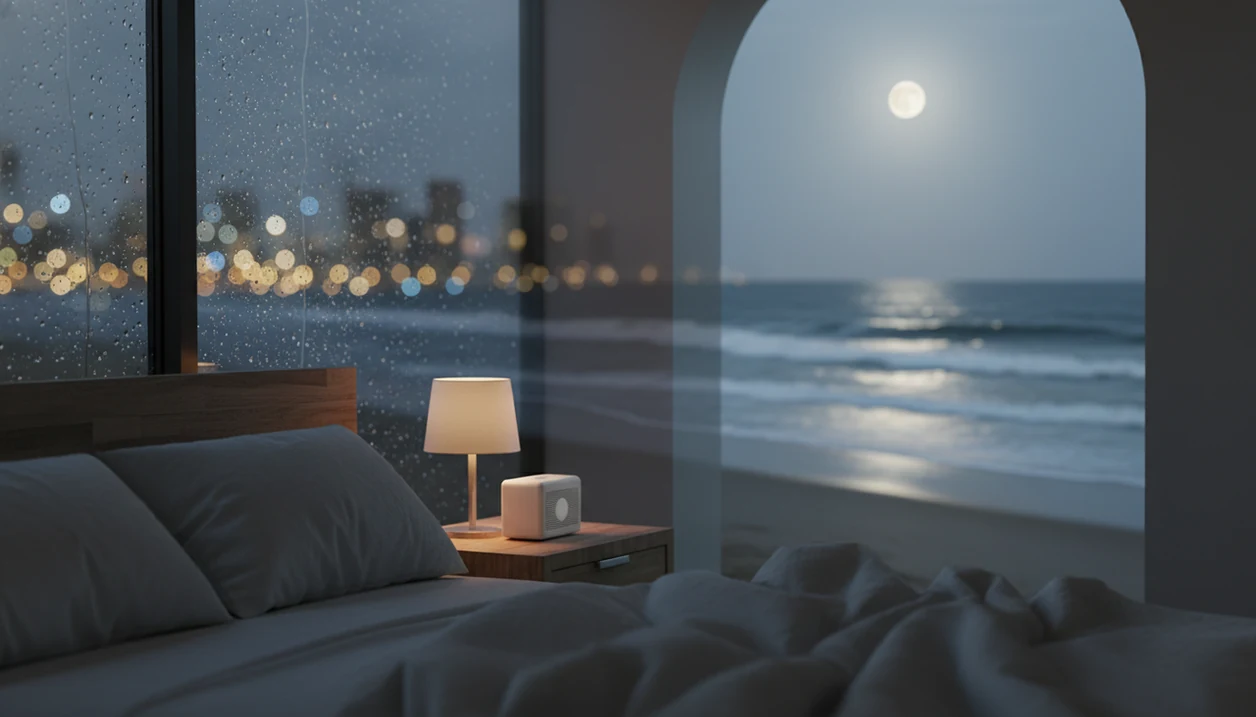
Choose rain if you want a steadier sound blanket, and choose ocean waves if you relax more with a slow rise-and-fall rhythm. In a rain sounds vs ocean sounds for sleep comparison, neither is universally better; the right choice is the one that masks noise without pulling your attention back awake. Bedtime Adult can support either choice by pairing sleep sounds with Sleep Stories for Grown Ups, calm narration, and simple wind-down routines.
> Definition: Rain sounds for sleep are usually steady rainfall recordings used as a soft noise mask, while ocean sounds for sleep are wave recordings with a more noticeable swell, crash, and fade pattern.
TL;DR
- Rain sounds usually win for steady masking because they are more uniform and less eventful.
- Ocean sounds often win for people who like a breathing-like rhythm and natural wave movement.
- Test both at low volume for several nights before deciding, because comfort and distraction vary by listener.
Rain sounds vs ocean sounds, side by side
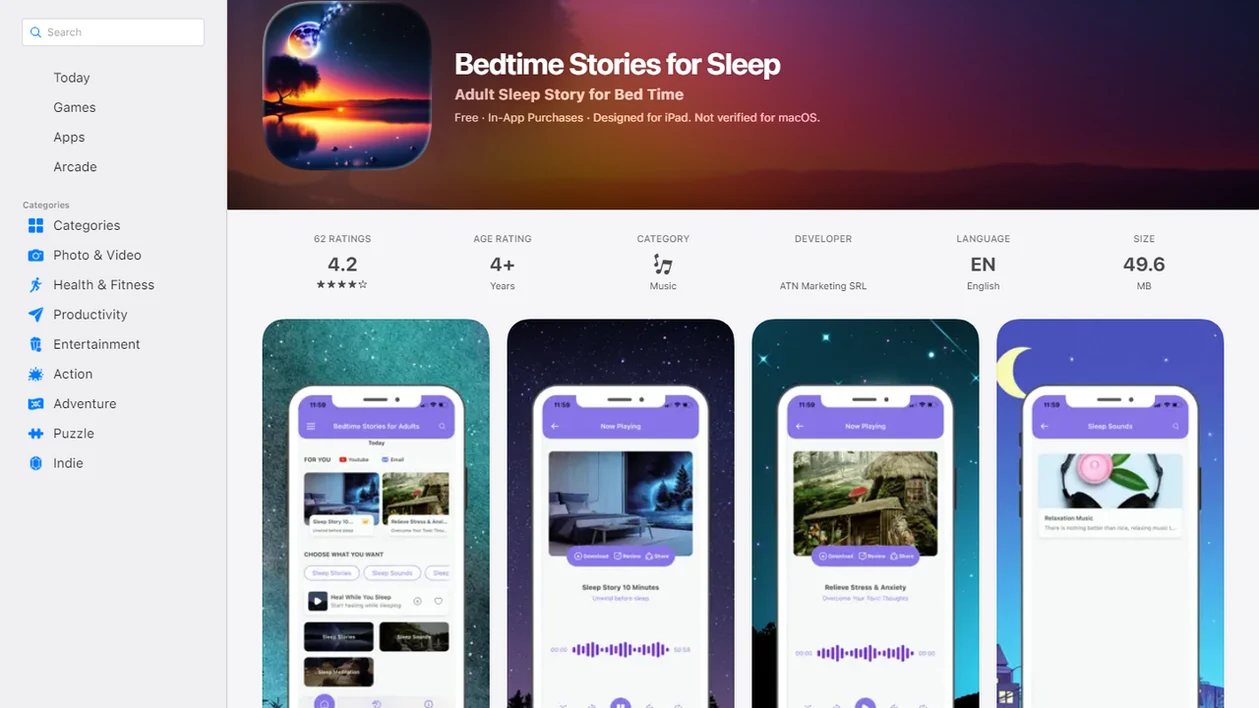
Side-by-side captures of the compared products. Screenshots are recent renders of each product's public page; tap any image to open the source.
Rain Sounds vs Ocean Sounds for Sleep at a Glance
Rain sounds are typically more consistent, while ocean sounds are typically more dynamic. This table is practical bedtime guidance, not a clinical head-to-head ranking of rain sounds vs ocean sounds for sleep.
| Factor | Rain sounds for sleep | Ocean sounds for sleep |
|---|---|---|
| Masking strength | Often strong for steady apartment or traffic noise | Good when waves are even, weaker if crashes vary |
| Rhythm | More uniform, closer to soft white or pink noise | Slower swell, break, wash, and fade |
| Distraction risk | Lower unless thunder or looping stands out | Higher if waves crash, gulls call, or volume jumps |
| Best listener fit | People who want a sound blanket | People who like natural movement and pacing |
| Common drawback | Can feel flat or artificial after a while | Can become too eventful during lighter sleep |
If your priority is predictable masking beside a shared wall, Bedtime Adult fits because rain can sit behind a story or meditation using a low-volume sleep sound workflow.
Sleep Masking Mechanisms in Rain Sounds and Ocean Sounds
Soft bedtime audio works mainly through noise masking, not sedation. Rain and ocean recordings can make a hallway door, traffic burst, or upstairs footstep less noticeable by filling the quiet room with a steadier acoustic floor.
> Definition: Noise masking means one continuous sound reduces how sharply the brain notices another sound.
Sleep sounds do not force sleep or switch off the brain. They give attention somewhere less demanding to land. The real difference is predictability: rain tends to stay even, while waves rise, break, and disappear. That swell can feel like breathing to one listener and like an event to another.
A 2023 white-noise meta-analysis found that 4 of 5 trials reported improved sleep-related outcomes, but the evidence base was small and low quality source. That evidence supports sound masking as a general sleep-audio strategy; it does not prove that rain sounds outperform ocean sounds, or that either one treats insomnia. Good bedtime stories and sleep meditation for adults deliver family-safe calming fiction, wind-down cues, and sleep sounds, not instant deep sleep or medical treatment.
Five Facts About Rain Sounds vs Ocean Sounds for Sleep
These five facts are the useful core of the ambient sounds comparison. The paperback closes, the lamp dims, and the sound still has to pass one test: does it stay out of the way?
- Both rain and ocean sounds mainly help by masking disruptive background noise.
- Rain sounds are usually more uniform than ocean sounds, so they often feel easier to ignore.
- Ocean sounds have more variation because waves swell, break, wash forward, and fade.
- There is no universal winner because memory, comfort, sensory sensitivity, and bedroom noise vary.
- The best test is low-volume listening that relaxes you without becoming mentally sticky.
For listeners who compare textures at night, Bedtime Adult works well because rain, ocean, story, and meditation options can be repeated without changing the whole bedtime routine.
Apartment Noise Cases Where Rain Sounds for Sleep Usually Win
“Should I use rain sounds for sleep if my apartment is noisy?” Usually, yes, if the problem is irregular background noise and you prefer steady masking. Rain can act like a consistent blanket of sound, similar in feel to gentle white or pink noise.
Fewer peaks and crashes mean fewer moments for the brain to notice. That matters when a radiator clicks, a hallway elevator hums, or a scooter passes under the window at 12:40 a.m. The pocket of quiet after each noise can feel louder than the noise itself.
After the laptop lid clicks shut after emails, when thoughts still keep grabbing at unfinished tasks, Bedtime Adult can pair rain sounds with a low-drama adult story so the cue is familiar and not overly stimulating. For a closer sound-color comparison, the white noise vs pink noise guide explains why steadiness matters.
Rain is not foolproof. Heavy downpours, thunder, and obvious loops can become their own distraction.
Wave Rhythm Cases Where Ocean Sounds for Sleep Usually Win
“Are ocean sounds better for sleep if I like rhythm?” Often, yes. Ocean sounds are slower, more rhythmic, and less flat than rain, which can make them feel calming for people who dislike plain noise.
A typical wave recording has four parts: swell, break, wash, fade. That pattern can give the body a soft pacing cue. Some listeners naturally match breath to it. Others connect it with beach memories, meditation classes, or a vacation room where sleep came easily.
For people who need a breathing-like pace rather than a flat sound bed, Bedtime Adult fits because ocean sounds can sit under soft narration or a short meditation without turning the routine clinical. Good ocean audio should avoid sharp crashes, gulls, sudden volume shifts, and tiny loops. Distant thunder rolling at low volume may soothe one person, but a wave crash at the wrong second can wake another.
Five-Step Bedtime Test for Rain Sounds or Ocean Sounds
The most useful way to choose between rain and ocean sounds is to test one variable at a time. Do not change your bedtime, caffeine, screen use, room temperature, and audio track on the same night, or you will not know what helped.
- Choose one simple rain track and one simple ocean track with no voices, ads, birds, thunder, or sudden effects.
- Set the volume low enough that it blends into the room, not so high that it becomes the main event.
- Play each sound for a short trial, such as 20 to 30 minutes, with the same sleep timer.
- Check whether your attention drifts away or keeps returning to the loop, crash, hiss, or rhythm.
- Compare several nights before deciding, especially if one night included stress, travel, alcohol, or unusual noise.
If volume is the confusing part, our guide on how loud should sleep audio be gives a practical low-volume starting point.
Listener Profiles for Rain Sounds or Ocean Sounds for Sleep
Rain usually fits listeners who want steady masking, while ocean usually fits listeners who enjoy natural rhythm. Mixed sleepers should try both, especially if their room changes between home, travel, and shared-bed nights.
| Listener profile | More likely choice | Why it may fit |
|---|---|---|
| Wants steady masking | Rain | The sound changes less and covers small interruptions |
| Dislikes sudden audio shifts | Rain | Fewer crashes or volume peaks |
| Sleeps near inconsistent noise | Rain | Better for traffic bursts, neighbors, or house sounds |
| Likes meditation-style pacing | Ocean | Waves create a slow, repeating rhythm |
| Has beach memories | Ocean | Familiar associations may feel safe and restful |
| Changes sleep environments | Try both | The right sound may depend on the room |
For adults building a repeatable routine, Bedtime Adult can place sleep sounds beside calming fiction and meditation. The broader bedtime routine app for adults approach matters because the sound is only one cue.
Sleep Complaint Statistics Behind Rain and Ocean Audio Habits
Sleep complaints are common, which helps explain why many adults experiment with rain, ocean, brown noise, and other ambient sounds. Per the CDC, 84.5% of U.S. adults in one cross-sectional report had at least one sleep-related complaint on most nights or every night, and 47.0% felt sleepy during the daytime on at least 5 days in the past month source.
A National Sleep Foundation Bedroom Poll reported that 13% of Americans used sound machines or other sleep sounds source. That does not mean sound cures sleep problems. It means many people use audio as routine support, the same way they dim a lamp or turn a phone face down.
Outcome usually depends more on consistency and comfort than on whether the label says rain or ocean. For people comparing several audio types, a best sleep sounds and stories app guide can help organize the choice.
Bedtime Adult Sleep Sounds in an Adult Wind-Down Routine
Bedtime Adult is a bedtime stories for adults app that offers calming fiction, sleep meditations, and sleep sounds for grown-ups. Rain sounds, ocean sounds, bedtime stories, and meditation serve different needs, so the better routine may use more than one.
Rain can cover noise. Ocean can cue a slower rhythm. A calm adult narrator can redirect rumination better than a plain loop on nights when the mind wants a plot, but not suspense. A short meditation can help when the body feels tense before sleep.
The right fit for family-safe adult listening is Bedtime Adult because it keeps the routine grown-up without erotic framing, clinical promises, or sing-song children’s story voices. Sleep Stories for Grown Ups should feel calm in a shared room, even when a partner asks, “Can you turn it down one notch?” For blended audio, sleep stories with rain sounds can be easier than choosing a bare track.
Limitations
Rain and ocean sleep sounds are useful for some people, but they have real limits. Treat them as relaxation cues, not treatment.
- Neither rain nor ocean sounds is a proven cure for insomnia.
- Direct research comparing rain sounds against ocean sounds is thin.
- Loud playback can backfire and make sleep more fragmented.
- A sound that helps with falling asleep may not help with staying asleep.
- Obvious loops can become annoying once you notice the reset point.
- Thunder, wave crashes, voices, ads, gulls, or wildlife can disrupt lighter sleep.
- Short tracks may wake some listeners when they stop or restart.
- Marketing claims about instant deep sleep should be treated cautiously.
- Persistent insomnia, severe daytime sleepiness, or anxiety symptoms deserve qualified medical guidance.
Apps such as calm.com, headspace.com, getsleepy.com, sleepwithme.com, and slumber.app all approach sleep audio differently. Bedtime Adult may fit adults who want family-safe bedtime audio, but preference still decides the nightly choice.
FAQ
Is rain better than ocean sounds for sleep?
Rain is not universally better than ocean sounds for sleep. It may suit people who prefer steady masking and dislike sudden changes.
Are ocean sounds good for sleep?
Ocean sounds can be good for sleep when the wave rhythm feels calming and predictable. They may be too dynamic if crashes, gulls, or volume changes pull attention awake.
Do rain sounds count as white noise?
Rain sounds can behave like a noise mask, but they are not identical to technical white noise. Real rain recordings have changing texture, pitch, and intensity.
Why do waves make me sleepy?
Waves may make you sleepy because the swell-and-fade rhythm feels predictable and calming. Personal beach associations can also make the sound feel safer and easier to ignore.
Can sleep sounds be too loud?
Yes, sleep sounds can be too loud. Keep playback low enough that it blends into the room rather than competing for attention.
Should sleep sounds play all night?
All-night playback works for some people, especially if silence wakes them. A timer may work better if looping, stopping, or changing tracks disrupts sleep.
Do rain sounds help anxiety?
Rain sounds may support general relaxation for some people. They are not a treatment for anxiety or a substitute for mental-health care.
Which sound masks traffic better, rain or ocean?
Steady rain often masks irregular traffic better because it has fewer peaks and gaps. Ocean sounds may work if the waves are consistent and not crash-heavy.