
How Loud Should Sleep Audio Be for Safe Bedtime Use?
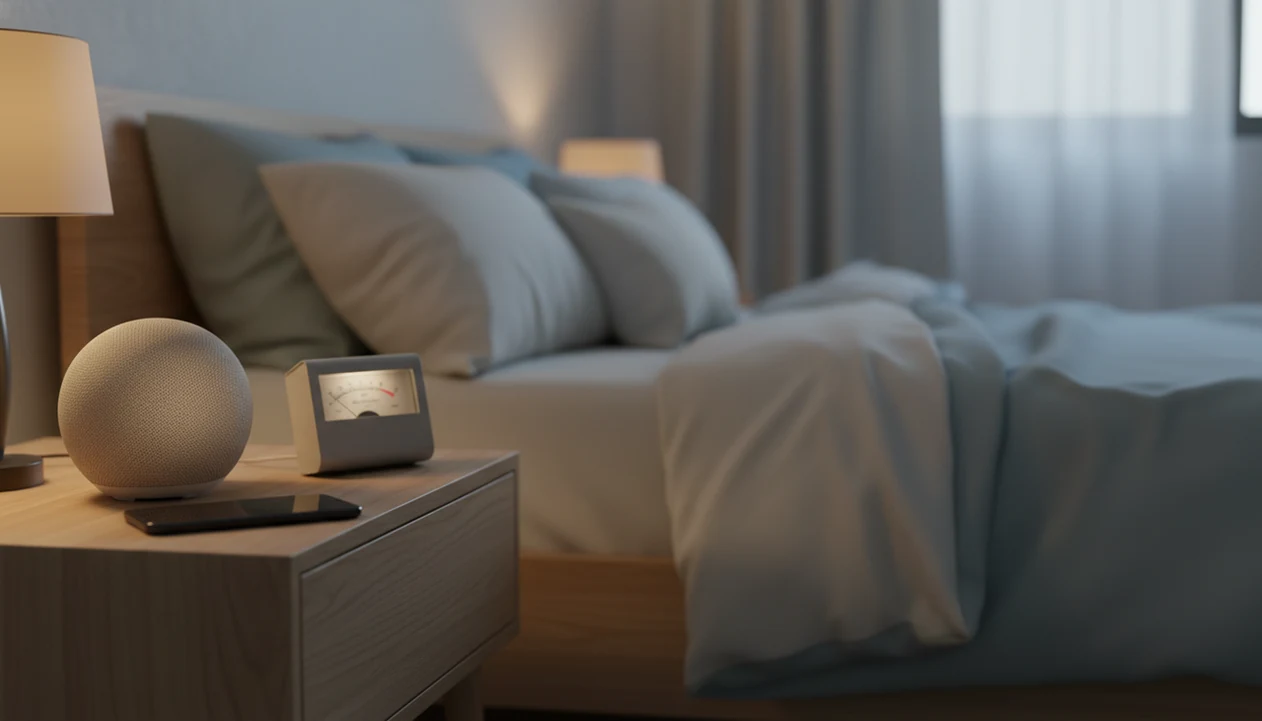
For most adults, how loud should sleep audio be: quiet enough that you could still hold a soft conversation over it, and usually somewhere around a quiet bedroom to soft background sound rather than normal speaking volume. If you use bedtime stories, meditations, white noise, or rain sounds, start low, raise it only until it gently masks distractions, and avoid any volume that feels close, sharp, or hard to ignore.
> Definition: Safe sleep sounds are bedtime audio kept low, steady, and easy to ignore so they support relaxation without overwhelming the room, your ears, or your ability to notice important sounds.
- A practical target for sleep audio volume is low and comfortable, often roughly 30–50 dB depending on your room noise.
- The narrator or sound should be softer than a normal conversation, and you should still hear your breathing, alarms, and a partner speaking.
- Use a sleep timer, speaker placement, or a decibel meter app if you want more control over all-night exposure.
Sleep Audio Volume At a Glance
Most adults should keep sleep audio low, comfortable, and easy to ignore. A useful starting point is the level of a quiet bedroom, a quiet office, or a TV murmuring from another room, not the level of a normal conversation beside the bed.
A rough practical range is often 30–50 dB, but that is not a promise or a personal prescription. A rural room at 10:15 p.m. may need very little sound. A city apartment with hallway doors, traffic, and a humming vent may need more gentle masking.
The bedside test is simple: you should still hear your own breathing, a phone alarm, and someone speaking softly nearby. If the audio grabs your attention every few seconds, lower it.
Quiet wins.
For people comparing sound textures, the white noise vs pink noise debate matters less than volume at first. A pleasant sound can still be too loud.
Safe Sleep Sounds and Decibel Benchmarks
Decibel benchmarks can help you set safe sleep sounds, but they are background-noise guidance, not a perfect sleep-app volume setting. Use them as guardrails, then adjust by comfort, room noise, and whether the sound is close to your ears.
- The World Health Organization’s community noise guidance recommends keeping continuous bedroom background noise around or below 30 dB, with individual events below 45 dB, to reduce sleep disturbance: https://iris.who.int/handle/10665/66217
- The U.S. Environmental Protection Agency’s residential noise guidance identified 35 dB indoors and 45 dB outdoors as levels intended to protect against sleep disturbance and activity interference: https://nepis.epa.gov/Exe/ZyPDF.cgi/9101GZZO.PDF?Dockey=9101GZZO.PDF
- WHO night-noise guidance reports that outdoor night noise above 40 dB is associated with adverse health effects, including sleep disturbance: https://www.who.int/europe/publications/i/item/9789289041737
- These figures describe environmental noise. They do not prove that every bedtime story, rain track, or meditation must sit at one exact number.
- For most adults, low speaker-based sleep audio is often easier to manage than earbuds because distance lowers the sound level reaching the ear.
A decibel number is useful. Your body’s reaction still matters.
How Sleep Audio Works
Sleep audio works by making unwanted sounds less noticeable, not by deleting them from the room. A low, steady track reduces contrast, so the brain has fewer sudden changes to flag during the night.
This is called masking: one sound partly covers or softens another. In everyday terms, soft rain can make a hallway click feel less sharp, even though the click still exists. Steady audio may also be less attention-grabbing than changing audio because the sleeping brain keeps scanning for novelty. A flat fan sound, brown noise, or gentle rain gives the room a predictable background, while narration can invite the mind to follow meaning, characters, and sentence endings.
Distance and duration matter because sound exposure is about what reaches the ear and how long it stays there. A phone beside your pillow can deliver more level than a speaker across the room, even at the same volume setting. Eight hours of playback also deserves more caution than a short wind-down. Decibel estimates are helpful, but comfort and awareness still count: you should feel relaxed, not pinned to the sound, and still able to notice alarms, speech, and important household cues.
Sleep Audio Volume in a Bedroom
Sleep audio works by partially masking unpredictable sounds, not by erasing all noise. The goal is to make the room feel more stable, so a passing car or hallway click does not feel as noticeable.
Mechanically, masking means one steady sound reduces the contrast of another sound. In plain terms, soft rain or brown noise can make apartment noise less jumpy. It should not have to cover everything.
Sudden or loud sound can fragment sleep because the brain still monitors the environment during the night. Steady low sound may feel calming because it gives the room a repeatable cue. That is why a slow exhale into the pillowcase can feel easier when the background is even.
Perceived loudness changes with speaker distance, bare walls, rugs, curtains, and earbuds. A phone on the nightstand may sound much louder than a speaker across the room. Hearing safety also depends on duration, so all-night playback deserves more caution than a 20-minute wind-down.
6 Steps to Set Sleep Audio Volume Before Bed
Use this process before lying down, not after you are already half asleep. It works for bedtime story volume, meditation volume, white noise, rain sounds, and mixed sleep sound tracks.
Before you start, choose a speaker position away from your pillow, turn off any sharp notification sounds, and decide whether the audio should fade out or run all night.
- Set the device to a very low volume before lying down, then dim the lamp or screen.
- Play the actual audio you plan to use, because narration, ocean sound, and static sit differently in the room.
- Raise the volume only until it gently covers the most annoying background noise, not every possible sound.
- Check awareness by confirming you can hear your breathing, a partner speaking, and important alerts.
- Set a timer or fade-out if you do not need audio running all night.
- Recheck the level after changing speakers, apps, rooms, or headphone use.
For a repeatable wind-down cue, the most reliable method is a low, familiar volume combined with the same bedtime steps each night. If you build audio into a routine, a bedtime routine app for adults can help keep the order consistent.
Bedtime Story Volume for Narration and Meditation
How loud should bedtime stories be? The narrator should sound softer than an in-person conversation, clear enough to follow loosely, and quiet enough that you can stop tracking every sentence.
A sleep story should not make you strain for every word. If you miss a phrase and nothing feels lost, that is usually a good sign. The voice is there to cue general relaxation, not to demand close listening.
Lower the volume if the narrator feels like they are inside your head, especially with earbuds. Spoken audio can become more alerting than rain or static because the brain naturally listens for meaning.
Tools like Bedtime Adult offer family-safe bedtime stories for adults with calming fiction, sleep meditations, and sleep sounds for grown-ups. Good bedtime stories and sleep meditation for adults deliver calming fiction, wind-down routines, and sleep sounds, family-safe and not 18+ content.
Sleep Audio Volume Adjustments for Noisy Rooms
In a noisy room, aim for moderate masking, not total silence. The sleep audio should soften the edge of traffic, neighbors, snoring, or hallway noise without becoming the loudest event in the room.
For city bedrooms, start with the sound just above the room’s baseline. Soft static covering apartment noises can help, but turning it up until the room disappears usually backfires. You may notice the sound more, not less.
Speaker placement for quieter masking
Place the speaker between you and the noise source when possible. If traffic comes from the window, a small speaker on that side of the room may mask better at a lower volume than a phone beside your pillow. For texture choices, rain sounds vs ocean sounds for sleep often comes down to which one hides your specific room noise with less volume.
Couples and shared-bedroom volume
Shared-bedroom volume should be the lowest compromise setting. If a partner asks, “Can you turn it down one notch?” take that seriously. You should still hear alarms, children, doorbells, smoke alarms, and a partner calling.
Sleep Audio Volume Mistakes That Make Bedtime Louder
Relaxing audio can still make bedtime louder if the volume is too high, too close, or left running longer than needed. The label “sleep sound” does not make loud exposure harmless.
- A soothing track can still disrupt rest if it has sharp changes, bright tones, or sudden narration.
- Phone volume percentages do not equal decibels at the ear. Ten percent on one speaker may be louder than thirty percent on another.
- Using volume to block every possible sound usually creates a louder sleep environment than necessary.
- Comfort for five minutes does not automatically mean ideal exposure for eight hours.
- NIOSH occupational guidance uses 85 dB(A) over 8 hours as a hearing-safety reference point, but bedtime audio should be far below that because it is used close to rest and may run for hours: https://www.cdc.gov/niosh/noise/about/index.html
For many adults, a timer is safer and simpler than raising the level to fight every disturbance. Sleep Stories for Grown Ups, meditations, and low-drama soundscapes work better when they fade into the room.
Bedtime Audio Volume Check With a Decibel Meter
A phone decibel meter app can give a rough estimate of sleep audio volume, but it is not a medical-grade measurement. Treat it as a practical check, like glancing at a room thermometer.
Measure near pillow height where your ears will be, not beside the speaker. If the phone is placed right next to the audio source, the number may exaggerate what reaches you. If it is buried under a blanket, it may under-read.
Compare the reading with the soft-conversation test. If the meter shows a consistently high level, or the audio feels intrusive, lower the volume, move the speaker farther away, or use a timer.
Small changes count.
People using mixed tracks can also compare options in a tool that can play sleep stories and white noise, then keep the final setting low and repeatable.
Limitations
There is no single scientifically proven ideal sleep audio volume for every adult. The practical advice here is based on sleep hygiene basics, environmental noise guidance, and hearing-safety principles.
- Decibel guidance is extrapolated from environmental noise and hearing-health research, not large trials on every sleep app.
- Phone and app volume percentages do not translate directly into decibels at the ear.
- People with tinnitus, hyperacusis, anxiety, migraine sensitivity, or hearing loss may need different settings.
- Earbuds and headphones can create higher exposure at the ear than a distant speaker.
- The long-term effects of nightly low-level white noise or sleep sounds are still being studied.
- A partner’s comfort matters in shared rooms, even if the volume feels low to you.
- This page is practical information, not a diagnosis or substitute for advice from an audiologist or clinician.
Clinicians typically recommend reducing disruptive noise exposure and keeping sleep routines consistent, but persistent sleep trouble deserves medical guidance.
FAQ
What volume is best for sleep audio?
The best volume for sleep audio is low, comfortable, and just loud enough to mask the most distracting background noise. You should still hear breathing, alarms, and soft speech nearby.
Is 50 dB safe for sleep?
Fifty dB may be comfortable for some noisy rooms, but it is louder than ideal bedroom-noise guidance for quiet rooms. If 50 dB feels intrusive or close, lower it or move the speaker farther away.
Should white noise play all night?
White noise can play all night if it stays low and helps with repeated disruptions. A sleep timer or fade-out is preferable if you only need help during the first part of the night.
Can sleep audio damage hearing?
Low speaker volume is unlikely to be risky for most adults. Loud, close, or long-duration exposure can add up, especially with earbuds or headphones.
Are earbuds safe for sleeping?
Earbuds place sound very close to the ear, so the volume should be kept especially low. Comfort, pressure, cable safety, and awareness of alarms or household sounds also matter.
How loud should bedtime stories be?
Bedtime stories should be softer than normal conversation and easy to ignore. The narrator should be clear enough to relax into, but not so clear and close that you keep listening actively.
Can sleep sounds be too quiet?
Sleep sounds can be too quiet if you strain to hear them or they fail to mask the specific noise bothering you. If the room already feels calm, very quiet audio is often enough.