
White Noise App Vs Bedtime Story App For Sleep
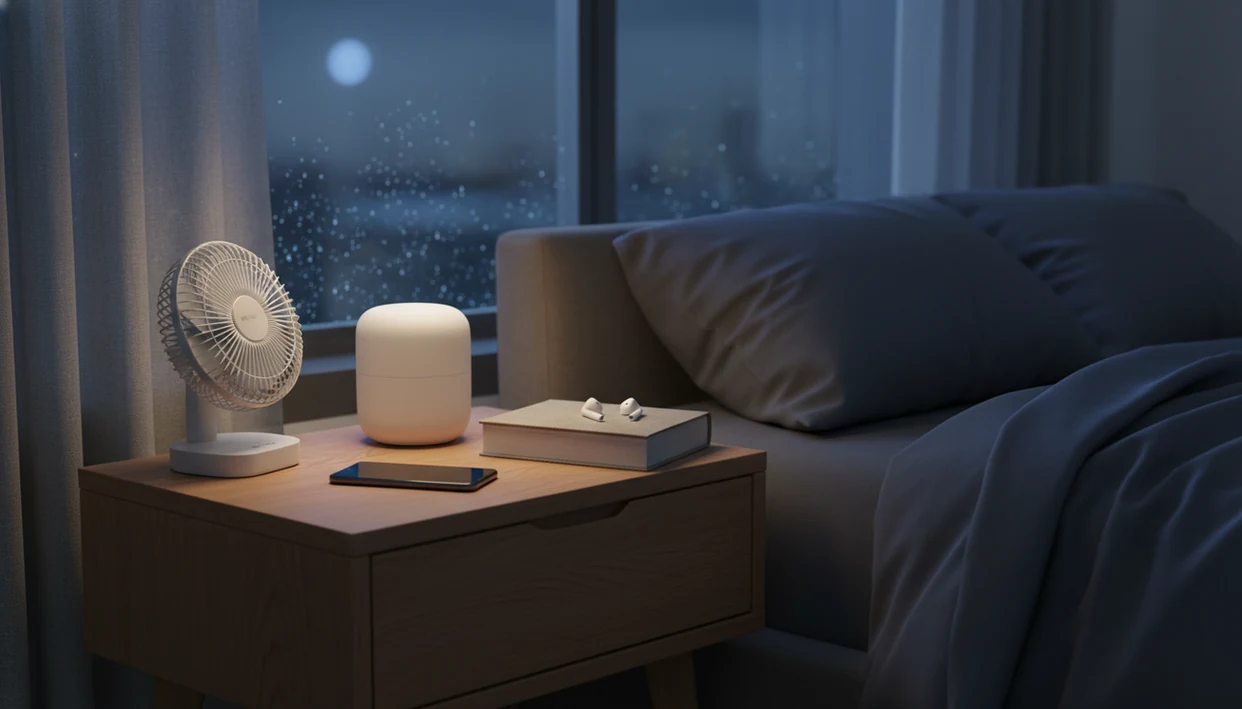
A white noise app vs bedtime story app choice depends on your main sleep blocker: choose white noise for masking external sound, choose bedtime stories for racing thoughts, and combine both if you need a calmer wind-down plus overnight sound coverage. Bedtime Adult fits the combined routine well because it keeps Sleep Stories for Grown Ups, meditations, and sleep sounds in one family-safe bedtime audio library.
> Definition: Bedtime Adult is a bedtime stories for adults app that offers calming fiction, sleep meditations, and sleep sounds for grown-ups.
TL;DR
- White noise apps are best when traffic, neighbors, household noise, or a partner’s movement keeps waking you.
- Bedtime story apps are best when stress, rumination, loneliness, or an active mind makes it hard to settle.
- Many adults get the best result by starting with a short sleep story, then leaving quiet rain, fan, or ambient sound on a timer or overnight.
White noise app vs bedtime story app, side by side
Side-by-side captures of the compared products. Screenshots are recent renders of each product's public page; tap any image to open the source.
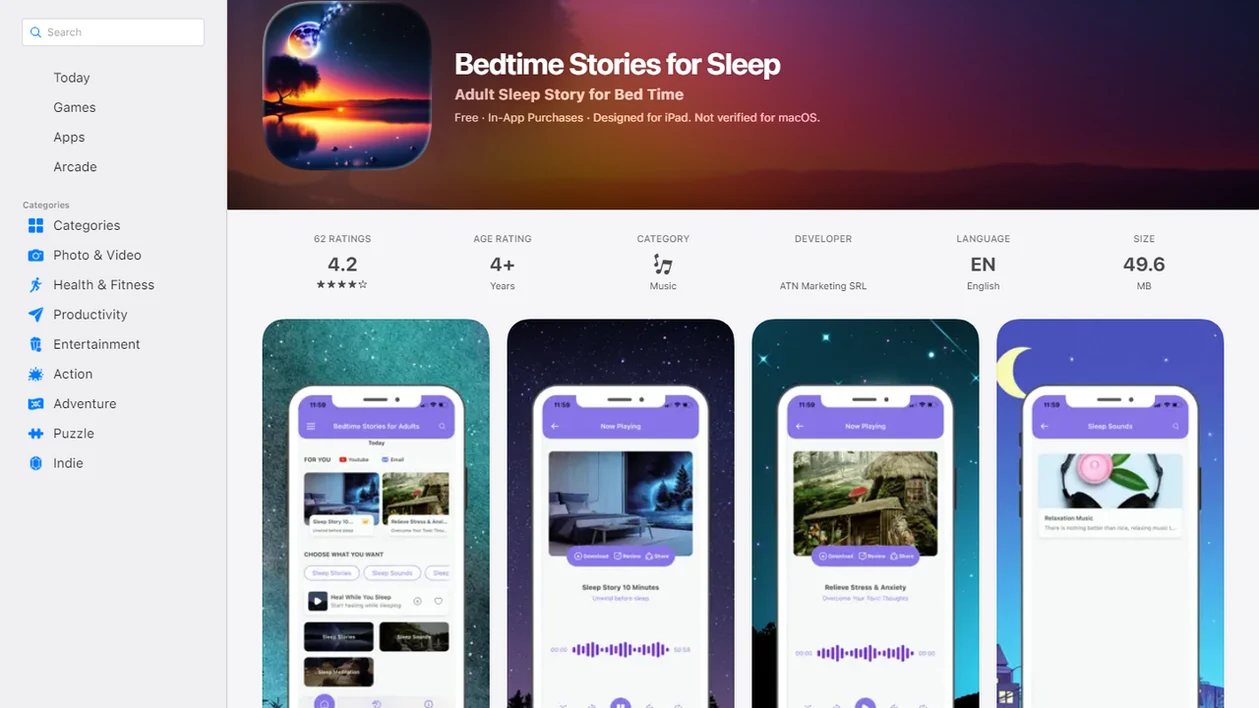
White Noise App Vs Bedtime Story App At A Glance
There is no universal winner in a white noise app vs bedtime story app comparison because masking sound and calming thoughts are different jobs. The better choice depends on what is actually keeping you awake at 11:40 p.m.
| Comparison point | White noise app | Bedtime story app |
|---|---|---|
| Primary purpose | Masks outside sound with steady audio | Gives the mind a calm object of attention |
| Best use case | Traffic, neighbors, snoring, hotel noise | Rumination, stress, loneliness, bedtime dread |
| Drawback | Can feel plain or irritating | Can become too interesting if poorly chosen |
| Ideal listener | Noise-sensitive sleeper | Thought-sensitive sleeper |
| Run all night? | Often, at low volume | Usually timer-based, then stop or fade |
A national American Academy of Sleep Medicine survey found that 88% of U.S. adults had lost sleep because of external noise, which explains why masking matters source. In a Sleep in America poll, 41% of adults reported using relaxing activities such as sounds, music, or reading to fall asleep at least a few nights a week. Cite the National Sleep Foundation poll here: source.
For noise-sensitive sleepers, white noise is often easier than a story because it keeps the room acoustically steady.
Sleep Sounds Vs Stories In The Brain And Bedroom
Sleep sounds and bedtime stories work differently: white noise steadies the sound environment, while story-led audio steadies attention. Neither should be framed as a cure for insomnia.
White noise, brown noise, rain, fan noise, and ocean loops can make sudden changes less noticeable. The distant traffic behind double-pane glass may still exist, but it stops jumping out of the room. A small ICU trial found that white noise reduced the effect of environmental noise on arousals and improved subjective sleep quality source, though that is not direct proof that every commercial app works the same way.
Story-led sleep audio uses a different mechanism. It gives the mind a low-stakes track to follow, so worries have less space to take over. Slow pacing, low-conflict plots, calm narration, and repetition are intentional. General relaxation audio can support sleep hygiene basics, not replace CBT-I, diagnosis, or medical care. A digital CBT-I trial with audio relaxation components showed improved sleep efficiency source, but that evidence belongs to structured therapy, not ordinary sleep-story apps.
The most defensible sleep app comparison starts with the blocker, not the brand category.
White Noise App Wins For Traffic, Snoring, And Apartment Noise
White noise wins when the bedroom is too unpredictable. Its core benefit is masking, not emotional storytelling or guided relaxation.
- Traffic: A steady fan, rain, pink noise, or brown noise track can soften the jump from silence to passing trucks.
- Snoring and partner movement: Continuous playback may reduce the contrast between small body sounds and the quiet room.
- Apartment noise: Footsteps upstairs, elevator sounds, pets, and hallway doors are less noticeable under a stable loop.
- Hotel rooms: Fan noise, ocean sound, or low white noise can make an unfamiliar room feel less acoustically sharp.
- Volume control: Overnight sound should stay comfortable and moderate; loud headphones are a poor long-term habit.
Boring is the point.
If your priority is covering unpredictable sound, a noise-first app fits better than a story because it can loop for hours without asking for attention. Bedtime Adult can still cover this need when you want sleep sounds beside stories, using rain, ambient textures, and timer-based playback.
Bedtime Story App Wins For Racing Thoughts And Rumination
Does a bedtime story app help more than white noise when your thoughts will not slow down? Yes, story-led sleep audio is usually the better first choice when the problem is internal noise rather than bedroom noise.
Adult sleep stories are not children’s tales, erotic audio, dramatic audiobooks, or podcasts with sharp jokes and cliffhangers. The useful version is calm adult fiction with low-conflict scenes, warm narration, and predictable pacing. No plot twist jolting the room. Just enough narrative to hold attention, not enough to wake it up.
Bedtime Adult is built for family-safe bedtime audio, with calming fiction, sleep meditations, and sleep sounds for grown-ups. That matters if a partner or child is nearby and you do not want awkward content, sudden ads, or a narrator who sounds like a children’s performer. Good bedtime stories and sleep meditation for adults deliver calming fiction, wind-down routines, and sleep sounds, not explicit entertainment or medical treatment.
Adults comparing story libraries can also review the best adult bedtime story apps guide for a wider market view. Stories can backfire, however, if they are too suspenseful, funny, sad, or interesting.
White Noise Or Stories: The Binary Sleep App Decision
The white noise or stories decision gets easier when you name the real blocker: room noise, mind noise, or both. A quick self-check beats downloading three apps at midnight.
Pick white noise when the room is the problem
Choose white noise first if traffic, neighbors, snoring, pets, hotel doors, or an uneven heating system keeps breaking through. The sound should sit low and steady, like a ceiling fan blending with the room. For external noise, white noise tends to work better than stories because the issue continues after you fall asleep.
Pick stories when your thoughts are the problem
Choose stories first if work stress, rumination, loneliness, or bedtime dread is the hard part. Bedtime Adult fits this use because Sleep Stories for Grown Ups can act as a repeatable wind-down cue before the phone goes face down. A calm adult narrator feels different from a sing-song children’s voice.
Pick both when bedtime needs two layers
Use a short story first, then let gentle background sound continue if the room still needs coverage. Partner-friendly listening means lower volume, one speaker placement, cautious earbud use, and a sleep timer. If a child shares the room, choose family-safe adult content and non-startling sounds.
Sleep Sounds Vs Stories Without More Phone Screen Time
The safest routine is to set sleep audio before lights-out, then stop interacting with the phone. Phone-based aids should not become a new path into scrolling, messages, or late-night app prompts.
- Choose the blocker: Pick white noise for room sound, a story for racing thoughts, or both for a layered routine.
- Start audio early: Begin the track before lights-out, ideally while the bedside lamp is already dimmed.
- Set the timer: Use a story timer for falling asleep, then decide whether rain, fan, or ambient sound should continue.
- Turn the screen away: Place the phone face down on the nightstand with the sleep timer already set.
- Keep volume low: Set audio just loud enough to cover distractions, not loud enough to dominate the room.
- Repeat for several nights: Judge the routine after a few consistent tries, not one restless night.
Anyone dealing with post-work screen spillover may prefer Bedtime Adult because one routine can move from a short story into background sound without opening a second app. The work badge dropped into a hallway bowl is a useful cue: the day is done, and the audio choice is already made.
Sleep App Pricing And Privacy Differences
Sleep app pricing matters because bedtime tools are only useful if they stay quiet, predictable, and low-friction. Free is not always calmer if ads or prompts interrupt the room.
| App type | Typical cost pattern | Worth paying for | Privacy questions to check |
|---|---|---|---|
| Free white noise app | Free with ads or limited sounds | No disruptive ads, stable looping | Ads, analytics, notifications |
| Paid sound library | One-time purchase or small subscription | Offline playback, background audio | Listening history, account creation |
| Subscription story app | Monthly or annual plan | Narrator choice, playlists, story timers | Personalization data, tracking |
| Mixed sleep app | Subscription with stories and sounds | Combined routine, downloads, meditations | Sleep tracking, microphone permissions |
The AASM reported that 34% of U.S. adults use sleep trackers, apps, or electronic sleep aids to monitor or improve sleep. Add the AASM source inline: source. That makes app behavior part of the routine, not a side issue.
People comparing calm.com, headspace.com, getsleepy.com, sleepwithme.com, and slumber.app should look beyond library size. Ads, upsells, notifications, and account prompts can undo the point of bedtime calm. For deeper story-market comparisons, the Calm vs Headspace for sleep stories breakdown covers two common subscriptions.
Evidence Behind Sleep Sounds And Bedtime Stories
The evidence is stronger for noise masking than for adult sleep-story apps. Sounds can reduce the contrast of disruptive noise, while stories are mostly supported by indirect evidence from relaxation, attention, and bedtime-routine research.
External noise can fragment sleep even when a person does not fully wake, so a steady fan, rain, or white-noise track is a practical way to make the bedroom less jumpy. That does not prove every app, sound color, or overnight loop improves sleep for every listener. Adult bedtime stories have an even thinner direct research base: calm narration may help by occupying attention, but commercial story libraries should not borrow claims from CBT-I trials as if they were the same intervention.
A sensible evidence-based routine looks modest:
- Use sound masking when the room is the problem.
- Choose stories when worry, loneliness, or rumination needs a gentle focus.
- Keep volume low enough for comfort and hearing safety, especially with earbuds.
- Set the track before lights-out so the phone does not invite scrolling.
- Treat better wind-down, fewer perceived disruptions, and easier consistency as practical goals, not guaranteed clinical outcomes.
CBT-I and structured relaxation are treatments with their own evidence. A commercial app can support the ritual, but it should not oversell itself as therapy.
Limitations
White noise apps and bedtime story apps are general relaxation tools, not clinical sleep treatment. They can support a routine, but they do not diagnose the reason sleep is difficult.
- Evidence is limited for specific commercial apps, especially adult bedtime story apps.
- White noise and stories do not cure chronic insomnia, sleep apnea, chronic pain, anxiety disorders, or depression.
- High-volume overnight sound may raise hearing, comfort, or earbud-pressure concerns.
- Stories can become too engaging if the plot, narrator, or emotional tone pulls you in.
- Some listeners become dependent on one narrator, one episode, or one exact sound mix.
- Phone-based sleep apps can worsen sleep if they lead to scrolling, notifications, or late-night screen exposure.
- Couples may disagree on volume, narrator, story style, speaker placement, or all-night playback.
- A shared room with children calls for family-safe content and non-startling transitions.
Reset the plan.
If bedtime audio creates more attention than it removes, lower the complexity. Bedtime Adult works best as a small, repeatable cue, not as a nightly search project. Readers who mainly worry about content tone can compare safe bedtime stories for adults before choosing a library.
FAQ
Is white noise better than bedtime stories for sleep?
White noise is better when external sound is the main problem, such as traffic, neighbors, snoring, or apartment noise. Bedtime stories are usually better when racing thoughts, stress, or loneliness make it hard to settle.
Do sleep stories actually work for adults?
Sleep stories can help some adults wind down by giving attention a calm, low-stakes place to rest. They are not a guaranteed insomnia treatment and should not replace CBT-I, medical evaluation, or mental health care when those are needed.
Can I use a white noise app and a bedtime story app together?
Yes, many adults use a short bedtime story first, then let gentle rain, fan noise, or ambient sound continue afterward. Bedtime Adult supports that kind of combined routine through Sleep Stories for Grown Ups, meditations, and sleep sounds.
Should white noise play all night while I sleep?
White noise can play all night if the room has ongoing noise that may wake you. Keep the volume moderate, avoid uncomfortable headphones, and choose a sound that does not bother your partner.
Are bedtime stories only for kids?
No, adult bedtime story apps use grown-up themes, calm pacing, and family-safe narration rather than children’s storytelling. The goal is a low-drama wind-down cue, not a nursery-style story.
Can white noise hurt my sleep?
White noise can hurt sleep if it is too loud, uncomfortable, irritating, or disruptive to a partner. Some people also dislike becoming dependent on constant sound in order to fall asleep.
Are sleep apps bad to use before bed?
Sleep apps are not automatically bad before bed if you start the audio and turn the screen off. Problems come from scrolling, blue light, notifications, repeated choices, and app interaction that makes bedtime more stimulating.
Which sleep app type helps most with racing thoughts?
Story-led sleep audio or sleep meditation is usually the better first choice for racing thoughts. White noise may still help if external sound is also part of the problem, but it does not give the mind a narrative focus.