
Bedtime Stories for Insomnia Wind-Down Support
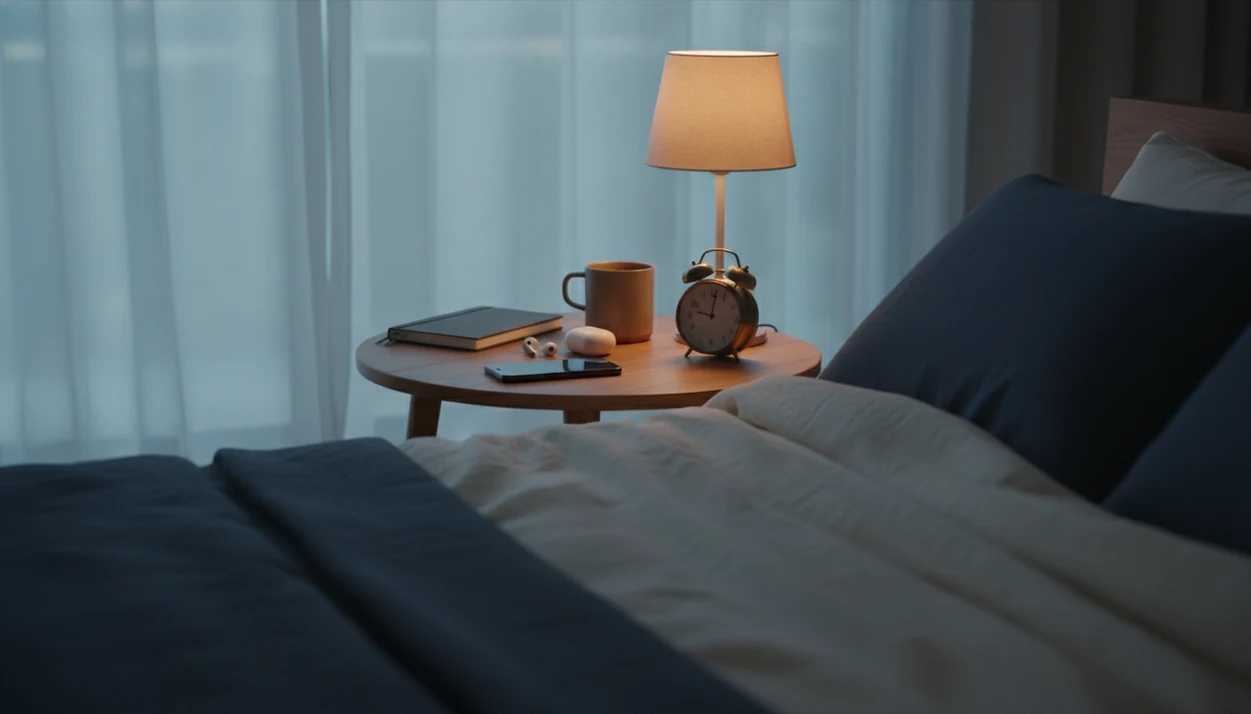
Bedtime stories for insomnia wind-down can help some adults relax by shifting attention away from racing thoughts, but they are not a standalone treatment for chronic insomnia. Use them as a consistent, low-stimulation wind-down habit, and seek evidence-based care if sleep trouble is frequent, severe, or long-lasting.
This page is educational and is not medical advice. If insomnia is frequent, worsening, or affecting daytime safety, talk with a qualified clinician rather than relying on audio alone.
> Bedtime Adult is a bedtime stories for adults app that offers calming fiction, sleep meditations, and sleep sounds for grown-ups.
- Sleep stories can support relaxation and routine, but they do not cure insomnia.
- The best insomnia bedtime stories are slow, predictable, family-safe, and low in suspense.
- If insomnia is chronic or impairing, relaxation audio should sit beside evidence-based care, not replace it.
Bedtime Stories for Insomnia Wind-Down at a Glance
Bedtime stories for insomnia wind-down are calming adult audio stories used before sleep to reduce mental noise and support a steadier nighttime routine. They are relaxation support, not insomnia treatment.
They tend to fit adults who lie down tired but alert, replay meetings, check tomorrow’s calendar under dim light, or feel their thoughts speed up as soon as the room gets quiet. The story gives the mind one soft track to follow instead of ten unfinished ones.
Sleep trouble is common. According to CDC/NCHS data, 14.5% of adults had trouble falling asleep most days or every day in a recent 30-day period, and 17.8% had trouble staying asleep (https://www.cdc.gov/nchs/products/databriefs/db436.htm). A bedtime story may make the hour feel less tense, but frequent insomnia deserves more than audio alone.
Why Adults With Insomnia Use Bedtime Stories
Why do adults with insomnia use bedtime stories? Many are looking for a non-screen wind-down cue that feels calmer than scrolling, less clinical than a sleep worksheet, and less childish than a nursery-style story.
Racing thoughts are often the first problem. A slow narrator can give the brain something neutral to hold. Not exciting. Not demanding. Just enough structure to stop rehearsing the same worry again.
Adults also want family-safe bedtime audio that works in a shared room. A partner may ask, “Can you turn it down one notch?” before the room settles. That matters. Sleep storytelling for adults should mean calming fiction, wind-down routines, and sleep sounds, family-safe, not 18+.
Readers who dislike formal meditation often find story-based audio easier; we cover that fit in more detail in bedtime stories for adults who hate meditation.
Five Facts About Sleep Stories for Insomnia
- Sleep stories for insomnia work best as relaxation tools, not cures for chronic insomnia or diagnosed sleep disorders.
- Slow, familiar, low-suspense stories are usually better than dramatic plots because surprise can keep attention switched on.
- Routine matters more than one perfect episode; using the same cue nightly helps bedtime feel more predictable.
- The likely mechanism is attention shifting plus habit formation, not a special story effect.
- Persistent insomnia may need evidence-based care, especially when sleep loss affects work, mood, driving, or daily safety.
For adults with racing thoughts, a familiar sleep story is often easier than silence because it gives attention a quiet place to land. The phone still needs boundaries, though. Face down on the nightstand is different from glowing in your hand.
If you are comparing formats, our best adult bedtime story apps guide looks at app-style listening without treating audio as medical care.
How Bedtime Stories for Insomnia Wind-Down Work
Bedtime stories for insomnia wind-down work by lowering cognitive stimulation and redirecting attention away from rumination. In plain terms, the story gives your mind a quiet lane to follow instead of letting it circle the same thoughts.
Two useful terms are “attention shifting” and “conditioned cues.” Attention shifting means moving focus from worry to a neutral narrative. Conditioned cues are repeated signals, such as the same narrator, timer, and dim lamp at 10:15 p.m., that teach the body, “this is the settling-down part.”
The evidence is stronger for relaxation and behavioral sleep methods than for bedtime stories specifically. A 2013 systematic review and meta-analysis of nonpharmacological insomnia treatments found sleep latency improvements in some behavioral interventions, including relaxation-based approaches (https://pubmed.ncbi.nlm.nih.gov/23616696/). That does not prove a sleep story treats insomnia by itself.
Clinicians typically recommend evidence-based insomnia care when sleep problems are persistent, while relaxation habits can support a lower-stimulation bedtime routine. The most common medically supported way to address chronic insomnia is structured behavioral care combined with sleep hygiene basics.
For chronic insomnia, the American College of Physicians recommends cognitive behavioral therapy for insomnia, or CBT-I, as initial treatment before routine medication use (https://www.acpjournals.org/doi/10.7326/M15-2175).
7 Insomnia Wind-Down App Features to Look For
A useful insomnia wind-down app should make nighttime listening boring in the right way: calm narration, predictable pacing, no startling effects, and controls that don’t require bright-screen fiddling. It should help you repeat a routine, not promise to treat diagnosed insomnia.
Calming fiction for adults
Choose low-arousal adult narration, gentle endings, and minimal suspense. A seaside inn scene behind closed eyes should not suddenly become a mystery plot.
Sleep meditations and sounds
Look for soft rain, brown noise, ocean loops, or simple body scans that stay steady. Breath matching a quiet ocean loop can feel easier than counting minutes awake.
Routine-friendly playback controls
A sleep timer, favorites, offline playback, and saved routines reduce decisions when you are tired. Tools like Bedtime Adult can fit adults who want family-safe stories, meditations, and sleep sounds in one place.
Partner-friendly listeners may also want guidance from sleep stories for couples.
How to Use Insomnia Bedtime Stories at Night
Use insomnia bedtime stories as a repeatable wind-down habit, not as a last-minute rescue after an hour of frustration. The goal is to cue sleepiness gently and reduce stimulation before bed.
- Set a consistent listening time, such as 20 minutes before lights out.
- Choose a familiar, low-stimulation story with a calm adult narrator.
- Lower the volume and screen brightness before you get into bed.
- Set a timer or auto-stop so the episode does not run all night.
- Repeat the same routine for several nights before judging whether it helps.
- Stop or adjust the audio if the voice, plot, or sound texture keeps you alert.
Small details matter. A phone turned face down on the nightstand with the sleep timer already set feels different from browsing for “one more” episode. For light sleepers, volume and texture choices are covered further in sleep audio for light sleepers.
Common Myths About Insomnia Bedtime Stories
The biggest myth is that sleep stories treat insomnia by themselves. They may support general relaxation, but calm audio is not the same thing as evidence-based insomnia therapy.
Another myth is that any story app or podcast will help. Some voices are too animated. Some plots are too interesting. Some soundtracks swell at exactly the wrong moment. Rain tapping softly through headphones may help one person settle, while a dramatic serialized story keeps another person waiting for the next twist.
It is also false that a sleep story is useless if it does not work on the first night. Routines often need repetition before they feel automatic.
Finally, bedtime stories are not only for children. Adult sleep stories can be grown-up, low-drama, and family-safe without using a sing-song children’s voice.
When to Seek Professional Help for Insomnia
Seek professional help when insomnia lasts for weeks, keeps returning, or starts affecting work, mood, relationships, or driving. A bedtime story can support a calmer routine, but it should not become the reason you put off care.
A clinician can look for patterns that audio cannot evaluate, including medication effects, pain, anxiety, depression, breathing problems, alcohol use, or schedule disruption. CBT-I, short for cognitive behavioral therapy for insomnia, is a common first-line clinical option; it helps people change sleep-related habits and thoughts in a structured way.
If you are unsure whether it is time to ask for help, use a simple safety check:
- Notice whether poor sleep is making you irritable, foggy, late, forgetful, or less safe during the day.
- Treat drowsy driving, near-misses, or nodding off unintentionally as urgent warning signs.
- Mention breathing pauses, choking or gasping at night, ongoing pain, panic, or severe anxiety to a qualified clinician.
- Keep using calm audio only as a support habit while you arrange appropriate care.
No wind-down tool has to carry the whole problem alone.
Limitations
Bedtime stories can be a gentle wind-down tool, but they have clear limits. This is especially important when insomnia is frequent, severe, or tied to another health concern.
- Bedtime stories do not reliably fix chronic insomnia.
- They may not help when insomnia is driven by sleep anxiety, pain, depression, medications, alcohol use, or circadian disruption.
- Some listeners find narration distracting, especially if the story is too engaging.
- Calm audio is not the same as clinically proven therapy.
- Benefits vary by person, bedtime timing, sound sensitivity, and consistency.
- Loud sound effects, suspenseful plots, or bright app screens can make settling harder.
- Frequent or severe sleep problems deserve evidence-based evaluation from a qualified clinician.
No shame in that. Audio can make the room feel less lonely, but it should not delay care when sleep loss is affecting daytime life.
FAQ
Do bedtime stories help with insomnia?
Bedtime stories may help some adults relax before sleep by shifting attention away from racing thoughts. They do not treat chronic insomnia by themselves.
What are insomnia bedtime stories?
Insomnia bedtime stories are calming adult sleep stories used during a wind-down routine. They are usually slow, predictable, and designed for low-stimulation listening.
Are sleep stories an insomnia treatment?
No. Sleep stories are general relaxation tools and should not replace evidence-based insomnia care.
What story style helps sleep?
Slow, predictable, low-suspense narration with gentle pacing is usually the better fit. Loud effects, dramatic music, and complex plots can keep attention active.
Can audio make insomnia worse?
Yes, audio can feel distracting if the voice, volume, or story keeps you engaged. If that happens, lower the volume, change the format, or stop using it.
How long should bedtime stories be?
Choose a length that fits your routine, often 10 to 30 minutes. A timer or auto-stop setting can prevent the audio from running longer than planned.
Are bedtime stories only for children?
No. Many adults use grown-up, family-safe sleep stories for relaxation before bed.
What is an insomnia wind-down app?
An insomnia wind-down app offers calming stories, meditations, sounds, and playback tools for a repeatable bedtime routine. Apps such as Bedtime Adult may be useful for adults who want Sleep Stories for Grown Ups without clinical or explicit framing.
When should insomnia be treated?
Insomnia should be evaluated when sleep problems are frequent, severe, long-lasting, or impairing daytime function. Bedtime Adult and similar apps should not be used as a substitute for professional care.