
Screen-Free Bedtime Audio for a Calmer Night Routine
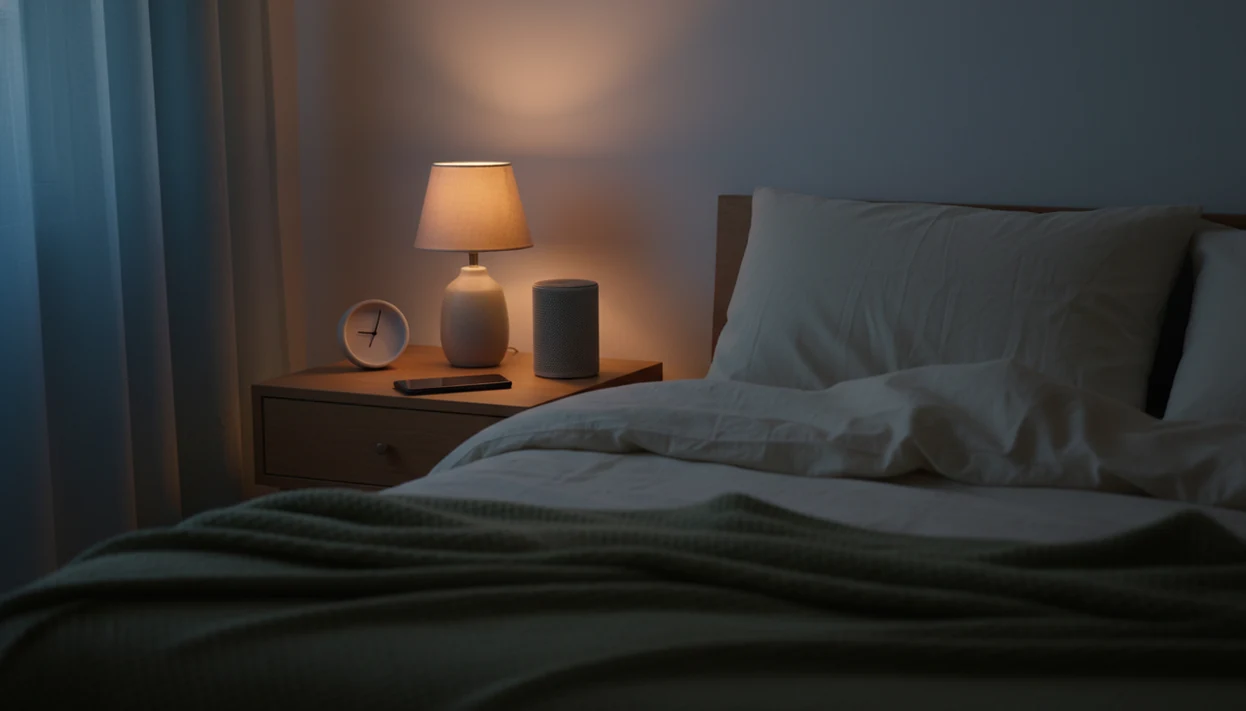
Quick answer: Screen-free bedtime audio helps you fall asleep by replacing late-night scrolling with stories, meditations, or gentle sounds you can hear without looking at a device. The key is to press play once, remove the screen from reach, and choose calm audio that does not pull your brain back into alert mode.
Definition: Screen-free bedtime audio is sound-only bedtime content, such as calming fiction, sleep meditation, or sleep sounds, used without visual screen interaction during the wind-down period.
TL;DR
- Use bedtime audio as a bridge away from scrolling, not as another reason to hold your phone in bed.
- Choose slow, predictable, family-safe audio instead of news, true crime, intense podcasts, or dramatic plots.
- Start playback once, set a timer, lock or move the phone, and repeat the same routine nightly.
What Screen-Free Bedtime Audio Means for Adults
Screen-free bedtime audio means the sound may come from a phone, but the bedtime routine removes looking, tapping, replying, and notification checking. The device becomes a player, not something to browse.
For adults, the format can be family-safe bedtime stories, sleep meditations, body scans, white noise, rain sounds, soft music, or calm ambient tracks. Bedtime Adult is a bedtime stories for adults app that offers calming fiction, sleep meditations, and sleep sounds for grown-ups. The important distinction is tone: grown-up, gentle, and low-drama.
Adult bedtime audio is calming fiction, wind-down routines, and sleep sounds, not 18+ content, medical treatment, or children’s storytime.
A useful test is simple. If the phone is face down on the nightstand with the sleep timer already set, you are closer to screen-free listening than phone use in bed.
Why Sleep Hygiene Audio Beats Nighttime Screen Stimulation
Sleep hygiene audio can beat nighttime screen stimulation because it removes the parts of device use that keep the brain alert: light, interaction, novelty, and notifications. Audio still gives the mind something gentle to follow, but it should not invite another swipe.
Bedtime screen exposure is common. In the National Sleep Foundation's 2011 Sleep in America poll, 90% of respondents reported using an electronic device within one hour of bedtime at least a few nights per week source. Experimental research also found that a light-emitting e-reader before bed reduced evening sleepiness, suppressed melatonin by about 55%, and delayed sleep by over 10 minutes compared with a printed book source.
The American Academy of Sleep Medicine notes that evening bright light can shift the body clock later and suppress melatonin source. Clinicians typically recommend treating screens, caffeine, irregular schedules, and stress as part of the same sleep hygiene picture.
Audio is support, not a cure.
Five Facts About Screen-Free Bedtime Audio
- The main benefit of screen-free bedtime audio is reducing visual and interactive stimulation before sleep.
- Many sleep experts recommend reducing screens 30 to 60 minutes before bed; the American Academy of Sleep Medicine also warns that evening bright light can delay circadian timing and suppress melatonin source.
- Calm, predictable content usually works better than news, true crime, debate shows, or intense storylines.
- To truly listen without screen, setup matters: lock the phone, use a timer, move it away, or play audio through a speaker.
- Audio is a relaxation tool, not a treatment for chronic insomnia, anxiety disorders, sleep apnea, or other sleep problems.
For adults, screen-free listening usually works best when the track is chosen before bed, not while sitting under the blanket searching. If you want a broader format overview, our best sleep sounds and stories app guide compares common listening styles.
How Screen-Free Bedtime Audio Works in the Brain
Screen-free bedtime audio works by turning repeated sound into a wind-down cue. Over time, the same soft narration, rain track, or breathing pattern can become part of a habit loop, meaning the brain starts linking that sound with sleep preparation.
Low-stakes narration, steady soundscapes, and slow breathing cues reduce decision-making. They also limit novelty seeking. In plain terms, you are giving the mind one boring-enough path instead of a dozen open tabs. Passive listening asks less from the nervous system than scrolling, app switching, commenting, or checking who replied.
Predictable audio matters. A cliffhanger, sudden joke, or tense argument can increase attention instead of lowering it. For many adults, a low narrator voice under the blankets works because nothing important needs to be solved before the next sentence.
The most useful bedtime audio is familiar enough to stop decision-making while still giving the mind a gentle place to rest.
Before You Start a Phone Bedtime Audio Routine
Before using phone bedtime audio, decide on one source before getting into bed. The worst time to compare five apps is after the bedside lamp is dimmed at 10:15 p.m.
Set Do Not Disturb, lower screen brightness, choose a sleep timer, and download the track if Wi-Fi is unreliable. A phone can sit across the room, but a smart speaker, small bedside speaker, or sleep headphones may feel easier. Travelers often do well with downloaded audio and a phone propped on a travel adapter, especially when rain sound masks hallway elevator chimes.
Shared bedrooms need extra care. Keep the volume low, try one-ear listening, use a pillow speaker, or choose sounds both partners tolerate. If a partner asks, “Can you turn it down one notch?” take that as useful feedback, not failure.
Adults who find words engaging may prefer brown noise, rain, ocean, or soft music.
How to Use Screen-Free Bedtime Audio Tonight
Use this short setup when you want to listen without screen tonight. Do it before you are tired enough to make poor choices.
- Choose one calm track before the wind-down window begins, such as a slow story, body scan, rain sound, or soft music.
- Set Do Not Disturb, a sleep timer, and a low volume that fades into the room.
- Start playback once and lock the phone.
- Move or cover the screen so it is not visible or reachable from bed.
- Breathe slowly, listen passively, and avoid changing tracks unless the audio is clearly unsuitable.
- Repeat the same routine for several nights before judging whether it helps.
For busy adults, a short repeatable audio routine is often easier than a full evening overhaul because it changes one behavior: what happens after the phone should stop being interactive.
Best Audio Types to Listen Without Screen
The best audio type depends on whether words calm you or wake you up. Choose the format that lowers effort, not the one with the most features.
| Audio type | Good fit | Watch out for |
|---|---|---|
| Bedtime stories | Adults who like soft narration and gentle imagery | Suspense, conflict, cliffhangers |
| Sleep meditations | People who want breathing structure | Too much instruction can feel busy |
| Body scans | People who relax through physical cues | May feel distracting during pain |
| Sleep sounds | People who find words engaging | Loops with obvious gaps |
| Soft music | People who want nonverbal calm | Lyrics can pull attention |
| Podcasts | Familiar, low-energy shows | News, comedy, debate, true crime |
Adult bedtime stories should be slow, gentle, low-conflict, and family-safe. Meditations and body scans can help when breathing or muscle relaxation needs structure. Sounds or music may work better when language feels too mentally active. For texture choices, the white noise vs pink noise comparison can help narrow the sound.
Common Phone Bedtime Audio Mistakes
The most common mistake is browsing for the perfect track after you are already in bed. That turns a wind-down cue into another search session.
Other mistakes are small but familiar: checking notifications after the audio starts, choosing suspenseful or angry content, using earbuds that wake you later, setting the volume too high, or letting autoplay drift into unrelated shows. A sleep timer glowing on the screen can be useful, but only if you do not keep picking it up to inspect the countdown.
The pocket check is real.
A simple repeatable ritual is better than nightly app-hopping because it gives the brain fewer choices. If spoken stories feel right but plain rain feels too empty, sleep stories with rain sounds can sit between narration and soundscape.
How to Know Your Sleep Hygiene Audio Is Working
How do you know your sleep hygiene audio is working? Track whether it reduces scrolling, lowers perceived alertness, and makes settling down feel easier over one week.
Use simple signals, not a complicated sleep spreadsheet. Note time spent scrolling, perceived calmness, time to settle, wake-ups, and morning grogginess. A systematic review of 67 studies found that screen time was adversely associated with sleep outcomes in 90% of included studies, including shorter duration and delayed sleep timing source. Per the CDC, about 35% of U.S. adults report sleeping less than seven hours per night source.
Success may show up first as less scrolling and a calmer routine, even before total sleep duration changes. That still counts. If stories make you follow every plot point, switch to rain, brown noise, distant train ambience, or another nonverbal texture.
Screen-free bedtime audio usually works best when it reduces nighttime decisions, while silence fits people who already settle easily without stimulation.
Limitations
Screen-free bedtime audio has real limits. It can support general relaxation, but it should not be treated as medical care.
- Audio is not a cure for chronic insomnia, anxiety disorders, sleep apnea, restless legs, or other medical sleep problems.
- If you keep checking the phone, changing tracks, or reading the screen, the routine is no longer truly screen-free.
- Some adults find narration too engaging and may sleep better with soundscapes or silence.
- External speakers may not work in shared bedrooms, apartments with thin walls, or partner-sensitive sleep environments.
- Earbuds and sleep headphones can be uncomfortable or unsafe for some sleepers if worn all night.
- Overdependence on one track can become a crutch, so occasionally test shorter or simpler routines.
- Evidence specific to screen-free bedtime audio for adults is limited; much of the rationale comes from broader screen, light, relaxation, and sleep hygiene research.
Adult sleep-audio apps can be useful, but the habit matters more than the logo.
FAQ
Is bedtime audio really screen-free if it plays from my phone?
Yes, if you start playback once, lock the phone, and stop looking at or interacting with the screen. If you keep browsing or checking notifications, it is still phone use in bed.
Can I use my phone for bedtime audio without scrolling?
Yes. Choose the track before bed, enable Do Not Disturb, set a sleep timer, lock the phone, and place it out of reach.
What type of audio is best for falling asleep?
Calm fiction, guided relaxation, body scans, white noise, rain, soft music, and other predictable low-stimulation audio are good choices. Bedtime Adult is one option for adult-focused stories and sounds.
Are podcasts bad to listen to before bed?
Podcasts are not always bad, but stimulating, funny, suspenseful, or information-heavy shows can keep the brain alert. Familiar low-energy episodes are usually safer than news, debate, or true crime.
Should I use earbuds for sleep audio?
Earbuds can work for solo listening, but they may become uncomfortable or too loud overnight. Speakers, smart speakers, pillow speakers, or sleep headphones may fit better depending on comfort and partner needs.
How loud should sleep audio be at night?
Use a low, comfortable volume that is easy to ignore. It should not mask important household sounds, alarms, or safety cues.
Can bedtime audio fix insomnia?
Bedtime audio may support relaxation, but it cannot replace medical care or behavioral treatment for chronic insomnia or sleep disorders. Persistent sleep problems should be discussed with a clinician.
When should I start listening to bedtime audio?
Start during the 30 to 60 minute wind-down window before your desired sleep time. Apps such as Bedtime Adult can fit that window when the track is chosen before getting into bed.