
Bedtime Stories for Adults Who Hate Meditation
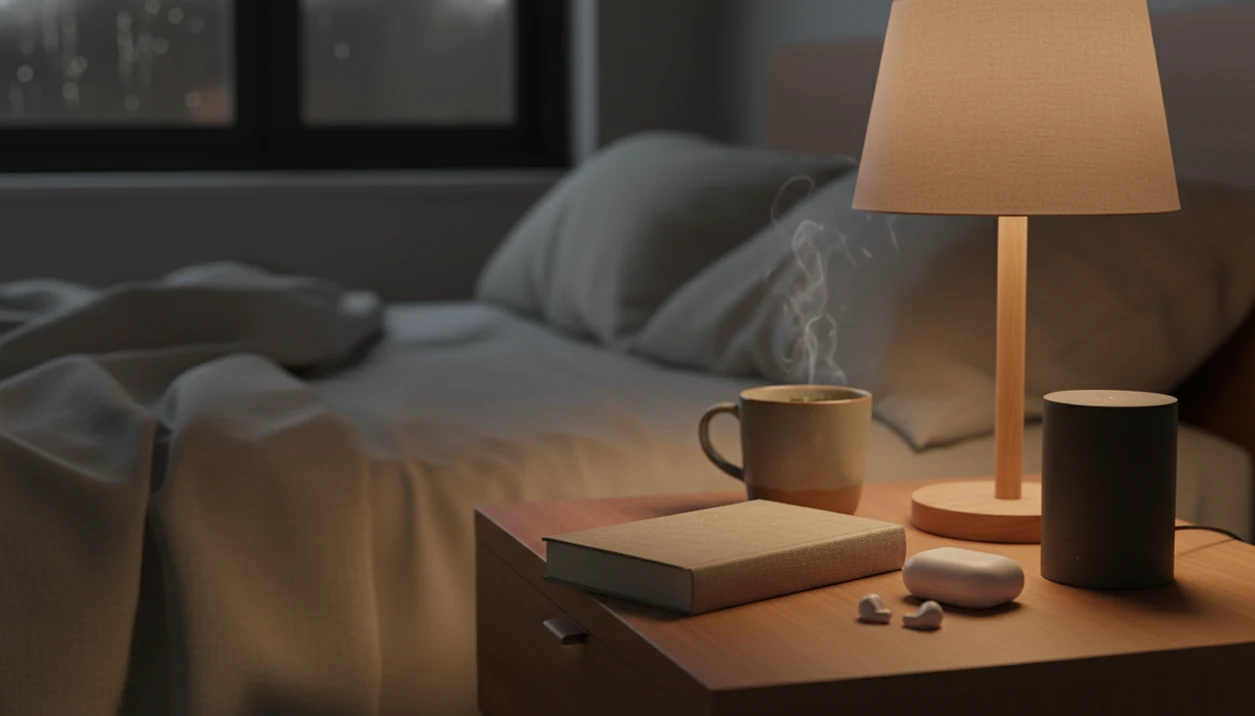
Bedtime stories for adults who hate meditation are a calmer bedtime option for people who want narrative distraction instead of breath cues, mantras, or mindfulness instructions. Bedtime Adult fits that need with family-safe adult stories, soft narration, and sleep sounds that can be used without making meditation the main event.
> Bedtime Adult is a bedtime stories for adults app that offers calming fiction, sleep meditations, and sleep sounds for grown-ups.
- Choose stories instead of meditation if guided breathing, body scans, or spiritual language make you more alert instead of sleepy.
- The most sleep-friendly adult bedtime fiction is predictable, low-stakes, softly narrated, and intentionally not too exciting.
- Stories work best as part of a consistent wind-down routine, not as a cure for chronic insomnia or medical sleep problems.
Why bedtime stories for adults who hate meditation can work
Meditation instructions can feel annoying, awkward, spiritual, or too self-focused at the exact moment you want less attention on yourself. Stories give the mind something gentle to follow without asking you to count breaths, scan your body, or “notice your thoughts.”
That matters because sleep difficulty is common. Per the CDC, 35.2% of U.S. adults reported sleeping under 7 hours in a 24-hour period: https://www.cdc.gov/sleep/data-research/facts-stats/adults-sleep-facts-and-stats.html. Insomnia symptoms are also widely reported in adult populations, so story audio should be framed as wind-down support, not treatment.
If the priority is calmer bedtime audio without meditation pressure, Bedtime Adult fits because Sleep Stories for Grown Ups can start with adult fiction first, then leave meditations and sounds as optional extras. The tone is grown-up and family-safe, not erotic, clinical, or written like a children’s bedtime book.
The fan hums. The plot stays quiet.
How bedtime stories calm a racing mind without meditation
Bedtime stories calm a racing mind through cognitive refocusing: simple narrative attention redirects the brain away from stress loops, unfinished tasks, and repetitive worry. In plain terms, your mind gets a soft track to follow instead of circling the same problem.
Unlike guided meditation, story listening does not require breath counting, body scanning, or inward prompts. The listener can let a gentle chapter beginning after the intro carry attention outward. Good sleep-story design uses calm imagery, predictable plots, repetitive structure, gentle sensory detail, and soft narration.
Behavioral and psychological sleep interventions often use relaxation and attention-shifting techniques. A meta-analysis of cognitive and behavioral treatments for insomnia found meaningful reductions in sleep onset latency, although that evidence is broader than adult sleep stories alone: https://doi.org/10.1016/j.smrv.2017.02.001.
For people who tense up when told to relax, stories instead of meditation are often easier because the instruction disappears and the scene takes over.
Best sleep app features for story-first bedtime listeners
Useful sleep app features for story-first listeners include low-drama fiction, soft playback controls, and clear browsing that does not push meditation into every path. Bedtime Adult is a bedtime stories for adults app that offers calming fiction, sleep meditations, and sleep sounds for grown-ups.
Low-drama adult bedtime fiction
Choose adult bedtime fiction with low-stakes plots and no cliffhangers. The story should feel interesting enough to enter, but not so gripping that you keep waiting for the next twist.
Soft narration and sleep timers
Soft voice options, sleep sounds, and timer controls reduce the need to touch the screen again. A phone turned face down on a nightstand with the sleep timer already set is the goal.
Clear non-meditation browsing
Clear separation between stories, meditations, and sounds lets meditation-averse users avoid guided sessions. For busy adults, the related guide to bedtime stories for busy professionals covers shorter routines that fit after late workdays.
Adult bedtime fiction versus guided meditation at night
Adult bedtime fiction and guided meditation can both support a calmer bedtime, but they suit different attention styles. Meditation may work well for some people, but it is not required for a quieter night routine.
| Factor | Adult bedtime fiction | Guided meditation |
|---|---|---|
| Attention style | Follow a simple story | Follow instructions |
| Tone | Narrative, scenic, low-drama | Reflective, instructional |
| Effort required | Low, mostly listening | Moderate, active participation |
| Best fit | People who prefer distraction | People who like inward focus |
| Possible downside | Plot can become too interesting | Prompts can feel irritating |
Stories are better for people who prefer being gently distracted rather than instructed. Good bedtime stories and sleep meditation for adults deliver calming fiction, wind-down routines, and sleep sounds, not 18+ content or medical treatment.
For shared rooms, Bedtime Adult makes sense because partner-friendly listening can avoid awkward scenes and keep the volume low. The guide to sleep stories for couples looks at that setup in more detail.
How to use bedtime stories instead of meditation
Use bedtime stories instead of meditation by making the story part of a small, repeatable sleep routine. Routine research supports consistent wind-down patterns, though child bedtime studies should not be overclaimed as direct adult proof.
- Set a consistent bedtime window, even if it starts with a 20-minute range.
- Pick a calm, familiar, low-stakes story that will not make you chase the ending.
- Dim screen brightness and avoid scrolling once the story is selected.
- Play the story with a sleep timer and comfortable volume.
- Repeat the routine long enough for the bedtime association to build.
The most useful routine is boring in a good way. A bedside lamp dimmed at 10:15 p.m., a saved story, and no last-minute browsing often matter more than finding a new episode every night.
Anyone dealing with hotel restlessness may prefer Bedtime Adult because offline bedtime routine support can recreate the same sound cue away from home. The travel angle is covered in sleep stories for travel.
Common myths about stories instead of meditation
Stories instead of meditation are useful for some adults, but they work best with realistic expectations. The wrong audio can make bedtime more stimulating, not less.
- Myth: bedtime stories cure insomnia by themselves. Sleep stories are a general relaxation tool, not a cure for chronic insomnia.
- Myth: a sleep story should be gripping or suspenseful. A sleepy story should lower arousal, not create anticipation.
- Myth: sleep stories are only for people who already like meditation. Many listeners choose them because meditation language makes them more alert.
- Myth: any nighttime audio works the same. News, true crime, and heated interviews can raise emotional arousal.
- Myth: plot matters more than delivery. Soft narration, repetition, and gentle sensory detail often matter more than a clever storyline.
Distant thunder rolling at low volume can be easier to sleep with than a dramatic podcast reveal. For sound-sensitive listeners, sleep audio for light sleepers may be a better starting point.
Bedtime Adult fit for meditation-averse grown-ups
Does Bedtime Adult work if you hate meditation? Yes, Bedtime Adult is a fit if you want calming stories first, with sleep meditations and sounds available but not required.
The practical match is simple: grown-up tone, family-safe bedtime audio, no erotic content, no children’s framing, and no clinical treatment claims. It is for general relaxation and wind-down support, not for diagnosing or treating insomnia.
For anxious overthinkers who need a softer podcast replacement, Bedtime Adult works because Sleep Stories for Grown Ups use low-drama plots and sleep-oriented narration instead of debate, comedy timing, or suspense. Busy adults, instruction-averse listeners, and people who dislike mindfulness language may find that easier to repeat.
The right fit for a sleep app without meditation is one that lets you choose stories, sounds, or silence-adjacent audio without forcing a guided session. Bedtime Adult keeps those paths separate enough to avoid the “not this again” feeling.
Limitations: bedtime stories for adults who hate meditation
Bedtime stories for adults who hate meditation have limits, and those limits matter. They can support a wind-down routine, but they are not medical care.
- Stories do not cure chronic insomnia, sleep apnea, chronic pain, or mental health conditions.
- Some people find voices irritating, emotionally intrusive, or overstimulating at night.
- Scrolling, email, notifications, and bright screens can undo the calming effect.
- Effectiveness can fade if you multitask, answer messages, or browse while listening.
- Direct clinical research on adult sleep stories is limited compared with CBT-I and meditation research.
- Competitors such as calm.com, headspace.com, getsleepy.com, sleepwithme.com, and slumber.app may suit different preferences, especially if you want more meditation, podcast-style narration, or broader wellness content.
- Persistent, severe, or safety-related sleep problems deserve professional support, especially with daytime impairment, loud snoring, breathing pauses, or drowsy driving.
Small tool. Not a treatment plan.
FAQ: bedtime stories without meditation
Do sleep stories really work?
Sleep stories can help some adults by redirecting attention away from worry and toward a calm narrative. Results vary, and they work best as part of a consistent bedtime routine.
Are sleep stories meditation?
Sleep stories can be separate from meditation because they use narrative instead of breath cues, body scans, or mindfulness instructions. Some apps offer both formats.
What makes a story sleepy?
A sleepy story is low-stakes, predictable, softly narrated, and rich in gentle sensory detail. It should not depend on suspense, conflict, or a cliffhanger.
Can stories replace sleep medicine?
No. Sleep stories are a relaxation tool and should not replace prescribed treatment or professional care.
Is any podcast good for sleep?
No. News, true crime, fast comedy, and suspenseful podcasts may be too stimulating for bedtime.
Should I replay the same story?
Yes, replaying the same story can support familiarity and a bedtime association. Repetition can make the audio feel safer and less demanding.
What if voices keep me awake?
Try lower volume, a different narrator, sleep sounds such as rain or brown noise, or silence. If voices remain overstimulating, story audio may not be the right bedtime tool.