
30-Minute Sleep Story For Adults For A Slower Wind-Down
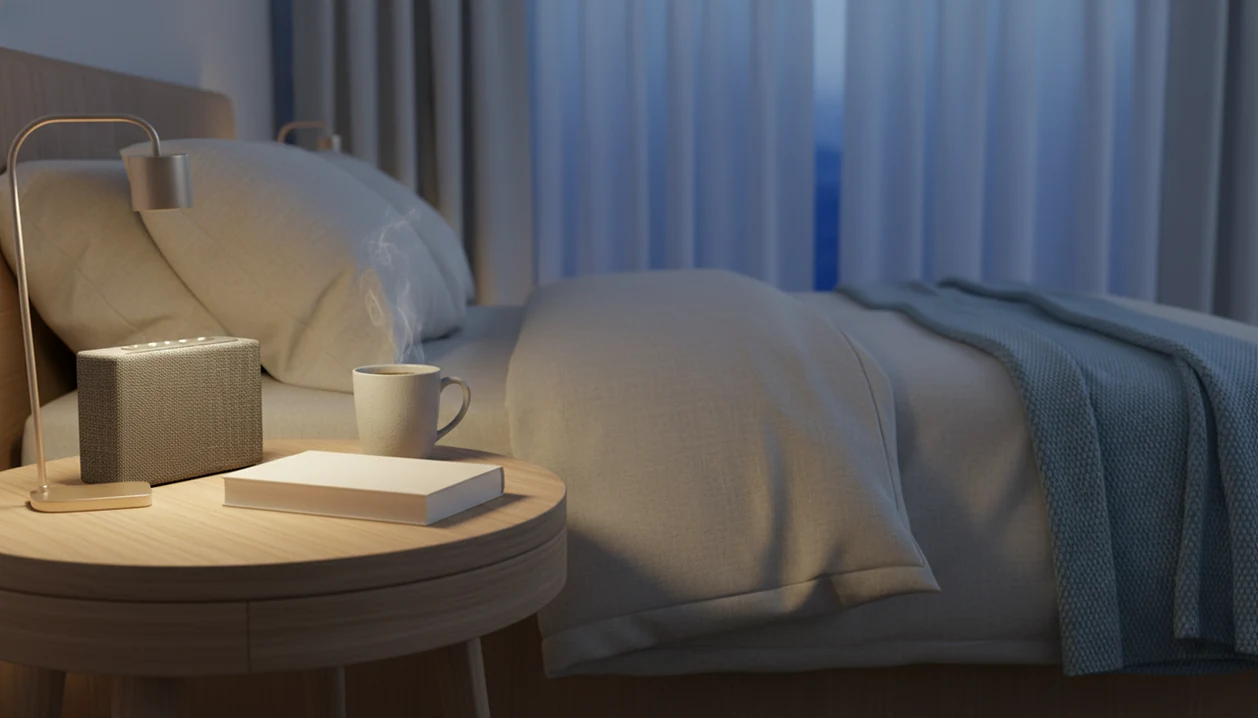
A 30-minute sleep story for adults works best as a calm, screen-free wind-down that gives your mind enough time to slow down before sleep. The length is useful because it is long enough to replace scrolling or rumination, but not so long that the story becomes the main event.
Definition: A 30-minute sleep story for adults is a slow, low-stimulation spoken bedtime story designed to help grown-ups relax as part of an evening routine.
TL;DR
- Thirty minutes is a practical sleep story length for adults who need a slower transition from the day.
- The best tracks use gentle narration, simple plots, soft ambience, and no sudden twists.
- A sleep story can support a routine, but it is not a treatment for chronic insomnia or medical sleep disorders.
What a 30-minute sleep story for adults means
A 30-minute sleep story for adults is calm narration for a grown-up listener, usually lasting about half an hour, with a slow plot and low emotional intensity. It is built for wind-down, not for suspense, therapy, or a satisfying final reveal.
Adult sleep stories are not children’s stories with longer words. The pacing, themes, and voice should feel mature, quiet, and family-safe. Think a train moving through misty countryside, not a fairy tale lesson or a mystery clue.
Good bedtime stories and sleep meditation for adults deliver calming fiction, wind-down routines, and sleep sounds, family-safe, not 18+ content. Tools like Bedtime Adult fit this lane with calming fiction, sleep meditations, and sleep sounds for grown-ups.
The point is simple: make bedtime less mentally loud.
Why a 30-minute bedtime story fits adult sleep routines
Why choose a 30-minute bedtime story? Thirty minutes gives many adults enough time to move from work mode into rest mode without turning the story into entertainment.
It sits in a useful middle range. A ten-minute track can feel too brief when your brain is still sorting tomorrow’s meeting, dinner cleanup, and the last calendar check under dim light. A much longer track may invite active listening. A 30-minute bedtime story can replace the scroll, the mental planning loop, or the habit of checking one more message.
For adults with a busy mind, a 30-minute bedtime story is often easier than silence because it gives attention a quiet place to land. The American Academy of Sleep Medicine recommends that adults get at least 7 hours of sleep per night (https://aasm.org/resources/pdf/sleepdurationconsensus.pdf), and the CDC reports that about 1 in 3 U.S. adults does not get enough sleep (https://www.cdc.gov/sleep/data-research/facts-stats/adults-sleep-facts-and-stats.html).
That context matters. A story is not the whole sleep plan, but it can protect the first half hour of it.
Five facts adults should know about long sleep stories
- Slow beats dramatic. A long sleep story for adults should be low-stimulation, with gentle narration and no scene that makes you wonder what happens next.
- Routine matters. Sleep stories usually work best when they happen at the same point in a repeatable bedtime routine.
- Sound can soften the room. Narration paired with soft rain, brown noise, or distant train ambience can create a peaceful listening environment.
- Length changes the job. Thirty minutes gives transition time, which is helpful when your body is in bed but your attention is still at your desk.
- Surprises work against sleep. Adult sleep stories should avoid sudden twists, loud music, arguments, and high-emotion plots.
A useful track feels pleasant enough to start, then easy to lose. If you want a broader overview of formats, our guide to sleep stories for adults covers shorter and longer options too.
How 30-minute sleep stories work on a busy mind
A 30-minute sleep story works through attention substitution, routine cueing, and low cognitive load. In plain language, it gives your mind something neutral to follow while your body gets the repeated signal that the day is ending.
Attention substitution matters most on noisy nights. Instead of replaying a tense email, you follow a quiet walk through a seaside village or a low-drama story with no plot twist jolting the room. Routine cueing comes from repetition. When the same kind of audio starts after the lamp dims, the pattern can become a wind-down cue.
Low cognitive load is the other piece. A simple setting, predictable rhythm, and gentle voice ask very little from the listener. No puzzle to solve. No emotional cliff.
The evidence is stronger for relaxation routines than for any exact sleep story length. The NIH has reported that about 12 million U.S. adults use meditation (https://www.nccih.nih.gov/health/meditation-and-mindfulness-effectiveness-and-safety), which gives useful context for relaxation-based practices often paired with sleep audio.
How to use a 30-minute sleep story for adults tonight
Use a 30-minute sleep story as a small, repeatable routine, not a test you have to pass. Set it up before you feel desperate for sleep.
- Set a consistent start time, ideally 30 minutes before your target lights-out window.
- Dim the room and reduce interruptions, including alerts, bright screens, and smartwatch taps.
- Choose one calm story with soft narration, not a menu of six possible tracks.
- Start playback, then lock the screen or place the phone face-down on the nightstand.
- Let the story continue at low volume without restarting it if your mind wanders.
- Repeat the same basic routine for several nights before judging whether it fits.
Don’t chase sleep. That pressure can wake you up more. The useful move is to lower the stakes, lower the light, and let the room get boring in a good way.
Before You Start a 30-Minute Sleep Story
Before you start a 30-minute sleep story, make the room and the choice boring first. The track works better when it supports an already calmer setup, rather than fighting caffeine, bright light, alerts, or last-minute browsing.
- Check the basics before bed: late caffeine, room temperature, notification settings, and how much bright light is still hitting your eyes. A story can soften the landing, but it cannot do all the work.
- Choose the story earlier in the evening, not while you are already in bed. Scrolling through options can become its own little wake-up ritual.
- Set the volume low enough that you can stop actively listening. If you share the room, make it partner-friendly from the start rather than adjusting after someone is already annoyed.
- Use the track as relaxation support, not a forced sleep test. You are not trying to prove you can fall asleep in exactly 30 minutes. You are giving your attention a quiet place to rest while the night gets less interesting.
Step 1: Choose the right sleep story length
The right sleep story length depends on how much transition time you need. Thirty minutes is ideal when your mind is still busy, you want to replace scrolling, or you need a longer runway into rest.
| Story length | Best fit | Watch out for |
|---|---|---|
| 10 minutes | Very tired listeners who only need a quick cue | May end before the mind settles |
| 20 minutes | Light wind-down after a normal evening | Can feel slightly short on stressful nights |
| 30 minutes | Busy mind, longer routine, screen replacement | Needs a story that stays easy to ignore |
| 45+ minutes | People who like extended background audio | Longer plots can become too interesting |
Longer is not automatically better. If the narrator builds suspense or the setting gets dramatic, your brain may stay with the story instead of letting go. Test the same length for several nights before switching formats.
Step 2: Pick a long sleep story for adults that is easy to ignore
A good long sleep story for adults is pleasant enough to follow, but simple enough to lose. That sounds odd until you notice how easily a clever mystery keeps the mind awake.
- Gentle narration: Choose a calm adult narrator, not a sing-song children’s story voice.
- Soft pacing: Look for long pauses, steady phrasing, and no rushed scene changes.
- Familiar settings: Gardens, trains, quiet hotels, libraries, and shorelines work better than danger or conflict.
- Low-stakes scenes: Avoid mystery, romance drama, cliffhangers, loud music, and emotionally intense topics.
Family-safe adult content should feel grown-up without becoming erotic, clinical, or childish. Bedtime Adult is one source of calming fiction, sleep meditations, and sleep sounds for grown-ups, including Sleep Stories for Grown Ups designed for quiet nighttime listening. For listeners who want that clear boundary, non-erotic bedtime stories for adults is the safer category to explore.
Easy to leave behind. That is the goal.
Step 3: Build a screen-free 30-minute bedtime story routine
Begin the routine before you feel wired and frustrated. A 30-minute story works better as a planned landing strip than as a last-minute rescue attempt.
Start with sleep hygiene basics: dim lights, a comfortable room temperature, reduced notifications, and no late-night scrolling. Put the device where you won’t keep touching it. If you share the room, lower the volume early, before a partner has to ask, “Can you turn it down one notch?”
Consistent bedtime habits matter more than finding one perfect single story. The CDC reported in 2023 that 17.5% of U.S. adults had trouble falling asleep on most days or every day in the past month, and 14.5% had trouble staying asleep that often (https://www.cdc.gov/nchs/products/databriefs/db499.htm). That does not mean a story cures those problems. It means many adults need practical, repeatable ways to make bedtime less stimulating.
For more routine-focused examples, our guide to bedtime stories for adults to fall asleep goes deeper.
Common mistakes with 30-minute sleep story tracks
Most problems come from making the track too interesting or the setup too bright. A sleep story should reduce stimulation, not add a new show to follow.
Common mistakes include choosing stories with suspense, romance drama, big plot turns, or a narrator who performs every line like theater. Listening too loudly can also keep the brain alert. So can leaving the screen glowing while the story plays.
Another mistake is switching tracks repeatedly. One night it is rain over a cottage roof, the next it is a space voyage, then a folklore episode. The search becomes the stimulation. Pick one calm track and let the routine settle.
Expecting instant sleep every night also backfires. Sleep is affected by caffeine timing, irregular schedules, stressful bedtime habits, and light exposure. A story can help the transition, but it cannot erase the whole day.
Limitations
A 30-minute sleep story can support general relaxation, but it has clear limits. It should not be treated as medical care or a guaranteed sleep solution.
- A sleep story is not a treatment for insomnia, sleep apnea, restless legs, or other medical sleep disorders.
- Results vary widely; one person may relax quickly, while another barely notices a change.
- A voice, plot, or soundscape that is too engaging can delay sleep.
- Thirty minutes is not universally better than 10, 20, or 45 minutes.
- Sleep stories do not replace regular sleep timing, reduced late caffeine, lower light, or a calmer evening schedule.
- If anxiety, pain, breathing issues, or frequent waking persist, a qualified health professional is the right next step.
- Partner-friendly listening may require lower volume, a speaker position change, or headphones.
Clinicians typically recommend addressing persistent sleep problems with evidence-based evaluation and sleep hygiene basics, not relying on one audio habit alone.
FAQ
Is 30 minutes a good length for a sleep story?
Yes, 30 minutes can be a helpful wind-down length for many adults because it gives the mind time to settle. It is not universally best, and some people do better with shorter or longer tracks.
What is a sleep story for adults?
A sleep story for adults is calm spoken audio designed to support relaxation before sleep. It usually uses soft narration, simple scenes, and low-drama pacing.
Are adult sleep stories different from kids’ bedtime stories?
Yes, adult sleep stories use grown-up pacing, settings, and tone without becoming children’s content. They should also remain family-safe and non-erotic.
Can sleep stories cure insomnia?
No, sleep stories are not a cure or treatment for chronic insomnia. Persistent sleep problems should be discussed with a qualified health professional.
Should sleep stories have music or background sounds?
Soft background sound can help some listeners feel settled. It should stay gentle, steady, and low-volume.
What volume is best for a sleep story?
Use a low, comfortable volume that does not require active listening. If you share a room, set it low enough that it does not disturb your partner.
Can I replay the same sleep story every night?
Yes, replaying the same story can strengthen a familiar bedtime cue. Repeatedly restarting or searching for new tracks can become stimulating.