
30-Minute Bedtime Routine After Work for Adults
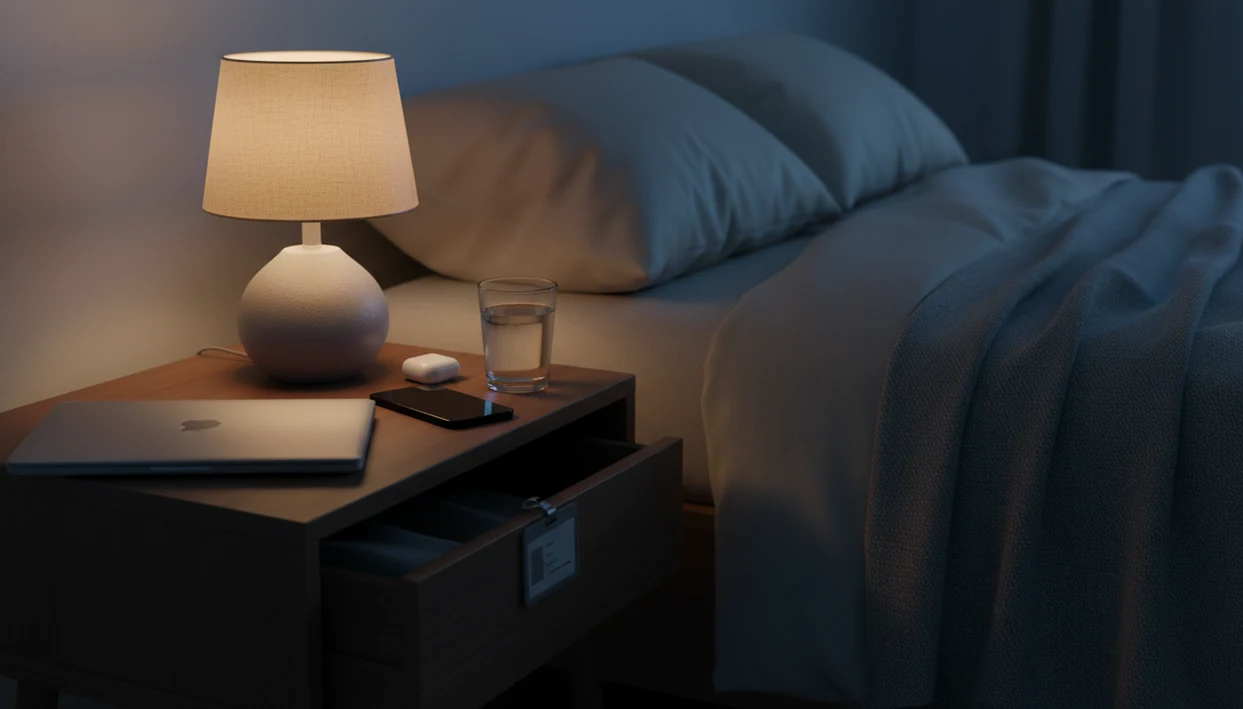
A 30-minute bedtime routine after work works best as a repeatable “off switch”: stop work inputs, dim your environment, release tension, and switch to calm audio before lights out. Keep it simple enough to repeat on busy weeknights, because consistency matters more than a perfect routine.
> Definition: A 30-minute bedtime routine after work is a short post-work wind-down ritual that helps adults move from screen-heavy, task-focused alertness into calmer sleep cues.
TL;DR
- Use the same 30-minute sequence most nights: close work, lower stimulation, relax the body, and play calming audio.
- Avoid work email, social media, bright screens, alcohol-as-sedation, and intense late-night problem solving during the routine.
- Pair the routine with basic sleep hygiene: regular bedtime, cool dark room, limited late caffeine, and a realistic schedule.
30-Minute Bedtime Routine After Work at a Glance
A practical 30-minute routine starts with work shutdown and ends with calm audio, not another round of decisions. Use 0-5 minutes to park tomorrow’s tasks, 5-10 minutes to reset the room, 10-15 minutes for hygiene, 15-22 minutes for stretching and breathing, and 22-30 minutes for bedtime audio.
That is enough structure for most busy professionals without turning bedtime into a second job. At 10:15 p.m., a dim bedside lamp and a phone placed face down can do more than an elaborate checklist.
Tools like Bedtime Adult can fit the final audio slot with family-safe calming fiction, sleep meditations, and sleep sounds for adults. The point is repetition, not performance.
Why an After Work Wind Down Matters for Adult Sleep
An after work wind down matters because the workday often ends on paper before the nervous system gets the message. Notifications, task switching, bright screens, and unresolved decisions can keep the brain in alert mode long after the laptop closes.
Five useful facts:
- The CDC reported that 35.2% of U.S. adults slept fewer than 7 hours in a 24-hour period: https://www.cdc.gov/sleep/data-research/facts-stats/adults-sleep-facts-and-stats.html
- Work stress can carry into bedtime as planning, replaying conversations, or checking one more message.
- Bright screens and fast content can delay the body’s shift toward lower evening arousal.
- A repeated routine acts as a behavioral cue: the workday is over, and sleep preparation has started.
- The most useful evening sleep routine is often the one a tired adult can repeat four or five nights in a row.
Slack notifications silenced before bed feel small. They are not small at 11:07 p.m.
How a Busy Professional Bedtime Routine Works
A busy professional bedtime routine works by pairing repeated sleep cues with lower cognitive arousal, so the brain learns what comes next. In plain terms, the same dim lights, quiet room, hygiene steps, breathwork, and calm audio become a predictable runway toward sleep.
The technical idea is conditioning. Repeated cues can become associated with a state or behavior. Fewer alerts and fewer choices also reduce cognitive arousal, which is the mental “open tabs” feeling that keeps many adults awake.
Relaxation routines, mindfulness-based interventions, and soothing bedtime audio have evidence behind them, but no study proves one universal 30-minute formula for everyone. Clinicians typically recommend cognitive behavioral therapy for insomnia for chronic insomnia, while routine-based relaxation can support general sleep hygiene for many adults. The American College of Physicians recommends cognitive behavioral therapy for insomnia as first-line treatment for chronic insomnia in adults: https://www.acpjournals.org/doi/10.7326/M15-2175
For busy adults, a repeated wind-down cue is often easier than willpower because it removes decisions at the exact time decision fatigue is high.
Before You Start an Evening Sleep Routine After Work
Start by choosing a target lights-out time, then count back 30 minutes. If lights out is 10:45 p.m., the routine begins at 10:15 p.m., even if the laundry is not folded.
Prepare the bedroom before you are tired. Aim for a cool, dark, quiet room, or use steady sleep sounds if traffic, neighbors, or hallway noise keep breaking the quiet. Put work devices on charge outside the bed when possible, especially if one email tends to become six.
Choose audio-only content before the routine begins. That prevents the half-asleep scroll through trailers, comments, and recommendations.
Shift workers, parents, on-call staff, and people in shared rooms may need a looser version. A bedtime routine timeline can help if your evening changes by the day.
Step 1: Close the Workday Before Your After Work Wind Down
“How do I stop thinking about work before bed?” Start by giving unfinished work a place to land. Spend five minutes writing tomorrow’s top three tasks, or park loose thoughts in a note you will not reopen tonight.
Then close the laptop, silence work notifications, and keep email out of bed. A repeated phrase can help: “Work is parked.” So can a repeated action, like placing the notebook beside the charger and walking away.
The transition gap matters. If you commute, use the walk from the train as your first exhale. If you work from home, a shower, short walk, or one low-drama audio track can mark the shift. Not a full reset. Just a bridge.
For adults who only have a shorter window, a 10-minute bedtime routine for adults can keep the same shutdown pattern.
Step 2: Lower Screens and Light in the Bedtime Routine
Lowering screens and light tells the room, and your brain, that the day is narrowing. Dim overhead lights, switch to a lamp, and use warmer lighting during the first half of the routine.
Stop social media, news, work messages, and video content during this window. They may feel relaxing, but they keep feeding novelty and reaction. Being in bed while scrolling is not the same as winding down.
If you use your phone for audio, start the track, set the timer, and turn the screen face down on the nightstand. A sleep timer glowing on the screen is fine for a moment. Browsing “just until the story starts” is where the routine usually breaks.
Bedtime stories and sleep meditation for adults should deliver calming fiction, wind-down routines, and sleep sounds, family-safe, not 18+.
Step 3: Use Body Cues in a Busy Professional Bedtime Routine
Body cues work because they move the routine out of your head. A warm shower, face washing, pajamas, tooth brushing, or two minutes of light tidying can become the body’s version of clocking out.
Keep movement gentle. Choose neck rolls, shoulder drops, calf stretches, or a slow forward fold instead of a late workout. The goal is to release the workday, not hit a new training target.
Simple breathing helps because it gives attention somewhere boring and steady to rest. Try inhaling for four counts and exhaling for six, or scan from jaw to shoulders to hands to legs.
Some nights, that is enough.
If racing thoughts are the main issue, a dedicated night anxiety wind-down may be more useful than adding more steps.
Step 4: Play Calming Audio for the Final 8 Minutes
Use the final eight minutes for audio that lowers stimulation: bedtime stories for adults, sleep meditations, body scans, brown noise, rain, or ocean sounds. Avoid exciting podcasts, true crime, breaking news, and video because they add plot, suspense, or light.
One randomized trial of adults with sleep complaints found that listening to 30 minutes of music at bedtime for three weeks improved subjective sleep quality, though it did not prove that audio cures insomnia: https://pubmed.ncbi.nlm.nih.gov/18426457/
Bedtime Adult is a bedtime stories for adults app that offers calming fiction, sleep meditations, and sleep sounds for grown-ups. The useful category here is adult-appropriate, family-safe audio: calm adult narration, not erotic content, not clinical treatment, and not a sing-song children’s story voice.
In practice, that makes Bedtime Adult most useful for the last slot of the routine: start one of its Sleep Stories for Grown Ups, set a timer, and stop making content decisions.
A quiet narrator between steady breaths can change the room.
How to Use This 30-Minute Bedtime Routine After Work
Use this routine as a fixed sequence, then adjust the details after one workweek. The order matters more than any single step.
- Set a realistic lights-out time that matches tomorrow’s wake time and your actual evening responsibilities.
- Block a 30-minute start time by counting back from lights out.
- Close work loops by writing tomorrow’s top three tasks before the routine begins.
- Lower lights and remove screens by switching to warm lighting and stopping scrolling, news, and work messages.
- Start calming audio and keep the room quiet, using a timer if you do not want sound playing all night.
- Repeat for at least one workweek before judging whether it helps.
If you want app-based structure, a bedtime routine app for adults can reduce bedtime decision-making without adding video.
Common Mistakes in an Evening Sleep Routine
Most evening sleep routine mistakes look relaxing from the outside, but keep the brain activated. Watch for these five patterns.
- The Productivity Routine: Turning bedtime into another checklist can make rest feel like a task review.
- The Bed Email Check: Work email in bed reopens the day after you already tried to close it.
- The Alcohol Shortcut: Alcohol may feel calming at first, but it can fragment sleep later in the night.
- The Suspense Track: True crime, politics, sports debate, and cliffhanger podcasts are built to hold attention.
- The New Routine Every Night: Constantly changing the sequence prevents the cue from becoming familiar.
An unhurried train story in soft rain is different from a show that keeps asking for one more episode.
How to Know Your After Work Wind Down Is Working
You know an after work wind down is working when bedtime starts feeling less resistant, even before every sleep metric improves. Look for shorter perceived time to fall asleep, fewer racing thoughts, and less bargaining with yourself at lights out.
Track lightly for 7 to 14 days. Morning energy, routine consistency, and how often you avoid bedtime scrolling are more useful than judging one rough night.
Small adjustments are normal. Move caffeine earlier, cool the room, shorten the audio, or switch from a story to rain sounds if narration keeps you engaged. If the cool pillow turned to the fresh side feels like the first calm moment of the day, keep the routine simple around that moment.
For longer-range expectations, bedtime routine benefits after 30 days are usually easier to notice than one-night changes.
Limitations
A bedtime routine can support general relaxation and sleep hygiene, but it is not medical care. Be honest about what a 30-minute routine can and cannot do.
- A routine does not replace evaluation for chronic insomnia, sleep apnea, depression, anxiety, or persistent daytime sleepiness.
- Shift work, on-call jobs, young children, caregiving, and shared bedrooms can make exact timing difficult.
- Some activities marketed as relaxing, including intense breathwork or emotional journaling, can feel too stimulating for certain people.
- Benefits often build over days or weeks and may be limited by inconsistent use.
- Evidence supports components such as relaxation, mindfulness, and soothing audio, but not one universal 30-minute formula.
- Alcohol may feel sedating, but it can fragment sleep and reduce sleep quality later in the night.
- People with trauma, panic symptoms, or severe sleep anxiety may need individualized professional support.
A partner asking, “Can you turn it down one notch?” is also real sleep hygiene. Shared rooms require compromise.
FAQ
Is 30 minutes enough for a bedtime routine after work?
Yes, 30 minutes can be enough if the routine is consistent, low-stimulation, and easy to repeat. The goal is a reliable transition, not a long evening ritual.
What time should I start a 30-minute bedtime routine?
Start 30 minutes before your planned lights-out time. If lights out is 10:45 p.m., begin the routine at 10:15 p.m.
Should I shower before bed after a stressful workday?
A warm shower can work well as a repeatable relaxation cue after work. Keep it calm and predictable rather than turning it into another task.
Can I use my phone during a bedtime routine?
Phone use is best limited to audio playback, a timer, or an alarm. Start the audio, then keep the screen off or face down.
What should I avoid during an evening sleep routine?
Avoid work email, social media, bright screens, alcohol-as-sedation, and stimulating media. News, true crime, and fast video can keep the brain alert.
Do bedtime stories help adults fall asleep?
Calm, audio-only bedtime stories can redirect racing thoughts without adding visual stimulation. Apps such as Bedtime Adult offer Sleep Stories for Grown Ups, but the content should stay low-drama and family-safe.
What if I work late and cannot do the full 30 minutes?
Use a shorter version with the same order: close work, dim lights, relax the body, and play calm audio. A consistent 10 minutes is better than skipping the routine entirely.
When should I get medical help for sleep problems?
Seek professional guidance for chronic insomnia, loud snoring, breathing pauses, severe anxiety, depression, or persistent daytime sleepiness. A bedtime routine can support sleep hygiene, but it should not delay care for ongoing symptoms.