
Sleep Meditation Crisis Help: When Audio Is Not Enough
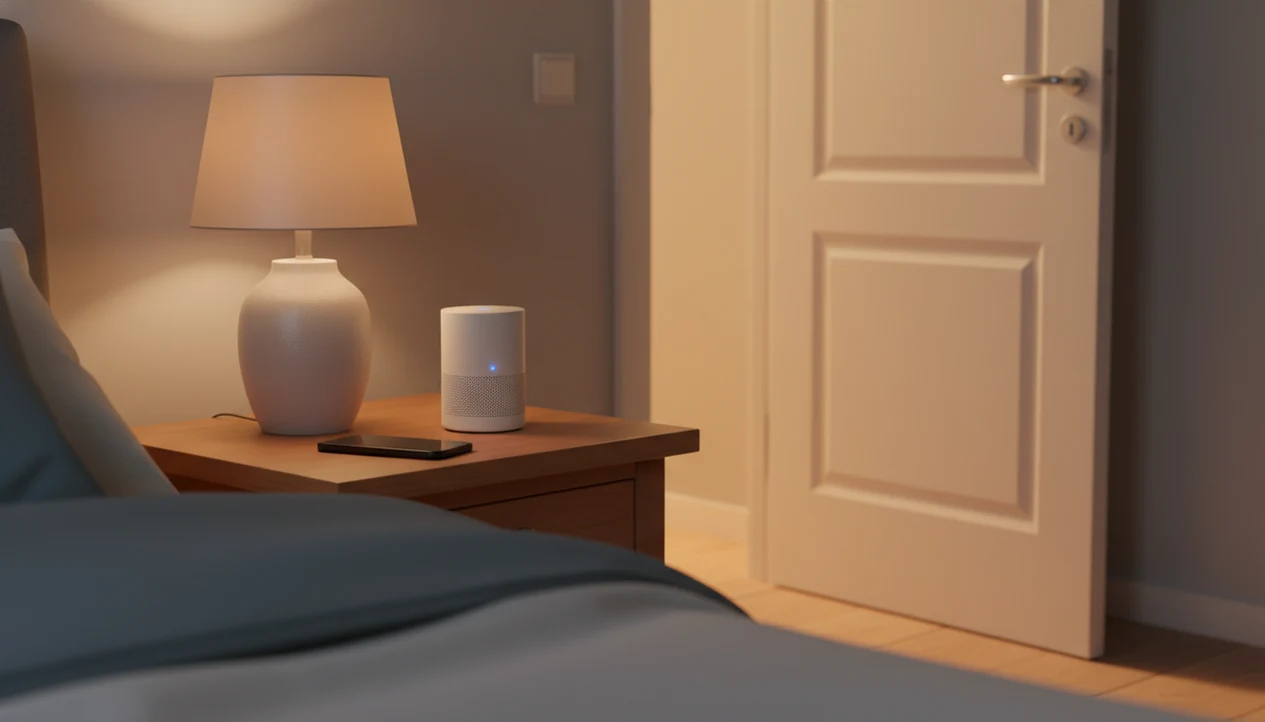
Sleep meditation crisis help is appropriate for mild night anxiety, but it is not enough if you feel unsafe, suicidal, at risk of self-harm, or unable to calm down without real-time support. In those moments, pause the audio and contact 988 in the U.S., a local crisis line, emergency services, or a trusted person nearby.
Definition: Sleep meditation crisis help means using calming bedtime audio only as a support tool while knowing when nighttime distress requires live crisis support instead.
TL;DR
- Use 988, emergency services, or local crisis support immediately if you might harm yourself or someone else.
- Sleep stories, meditations, and sounds can help with ordinary wind-down anxiety, but they cannot assess risk or keep you safe.
- For repeated sleep anxiety crisis nights, professional care such as CBT-I, therapy, medical review, or prescribed treatment may be needed.
Sleep Meditation Crisis Help Safety Line
Sleep audio is not emergency care. If you have suicidal thoughts, self-harm urges, thoughts of harming someone else, or feel unable to stay safe, stop the track and seek live help now.
In the U.S., call or text 988 for the Suicide & Crisis Lifeline. If there is immediate physical danger, call local emergency services. Outside the U.S., use your local emergency number or national crisis service.
A meditation track can lower stimulation for ordinary night stress. It cannot see your room, judge risk, move hazards away, or send someone to you. That difference matters at 2:40 a.m., when the phone is face down on the nightstand and the sleep timer is already set.
Stop the audio first. Then call, text, wake someone nearby, or move toward a safer shared space.
At-A-Glance Night Crisis Help Decisions
Use calming audio only when distress is uncomfortable but you can still stay safe. Get live help now when danger, self-harm, intoxication, confusion, or loss of control is part of the night.
| what is happening | audio may help | get live help now |
|---|---|---|
| Mild racing thoughts about tomorrow | Yes, try a low-drama story or soft rain | Not usually |
| Tense body, but you feel safe | Yes, use breath, rhythm, or brown noise | Not usually |
| Panic that is escalating or feels unmanageable | Maybe as a bridge | Yes, if you cannot settle or feel unsafe |
| Intrusive self-harm thoughts | No, not as the main plan | Yes, contact 988 or local crisis help |
| Intoxication, withdrawal, or medication reaction | No | Yes, call emergency or medical support |
| Hearing, seeing, or believing frightening things others do not | No | Yes, seek urgent live help |
| Immediate danger to you or someone else | No | Yes, call emergency services now |
People search “988 sleep distress” because the fear often arrives in bed. That phrase should point to real support, not only another track.
Five Facts About 988 Sleep Distress And Audio Limits
- Sleep difficulty is common: the CDC reported that about 14.5% of U.S. adults had trouble falling asleep most days or every day in a recent 30-day period.
- Mindfulness-based interventions produced moderate sleep-quality improvements in adults with sleep disturbance in a 2015 meta-analysis of randomized trials.
- The U.S. 988 Suicide & Crisis Lifeline handled more than 5.5 million calls, chats, and texts in its first year, according to SAMHSA data source.
- Cognitive behavioral therapy for insomnia, or CBT-I, is recommended as first-line treatment for chronic insomnia in adults by the American College of Physicians source.
- Audio can support sleep routines, but it cannot replace crisis support, diagnosis, medication review, therapy, or emergency care.
The most common medically supported way to treat chronic insomnia is CBT-I, often combined with sleep hygiene basics and clinician follow-up.
How Sleep Meditation Crisis Help Works At Night
Sleep meditation can help by shifting attention away from rumination and toward a voice, rhythm, breath cue, or neutral sound. In plain terms, it gives the mind something quiet to follow besides the fear loop.
The mechanism is often called attentional downshifting. Some listeners also feel parasympathetic-style relaxation, meaning the body starts acting less like it is preparing for a threat. A familiar voice returning each night can become a wind-down cue, especially when the volume sits barely above the pillow.
But audio cannot monitor behavior. It cannot assess suicidality, notice intoxication, interrupt self-harm, or decide whether emergency care is needed.
For some people, silence, closed-eye imagery, or body scans make distress sharper. Too much body focus can turn a heartbeat into an alarm bell. If a track increases panic, stop it and use live support or grounding instead.
Specific Guarantees For Family-Safe Adult Sleep Audio
Bedtime Adult creates family-safe bedtime stories, sleep meditations, and sleep sounds for grown-ups. That means calm adult content designed for wind-down time, not erotic material, clinical treatment, or sing-song children’s sleep stories.
Good bedtime stories and sleep meditation for adults offer calming fiction, wind-down routines, and sleep sounds, family-safe, not 18+.
Tools like Bedtime Adult can be part of an ordinary bedtime routine when the problem is overthinking, restlessness, or needing a softer cue after a long day. A paperback closed with a ribbon bookmark and a quiet ocean loop can both tell the brain, “we’re done now.”
Comfort, not cure.
Calming fiction, guided meditations, soft rain, brown noise, and distant train ambience are comfort tools. They are not promises to cure panic, depression, PTSD, insomnia, suicidal thoughts, or any medical condition. For content boundaries, our guide to family-safe adult sleep stories explains that distinction in more detail.
What Sleep Anxiety Crisis Audio Does Not Cover
Sleep anxiety crisis audio does not provide emergency monitoring, suicide risk assessment, diagnosis, or treatment. It also cannot replace a therapist, prescriber, doctor, crisis counselor, or emergency responder.
That boundary should stay visible. A track may feel steadying when the bedside lamp is switched off in sync with a partner, but it still does not know whether you are safe. It does not ask follow-up questions. It does not notice if things worsen.
Sleep audio also cannot diagnose or treat sleep apnea, bipolar episodes, withdrawal, psychosis, medication side effects, or medical causes of insomnia. If these are possible, a licensed professional should be involved.
No track calms every listener. Some voices irritate people. Some scripts feel too intimate. Some body scans make symptoms louder. If insomnia is becoming frequent or unsafe, the next step is guidance on when to see a doctor for insomnia, not simply a longer playlist.
How To Contact Night Crisis Help When Audio Fails
When audio fails, switch from self-soothing to live support. The goal is not to “try harder” at meditation; the goal is to reduce risk and get another human involved.
- Call or text 988 if you are in the U.S. and have suicidal thoughts, self-harm urges, crisis-level distress, or cannot stay safe.
- Use 988 chat if speaking out loud feels too hard or someone is sleeping nearby.
- Call emergency services now if there is immediate physical danger to you or someone else.
- Use local crisis support if you are outside the U.S., including your national crisis line or emergency number.
- Contact a trusted nearby person if being alone increases risk; wake them, message them, or move closer to a shared area.
- Move away from means of self-harm where possible without taking extra risks, then keep contacting live help.
For mild distress, sleep sounds may still help later. For danger, the support plan comes first.
Professional Care After Repeated Sleep Anxiety Crisis Nights
Repeated sleep anxiety crisis nights are a reason to talk with a licensed clinician, primary care professional, or mental health provider. A calming track helping once does not mean the underlying issue is resolved.
Clinicians typically recommend CBT-I as first-line care for chronic insomnia, with therapy, medication review, trauma-informed care, or medical evaluation added when appropriate. Night panic, intrusive thoughts, nightmares, substance withdrawal, medication effects, and mood episodes may need different support.
Bedtime audio can still have a place. For many adults, a 10-minute meditation or slow story works as an adjunct, especially after treatment has named the main problem. The work badge dropped into a hallway bowl, the phone set to a timer, the same narrator at low volume; those repeatable cues can help.
For chronic insomnia, bedtime audio usually works best as an adjunct to evidence-based care, while CBT-I fits people who need structured treatment for persistent sleep disruption.
If you are wondering whether stories alone are enough, read can sleep stories cure insomnia.
Limitations
Sleep audio has real limits, especially when night distress becomes unsafe or medically complicated.
- Sleep audio cannot assess safety, monitor behavior, or intervene in real time.
- Research supports sleep-quality improvement more than acute crisis treatment.
- Scripts, silence, imagery, or body scans may trigger trauma memories or panic in some listeners.
- Audio cannot treat sleep apnea, medication effects, mania, withdrawal, psychosis, or serious medical causes of sleeplessness.
- Over-reliance on a track can delay timely crisis support or clinical care.
- A listener should stop the audio and seek help if distress escalates.
- Partner-friendly listening can still fail if the content feels intrusive, too loud, or emotionally mismatched.
A shared speaker set to low volume may be kind to the room, but it is not a safety plan. If privacy is part of choosing any sleep tool, review basic sleep app privacy questions before making it part of a nightly routine.
FAQ
Can sleep meditation stop panic?
Sleep meditation may reduce mild panic symptoms for some people by giving attention a calmer focus. It is not enough if symptoms are severe, escalating, or make you feel unsafe.
Should I call 988 tonight?
In the U.S., contact 988 tonight if you have suicidal thoughts, self-harm urges, or feel unable to stay safe. Call emergency services if there is immediate physical danger.
Is 988 only for suicide?
No. In the U.S., 988 supports suicide, mental health, and substance-use crisis distress.
Can sleep audio replace therapy?
No. Sleep audio can support a wind-down routine, but it cannot replace therapy, CBT-I, medical evaluation, prescribed treatment, or crisis care.
Why does meditation worsen anxiety?
Meditation can worsen anxiety when silence, body focus, breath attention, or imagery intensifies physical sensations or trauma reminders. If that happens, stop and use grounding or live support.
What helps nighttime intrusive thoughts?
Light grounding, turning on a lamp, contacting a trusted person, and professional follow-up can help with nighttime intrusive thoughts. If thoughts involve self-harm or harming others, seek crisis support immediately.
When is insomnia an emergency?
Insomnia becomes urgent when it is paired with danger, self-harm thoughts, confusion, mania, psychosis, withdrawal, or inability to function safely. In those cases, use crisis or emergency services rather than sleep audio alone.