Sleep App Medical Claims: What to Trust and Avoid
Trust sleep app medical claims only when they are specific, evidence-based, and careful about limits. A sleep app can support relaxation, routines, and wind-down habits, but it should not promise to cure insomnia, diagnose sleep apnea, or replace professional care unless it has appropriate clinical validation and regulatory clearance.
This page is general consumer-safety information, not medical, legal, or regulatory advice. For persistent insomnia, suspected sleep apnea, breathing pauses, severe daytime sleepiness, or worsening mental health symptoms, seek care from a qualified clinician.
Definition: Sleep app medical claims are statements that a sleep app can diagnose, treat, prevent, or cure a health condition, rather than simply support relaxation, sleep habits, or general wellness.
TL;DR
- Strong cure, diagnosis, or treatment language needs stronger evidence than general wellness language.
- Most consumer sleep apps are not clinically validated medical devices and should not be used as stand-alone diagnostic tools.
- Bedtime Adult positions calming fiction, sleep meditations, and sleep sounds as wind-down support, not as treatment for insomnia, anxiety, sleep apnea, or other medical conditions.
Sleep app medical claims definition and trust boundary
Sleep app medical claims are promises that an app can diagnose, treat, prevent, or cure a health condition. That includes language about treating insomnia, curing sleep problems, diagnosing disorders, screening for sleep apnea, or replacing a clinician’s care.
Wellness claims are different. An app may say it supports general relaxation, bedtime routine consistency, stress reduction, or calming audio before bed. Those claims still need to be honest, but they do not carry the same medical burden as “fixes insomnia.”
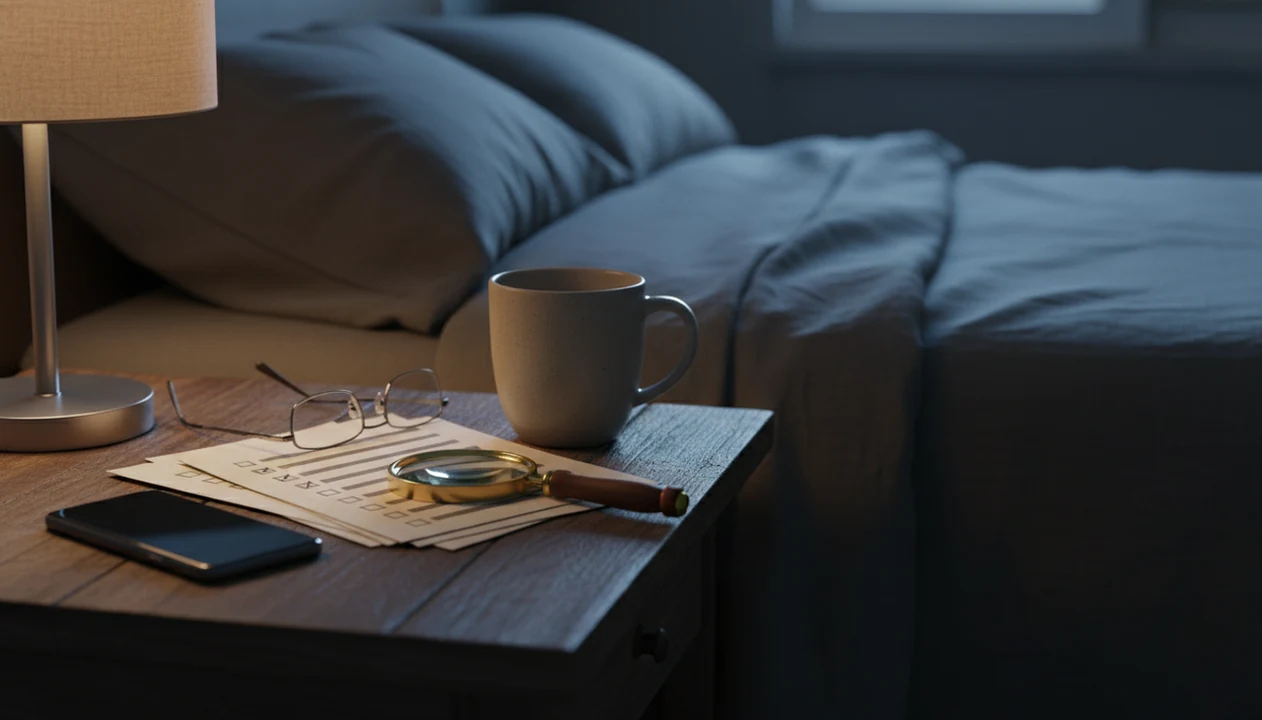
The line matters at 10:15 p.m., when the bedside lamp is dim and a user wants help, not inflated certainty. Bedtime Adult is a bedtime stories for adults app that offers calming fiction, sleep meditations, and sleep sounds for grown-ups. Family-safe adult bedtime audio should avoid clinical promises unless the evidence and regulatory status actually support them.
Five facts about health claims sleep app users should know
- Most sleep apps are not validated medical devices. App store availability does not mean an app can diagnose insomnia, apnea, or another sleep disorder.
- Published evidence is limited. A 2021 review found that only 32.9% of Google Play sleep apps had empirical evidence behind their claims, and 15.8% had clinician input (source).
- Medical claims raise the standard. Apps that claim to diagnose, treat, or cure may face stricter medical-device expectations than general wellness tools.
- FTC standards apply to advertising. Health advertising must be truthful, non-misleading, and supported by competent evidence before objective promises are made.
- Bedtime audio should stay in its lane. Bedtime story and meditation apps should frame benefits around relaxation and routines, not medical treatment.
Small words matter here.
How sleep app medical claims work in advertising and evidence
Sleep app medical claims work through both express claims and implied claims. “Treats insomnia” is express. A dramatic before-and-after story that suggests the app fixed a diagnosed sleep disorder can be implied, even if the word “treat” never appears.
Evidence expectations rise as the claim becomes more medical, more specific, or more outcome-based. A claim that audio “may help you relax before bed” needs a different support level than “clinically proven to cure chronic insomnia.” Clinicians typically recommend validated care, such as CBT-I for chronic insomnia evaluation, rather than relying on general relaxation audio alone.
App store placement is not FDA clearance, clinical validation, or FTC-safe advertising. Sleep scores, tracking graphs, and bedtime audio can still shape belief. A green score at 6:40 a.m. can feel official, even when it is only an estimate.
FTC sleep app claims and substantiation standards
What are FTC sleep app claims? They are health-related advertising claims about a sleep app that must be truthful, not misleading, and supported before they are made.
The FTC’s health-products guidance says objective health claims need competent and reliable scientific evidence before marketers make them (FTC Health Products Compliance Guidance).
FTC scrutiny can apply to express claims and implied claims. Marketers need competent and reliable evidence for objective health promises, especially when they mention insomnia, anxiety, apnea, therapy, or clinical improvement. A soft narrator does not make a medical promise safer.
Risky phrases include “cure insomnia,” “clinically proven to fix sleep,” “diagnose sleep apnea,” “replace therapy,” and “eliminate anxiety.” Safer language is more careful: “may help you relax,” “supports a wind-down routine,” or “provides calming bedtime audio.”
Good bedtime stories and sleep meditation for adults deliver calming fiction, wind-down routines, and sleep sounds, family-safe, not 18+ content or medical treatment.
Sleep app cure claims versus wellness support language
Sleep app cure claims promise medical outcomes; wellness support language describes routine, relaxation, and pre-sleep environment. A bedtime story app may help create a calmer room without proving disease treatment.
| Claim type | Red-flag wording | More cautious alternative |
|---|---|---|
| Insomnia cure | “Cures insomnia naturally” | “May support a calmer wind-down routine” |
| Apnea diagnosis | “Detects sleep apnea from your phone” | “Tracks sleep-related patterns for personal awareness” |
| Anxiety treatment | “Eliminates nighttime anxiety” | “Offers calming audio for general relaxation” |
| Therapy replacement | “No need for CBT-I or care” | “Can be used alongside healthy sleep habits” |
| Guaranteed sleep | “Fall asleep in minutes” | “Designed for low-drama bedtime listening” |
CBT-I and CPAP are examples of established clinical treatments that consumer apps should not claim to replace. For chronic symptoms, the safer next step is guidance like when to see a doctor for insomnia.
Evidence signals behind trustworthy health claims sleep app marketing
Trustworthy health claims sleep app marketing points to evidence quality, not just a polished product page. Look for these signals before believing medical wording.
- Peer-reviewed studies: Published research matters more than testimonials, star ratings, or a soothing demo screen.
- Independent validation: A systematic review of 73 sleep-parameter apps found only 3 validated against polysomnography, with weak correlations for sleep staging.
- Clinician involvement: The 2021 review found clinician input in only 15.8% of Google Play sleep apps, so medical wording deserves skepticism.
- Transparent methods: Good claims explain who was studied, what was measured, and what comparison group was used.
- Limited conclusions: “Supports relaxation” is more credible than vague “AI-powered sleep improvement.”
For people comparing wellness audio, can sleep stories cure insomnia is the sharper question than whether a narrator sounds calm.
Four myths about sleep app medical claims
Myth 1: App store availability means medical testing. It does not. A sleep app can be widely downloaded without being clinically validated or approved.
Myth 2: Stories or meditations can cure insomnia or apnea by themselves. They may support relaxation and routines, but they do not replace CBT-I, CPAP, testing, or medical care when needed.
Myth 3: Every sleep tracking app is protected by HIPAA. Many consumer apps fall outside HIPAA depending on who offers the app and who handles the data.
Myth 4: Avoiding “diagnose” or “treat” makes every claim safe. Implied cure messaging can still mislead users.
Over-reliance on sleep scores can create false reassurance or unnecessary worry. The pocket check is real. Some users wake, open the graph, and feel worse before they even sit up.
Privacy risks in sleep app medical claims and tracking
Sleep patterns, bedtime habits, and health-related app use can be sensitive behavioral data. Even a simple routine can reveal when you go to bed, when you wake, whether you travel, and how often you use anxiety-adjacent or insomnia-related content.
Many consumer sleep apps may fall outside HIPAA. Coverage depends on how the app is offered, who operates it, and whether a covered healthcare entity is involved. A 2020 review raised concerns about data privacy, false positives, and strain on sleep services when app results drive follow-up care.
Review the privacy policy before using tracking features. Check data sharing, ad partners, deletion controls, account requirements, and whether audio use is linked to a profile. The broader checklist is covered in sleep app privacy.
Sources and Regulatory Guidance Used
This safety framing relies on regulator, government, and peer-reviewed sources to separate wellness support from medical promises. These sources guide claim boundaries; they are not individual medical advice or a substitute for a clinician’s evaluation.
- Check advertising claims against FTC expectations for truthful, non-misleading health marketing and appropriate substantiation before objective promises are made: source.
- Compare app features with FDA guidance on low-risk general wellness products versus software that may function as a medical device: source.
- Review privacy assumptions using HHS guidance on when HIPAA applies to mobile health apps, because many direct-to-consumer tools sit outside the covered-entity relationship: source.
- Weigh peer-reviewed sleep-app reviews for validation gaps, including limited clinical input, weak validation against sleep-lab measures, and risks from over-reading consumer sleep scores: source.
The practical takeaway is modest: bedtime audio can be useful as a calming routine cue, but medical-sounding claims need stronger proof than a peaceful interface.
Bedtime Adult wording for cautious sleep app claims
Wellness sleep-audio apps should describe themselves as family-safe adult bedtime audio, not erotic content, clinical treatment, or children’s sleep programming. Careful wording includes calming fiction for adults, sleep meditations, sleep sounds, wind-down routines, and relaxation support.
Claims to avoid include “treats insomnia,” “cures anxiety,” “diagnoses sleep problems,” or “replaces a doctor.” Sleep audio can be part of a quiet routine, such as soft narration after the intro or rain audio under a sleep timer. That is wellness support, not a medical result.
Seek professional care for chronic insomnia, suspected sleep apnea, dangerous daytime sleepiness, breathing pauses, or mental health concerns. For shared rooms, family-safe adult sleep stories are about comfort and tone, not clinical treatment.
Limitations
Sleep apps have real limits, even when they are useful for relaxation.
- Most sleep apps cannot reliably diagnose sleep disorders or measure sleep stages with clinical accuracy.
- Consumer sleep technologies should not be used as stand-alone diagnostic tools.
- There is limited high-quality evidence that consumer sleep apps alone sustainably treat chronic insomnia.
- App results can create false positives, false reassurance, or unnecessary clinical follow-up.
- Detailed sleep tracking can increase anxiety about sleep metrics, sometimes called orthosomnia.
- Privacy protections vary, and some consumer apps may not be covered by HIPAA.
- Bedtime Adult can support relaxation and bedtime routines, but it cannot guarantee sleep or medical outcomes.
- Sleep Stories for Grown Ups may help cue a calmer evening, but they should not delay care for persistent symptoms.
A quiet ocean loop can help the room feel less sharp. It still is not a diagnosis.
FAQ
Can sleep apps cure insomnia?
Sleep apps may support relaxation, routines, or sleep hygiene habits, but they should not be treated as a cure for chronic insomnia. Persistent insomnia should be discussed with a qualified clinician.
Are sleep apps FDA approved?
Most consumer sleep apps are not FDA-approved medical devices. Some specific medical apps or devices may have FDA clearance for defined uses.
What are FTC sleep app claims?
FTC sleep app claims are advertising claims about sleep-related health benefits that must be truthful, non-misleading, and substantiated. This applies to both direct promises and implied health messages.
Can apps diagnose sleep apnea?
Consumer apps should not diagnose sleep apnea unless they are specifically validated and cleared for that medical purpose. Suspected sleep apnea requires professional evaluation.
Are sleep scores medically reliable?
Many consumer sleep scores are estimates based on sensors and algorithms. They should not be used as clinical measurements by themselves.
Is sleep app data HIPAA protected?
Many consumer sleep apps are not automatically covered by HIPAA. Users should review privacy policies, data sharing terms, and deletion options.
What sleep app claims should I avoid?
Avoid claims such as “cures insomnia,” “diagnoses sleep apnea,” “guaranteed sleep,” “replaces therapy,” or “treats anxiety” without strong evidence. Be cautious with vague clinical language.
When should I see a doctor about sleep problems?
See a doctor for persistent insomnia, suspected sleep apnea, severe daytime sleepiness, breathing pauses, or worsening anxiety. Do not rely on a sleep app as the only source of care.