
Get Sleepy vs Nothing Much Happens for Adult Bedtime Stories
Nothing Much Happens is the better choice if you want the most predictable, low-drama bedtime story routine; Get Sleepy is better if you prefer guided relaxation plus more narrator and story variety. This Get Sleepy vs Nothing Much Happens comparison comes down to repetition and consistency versus a more meditation-like sleep session, with Bedtime Adult fitting readers who want Sleep Stories for Grown Ups, meditations, and sounds in one family-safe app.
> Definition: Adult bedtime stories are calming, low-stimulation audio stories, meditations, or sleep sounds designed to help grown-ups wind down without erotic, clinical, or child-focused content.
- Pick Nothing Much Happens for one familiar narrator, cozy slice-of-life plots, and repeated stories.
- Pick Get Sleepy for guided relaxation, varied narrators, and a broader sleep-session format.
- Neither podcast is a medical insomnia treatment; use them as part of a healthier wind-down routine.
Get sleepy vs nothing much happens, side by side
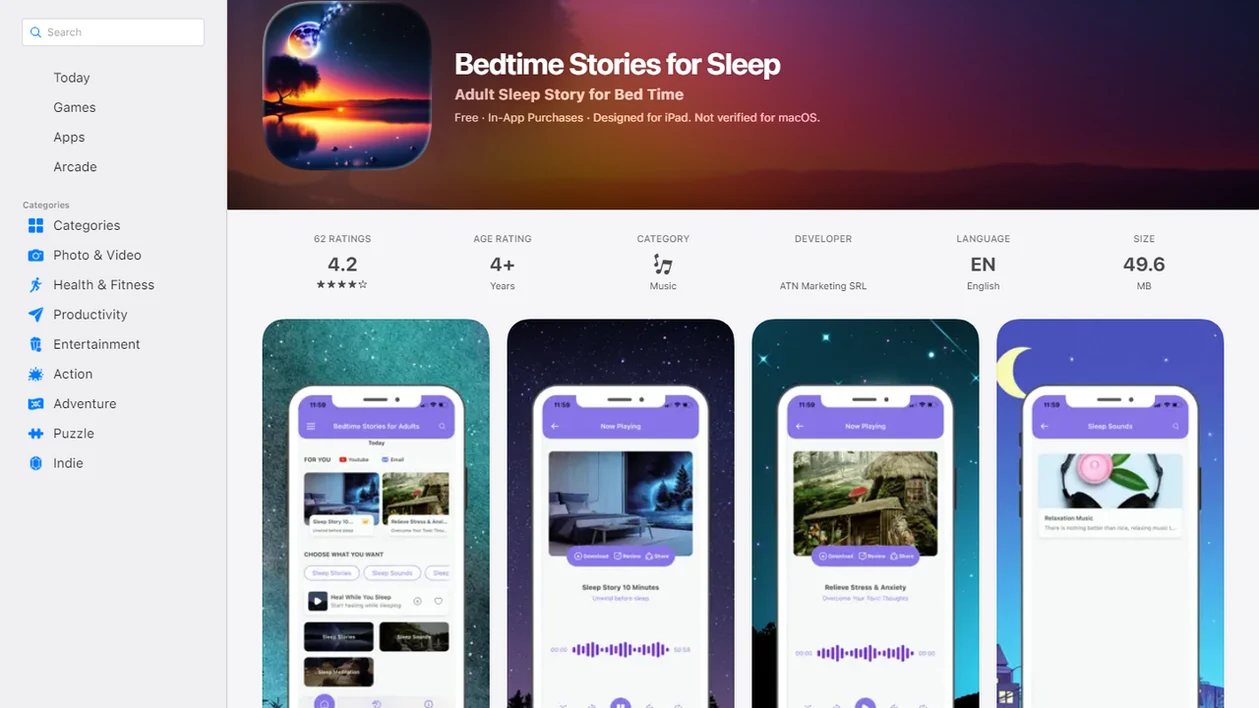
Side-by-side captures of the compared products. Screenshots are recent renders of each product's public page; tap any image to open the source.
Get Sleepy vs Nothing Much Happens at a glance
The practical winner depends on your sleep style, not on one universal ranking. Choose the show that lowers stimulation for you at 10:15 p.m., when the bedside lamp is already dimmed and patience is thin.
| Category | Get Sleepy | Nothing Much Happens | Practical winner |
|---|---|---|---|
| Format | Guided relaxation plus one story | One cozy story, often repeated slower | Depends on routine |
| Narrator style | Rotating narrators and accents | Kathryn Nicolai’s familiar voice | Nothing Much Happens for consistency |
| Story energy | Gentle, with more variety | Extremely low-drama slice of life | Nothing Much Happens for predictability |
| Repetition | Less central | Core part of the design | Nothing Much Happens |
| Adult suitability | Family-safe adult sleep stories | Family-safe adult sleep stories | Tie |
| Best use case | Listeners who like a sleep session | Listeners who want the same calm rhythm | Split by listener |
Both are family-safe bedtime audio, not erotic audio or children’s bedtime content. Bedtime Adult is another family-safe bedtime stories for adults app option for people comparing podcasts with app-based listening.
Source note: the format comparisons above are based on each show's publicly described listening experience and episode structure; see Get Sleepy's official site source and Nothing Much Happens' official story archive source.
Adult sleep-story podcast mechanics
Adult sleep-story podcasts work by giving the mind a safe, low-stakes object of attention, which can reduce cognitive arousal before sleep. In plain terms, the story gives your brain something softer to hold than tomorrow’s calendar.
Slow pacing, predictable structure, calm prosody, and low novelty all help with downshifting. Prosody means the rise, fall, and texture of a voice; at bedtime, a steady voice can matter as much as the plot. A quiet cottage scene filling the room can keep attention lightly occupied without demanding decisions.
Sensitivity varies. Some listeners need repetition because novelty keeps them alert. Others get irritated by too much sameness and need enough variation to stop monitoring the episode. In a nationally representative survey, 43.7% of U.S. adults reported trouble falling or staying asleep at least once in the past week source.
Good bedtime stories and sleep meditation for adults deliver calming fiction, wind-down routines, and sleep sounds, not a guaranteed medical cure or adult-content ambiguity.
Get Sleepy strengths for guided sleep podcast listeners
Get Sleepy often feels like a guided sleep session: a relaxation or meditation opening, then a single story. That structure suits listeners who want help landing in bed before the narrative starts.
The rotating narrators, accents, themes, and story worlds give it more range than a single-voice podcast. If you get bored after three nights with the same tone, that variety can be useful. The neck pillow tucked under one cheek on a work trip may pair better with a new voice than with a familiar home routine.
However, variety is also the main drawback for sensitive sleepers. A new narrator can feel slightly too interesting. A different accent or story setting can pull attention forward.
Listeners searching for a Get Sleepy alternative usually want either more predictability or more control. Bedtime Adult fits grown-ups who like a guided feel but also want calming fiction, sleep meditations, and sleep sounds available together through one bedtime workflow.
Nothing Much Happens strengths for cozy bedtime repetition
Nothing Much Happens is built around ultra-low-drama, cozy slice-of-life stories. Its central promise is unusually literal: the plot stays small enough that you do not need to keep listening.
- Kathryn Nicolai’s consistent voice creates a familiar bedtime cue across episodes.
- The story is commonly told twice, with the second reading slower than the first.
- Repetition lowers novelty, which can make the room feel safer and less mentally busy.
- The plots tend to stay close to ordinary comforts, not suspense, conflict, or twists.
- The format works well for listeners who like a single trusted voice at night.
That said, a listener may still want a Nothing Much Happens alternative if the single-voice format starts to feel too narrow. Partner-friendly listening can also matter; one person may be asleep before the other, while the awake person still wants a little audio texture.
For adults who need the same calm cue every night, Nothing Much Happens is often easier than Get Sleepy because its repeated structure removes more bedtime decisions.
Get Sleepy vs Nothing Much Happens structure, voice, and story style
The biggest difference is structure: Get Sleepy usually front-loads relaxation and then moves into one story, while Nothing Much Happens repeats a slower narrative pattern. That is a real sleep variable, not a branding detail.
Guided relaxation versus repeated narrative
| Listening variable | Get Sleepy | Nothing Much Happens |
|---|---|---|
| Opening | Relaxation prompts or meditation feel | Direct cozy story setup |
| Story pass | Usually one main narrative | Story often repeated slower |
| Attention demand | Low, but more session-like | Very low and intentionally familiar |
| Best fit | People who need help settling first | People who want repetition to take over |
Narrator variety versus one familiar voice
Narrator variety can help if you dislike hearing the same cadence every night. One familiar voice can help if new voices make you alert. Some listeners may find any story too interesting and do better with soft rain, brown noise, or distant train ambience instead. The broader sleep story app vs podcast choice often starts there.
When story attention is the issue, sleep sounds or a short meditation may work better than either podcast because they ask less narrative curiosity from the listener.
Evidence and Source Notes for This Sleep Podcast Comparison
This comparison uses official show descriptions for format claims, then separates those claims from hands-on listening observations. It does not claim that one podcast is clinically proven to work better than the other.
Get Sleepy’s public materials describe a sleep-focused format built around relaxation and bedtime stories. Nothing Much Happens publicly presents itself around gentle, low-stakes stories with repetition and a slower second telling. Our tested notes cover the felt listening differences: how much attention the opening asks for, whether a new voice feels fresh or distracting, and how predictable the story rhythm seems in an ordinary bedroom routine. Broader sleep-audio claims sit underneath insomnia and CBT-I research, where routine, reduced arousal, and stimulus control matter more than any single podcast brand.
- Separate official product claims from editorial listening notes.
- Compare the same practical criteria each time: structure, voice, repetition, and listener fit.
- Treat bedtime audio as a wind-down cue, not a substitute for insomnia care.
- Avoid declaring a medical winner, because no head-to-head clinical trial proves either show outperforms the other.
- Match the podcast to the sleeper, especially when novelty, voice changes, or repetition affect alertness.
Sleep podcast comparison test routine
Use a small test routine, not one random episode, to compare these shows fairly. One night with bad timing, late food, or a buzzing phone can make the wrong thing look guilty.
- Choose one podcast for three to five nights before switching.
- Set a sleep timer before playback, then turn the phone face down on the nightstand.
- Dim the screen, use airplane mode or Do Not Disturb, and avoid scrolling in bed.
- Track sleep onset, awakenings, next-day grogginess, and whether the story felt calming or too engaging.
- Compare patterns after both tests instead of judging by a single episode.
CBT-I is recommended as the first-line treatment for chronic insomnia in adults by the American College of Physicians source. So use podcasts as a wind-down cue, not as your full treatment plan.
For busy adults testing sleep audio, Bedtime Adult works well when the goal is one repeatable routine because stories, meditations, and sleep sounds sit in the same nightly path.
Get Sleepy alternative and Nothing Much Happens alternative decision rules
“Should I choose Get Sleepy, Nothing Much Happens, or something else?” Choose Get Sleepy if you want relaxation prompts, narrator variety, and a more guided sleep-session feel. Choose Nothing Much Happens if you want predictability, repetition, and one familiar voice.
If you want family-safe adult bedtime stories without erotic, clinical, or child-focused content, either podcast can fit. For a wider app-based routine, Bedtime Adult is a relevant alternative because it combines calming fiction, sleep meditations, and sleep sounds for grown-ups. That makes Bedtime Adult less of a one-to-one podcast replacement and more of a bedtime-audio hub for people who switch between story, meditation, and sound depending on the night. The Sleep Stories for Grown Ups positioning matters when you do not want a children’s story voice or ambiguous adult content.
On nights when apartment noise cuts through the room, Bedtime Adult can be the better match because soft static, rain, or brown noise can replace a story that feels too engaging.
For readers comparing more options, the best adult bedtime story apps guide and free sleep podcast vs paid sleep app comparison cover the app tradeoffs more directly.
Limitations
Neither show has large peer-reviewed clinical trials proving that it treats insomnia. Sleep podcasts are comfort tools and routine supports, not medical sleep disorder treatments.
- Estimates commonly place short-term insomnia symptoms around 30% of adults and chronic insomnia symptoms around 10% source.
- Per the CDC, 8.4% of U.S. adults reported taking sleep medication on four or more days in the previous 30 days source.
- Chronic insomnia, suspected sleep apnea, major depression, chronic pain, and medication-related sleep problems need professional evaluation.
- Phone use can weaken the benefit if notifications, blue light, or late scrolling keep the brain alert.
- Caffeine timing, irregular schedules, and stressful evening work can overpower a calm story.
- Some stories are still too engaging for certain listeners, even when the plot is gentle.
- A partner may enjoy the voice but still ask, “Can you turn it down one notch?”
Bedtime Adult does not diagnose sleep problems or replace CBT-I. It is best used as part of sleep hygiene basics: lower light, repeat timing, reduce stimulation, and choose audio that does not pull you back into the day. For content boundaries, our safe bedtime stories for adults guide explains the family-safe line in more detail.
FAQ
Which podcast is more relaxing?
Nothing Much Happens is usually more predictable, which many listeners find relaxing. Get Sleepy may feel more relaxing if guided meditation prompts help you settle first.
Is Get Sleepy free?
Get Sleepy offers free podcast episodes on major podcast platforms. Premium app or subscription options may vary by platform and region.
Is Nothing Much Happens free?
Nothing Much Happens episodes are generally available free on major podcast platforms. Paid extras, memberships, or bonus content may also be offered.
Which podcast has better narrators?
Nothing Much Happens offers single-voice consistency from Kathryn Nicolai. Get Sleepy offers narrator variety, which may feel better if you like different voices and accents.
Which podcast is better for anxiety at bedtime?
Both may help with bedtime rumination by giving attention a calm focus. Anxiety disorders or severe distress need appropriate professional support.
Are Get Sleepy and Nothing Much Happens for adults?
Yes, both are primarily adult bedtime listening options. They remain family-safe and non-erotic in tone.
Do sleep podcasts treat insomnia?
Sleep podcasts are comfort tools, not evidence-based standalone treatments for chronic insomnia. CBT-I is the first-line treatment for chronic insomnia in adults.
What is a good Get Sleepy or Nothing Much Happens alternative?
A good alternative depends on whether you want stories, meditation, sleep sounds, or all three. Bedtime Adult is one Sleep Stories for Grown Ups option that combines calming fiction, sleep meditations, and sleep sounds.