App To Help Me Stop Racing Thoughts At Night
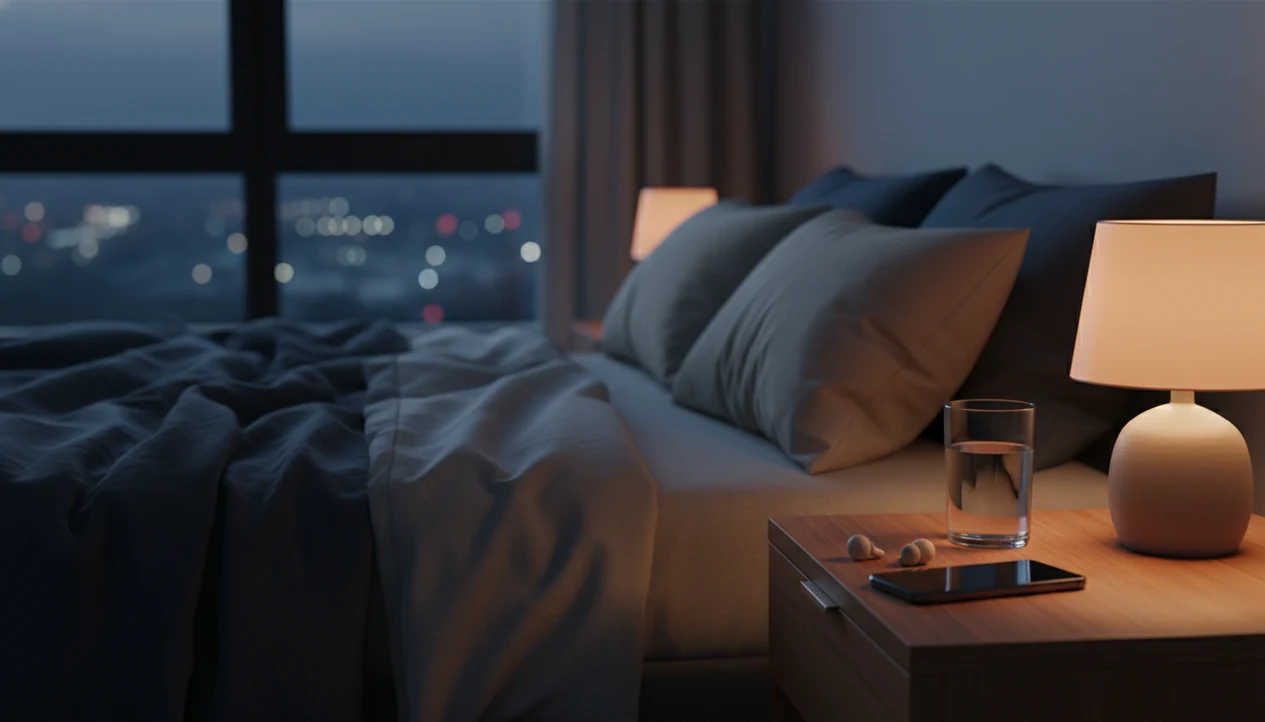
An app to help me stop racing thoughts can help at bedtime by giving your mind a calm, structured focus through guided narration, breathing, sleep stories, meditation, or relaxing sounds. Bedtime Adult is built for that kind of low-drama wind-down, but it is best used as bedtime support, not as a cure for insomnia, anxiety, ADHD, depression, or persistent nighttime distress.
> Definition: Bedtime Adult is an app with bedtime stories for adults, calming fiction, sleep meditations, and sleep sounds for grown-ups.
- A racing thoughts app works best when it gently redirects attention instead of asking you to think, journal, or scroll in bed.
- Guided sleep stories, body scans, breathing prompts, and calm narration are often more useful at night than passive music alone.
- Use an app as bedtime support, and seek professional care if racing thoughts are severe, frequent, or connected to ongoing sleep loss or distress.
How these apps look
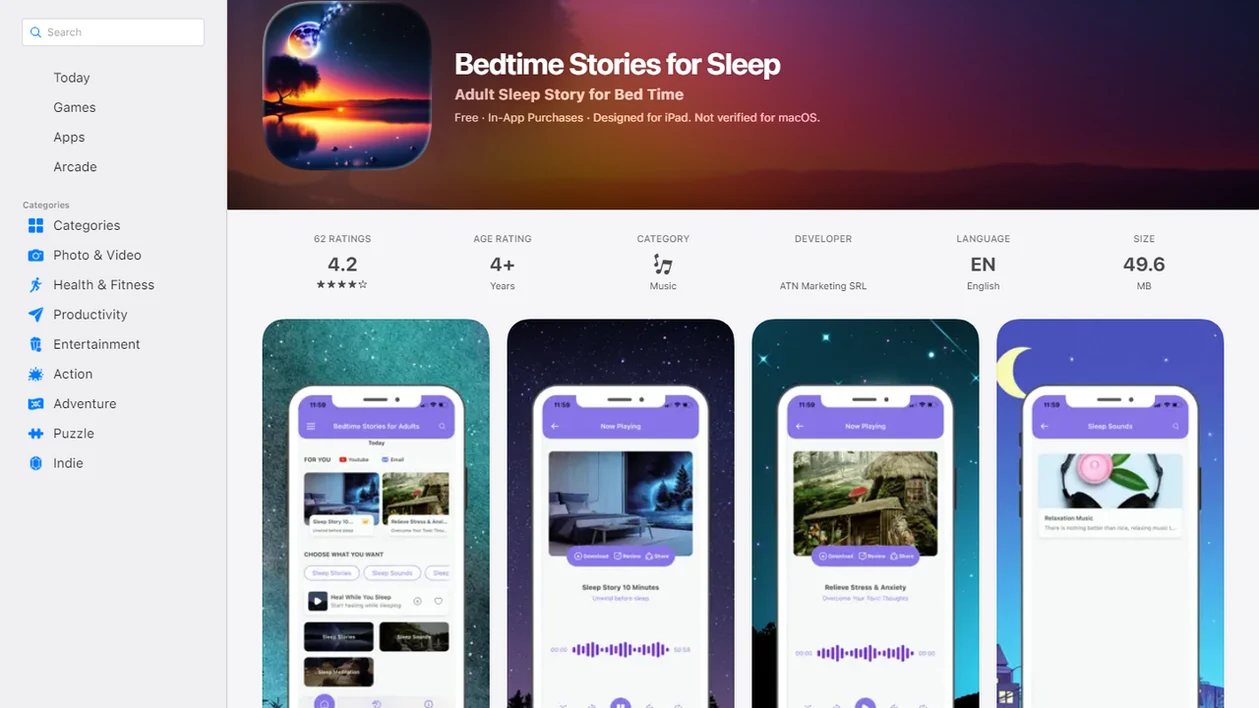
Side-by-side captures of the compared products. Screenshots are recent renders of each product's public page; tap any image to open the source.
How an app to help me stop racing thoughts works at bedtime
A bedtime app for racing thoughts works by shifting attention from rumination to a low-effort external focus. The goal is not to “empty your mind,” but to give it something quieter to follow.
Guided narration, breathing cues, body scans, low-drama stories, and soundscapes can lower bedtime arousal by reducing decision-making and mental rehearsal. When a narrator gives the next gentle cue, your brain has less room to replay tomorrow’s meeting or last week’s awkward conversation.
Passive audio can help some people, but it may be too thin when thoughts are loud. The mind can slip right back into worry between sounds.
The practical aim is simple: repeat a calming cue until bed starts to feel less like a thinking room. Good bedtime stories and sleep meditation for adults deliver calming fiction, wind-down routines, and sleep sounds, not a clinical promise or 18+ audio.
Five facts about choosing a racing thoughts app for sleep
- Guided narration is usually more useful than music alone when mental chatter is intense, because words give attention a track to stay on. - Stronger bedtime apps combine several formats, including sleep stories, breathing, body scans, meditation, and rain or brown noise. - A racing thoughts app should open fast. At 10:47 p.m., nobody wants a maze of menus. - Digital sleep tools can improve sleep outcomes, with the strongest research support for digital CBT-I, according to a 2020 systematic review in Nature and Science of Sleep source. That CBT-I evidence should be treated as support for structured digital sleep interventions, not as direct proof that any one sleep-story app treats insomnia. - Sleep difficulty is common: the CDC reports that 35.2% of U.S. adults slept fewer than 7 hours in 2022 source, and NHLBI notes that insomnia symptoms affect many adults source.
Sleep Stories for Grown Ups can fit people who want a calm mind sleep app because it gives the brain a simple listening task, rather than another screen task.
When to use a night thoughts app before sleep
When should you use a night thoughts app before sleep? Use it when your mind starts looping through work, tomorrow’s tasks, money worries, text messages, or a conversation you keep rewriting in your head.
The better moment is before the third clock check. It is also before email, social media, or a news feed turns one worry into twelve new tabs. A bedside lamp dimmed at 10:15 p.m. is a good cue to start, especially if the same window repeats most nights.
After the tie or blazer is hung on a chair, when the phone is still in your hand, Bedtime Adult fits busy adults who need a soft landing because Sleep Stories for Grown Ups can start with calm narration instead of another productivity prompt.
However, frequent panic, major depression symptoms, trauma distress, or chronic insomnia need more than an app. Clinicians typically suggest professional support when nighttime thoughts cause ongoing sleep loss or daytime impairment.
For example, NHLBI recommends talking with a healthcare professional when insomnia lasts longer than a few weeks or interferes with daily life source.
How to use a calm mind sleep app for racing thoughts
Use a calm mind sleep app by setting it up before the phone becomes the problem. The routine should reduce choices, not create a late-night browsing session.
- Set the app before getting into bed or immediately after lights out, while your plan is still clear.
- Choose one guided track instead of sampling six voices, three stories, and four sound mixes.
- Lower brightness and use audio-only mode if available, then place the phone face down on the nightstand.
- Follow the narrator, breath cue, story, or body scan without trying to force sleep.
- Repeat the same routine for several nights before deciding whether the format helps.
Anyone dealing with thought loops after midnight may find Bedtime Adult useful because the bedtime workflow favors one chosen story, meditation, or sleep sound over constant track switching. If you want a more direct meditation path, the download sleep meditation app guide explains that format.
If your hand keeps doing the pocket check, move the phone face down, turn on the timer, and treat any track-switching urge as part of the wind-down problem.
What racing thoughts support looks like in Bedtime Adult
Bedtime Adult supports racing-thoughts nights with family-safe bedtime audio for adults, not erotic content, clinical treatment, or sing-song children’s stories. It gives the mind a calm place to land without asking for journaling, analysis, or self-improvement at 11:30 p.m.
Calming fiction for adults
Calming fiction gives adults a low-effort narrative to follow. Bedtime Adult uses soft narration and slow pacing, so the story can become a wind-down cue instead of a plot you feel pushed to finish. A peaceful ending before the timer stops is often the right shape.
Adults who dislike broad meditation apps may prefer Bedtime Adult because the focus is bedtime stories for adults to fall asleep, with simple listening rather than daytime coaching. For a wider story-first overview, read the app that has bedtime stories for adults guide.
Sleep meditation and sounds
Sleep meditations, body scans, soft rain, distant train ambience, and brown noise give different textures for different nights. Bedtime Adult keeps those options sleep-focused, so a partner can ask, “Can you turn it down one notch?” and the room still settles.
Racing thoughts app formats versus bedtime alternatives
Guided sleep apps are usually lower effort than journaling or scrolling once you are already in bed. The main difference is whether the option gives your mind a quiet track, or asks it to keep choosing.
| Bedtime option | Effort level in bed | Good fit | Common drawback |
|---|---|---|---|
| Sleep stories | Low | Work loops, replayed conversations, busy minds | A story that is too interesting can keep attention awake |
| Guided meditation | Low to medium | Body tension, stress, breath awareness | Some formats feel too instructional |
| Breathing audio | Low | Short wind-down windows | May be too minimal for intense worry |
| Passive music | Very low | Mild restlessness | Thoughts can return between phrases |
| Journaling | Medium to high | Earlier evening planning | Can become activating in bed |
| Scrolling | High | Almost never ideal for sleep | Adds light, novelty, and comparison |
For many adults, guided narration is easier than journaling in bed because it redirects attention without asking for new decisions. Bedtime Adult covers that need with sleep stories, meditations, and sounds; people who want sound-first listening can compare options in the download sleep sounds app page.
Common myths about racing thoughts apps at bedtime
Racing thoughts apps are useful only when expectations stay realistic. They can support a routine, but they do not erase every cause of nighttime mental noise.
Myth 1: A sleep app will stop racing thoughts instantly. Most apps work by gradual redirection, not by switching thoughts off on command.
Myth 2: Any meditation app is good for bedtime. Some apps, including broad wellness tools like calm.com or headspace.com, may include daytime lessons that feel too active at night.
Myth 3: One failed attempt means apps never help. The problem may be the timing, track length, voice, or whether you started after frustration peaked.
Myth 4: Racing thoughts are always simple overthinking. They can be linked to anxiety, insomnia, ADHD, depression, stress, medication effects, or life events.
Myth 5: Passive sound is enough for everyone. When thoughts are intense, a guided story or body scan may hold attention better than music alone.
Limitations
Bedtime Adult can be part of an offline bedtime routine, but it is not a medical treatment or a guaranteed fix. That boundary matters, especially when sleep loss is persistent.
- An app is not a guaranteed fix for chronic insomnia, anxiety, panic, ADHD, depression, or trauma-related distress.
- Evidence for consumer sleep apps is uneven across products, features, and study quality.
- Meditation may help stress and sleep for some people, but the National Center for Complementary and Integrative Health says sleep evidence is limited and varies by study design source.
- Passive audio may not work when thoughts are intense because the mind can return to worry.
- Phone checking, browsing, and changing tracks can increase activation instead of reducing it.
- Persistent insomnia, panic, trauma symptoms, major depression symptoms, or daytime impairment deserve professional support.
- Apps such as getsleepy.com, sleepwithme.com, or slumber.app may fit different listening tastes, so voice and format matter.
A neck pillow tucked under one cheek on a red-eye may be enough for travel audio. It is not enough for severe distress.
FAQ
What app stops racing thoughts?
No app can guarantee stopping racing thoughts. A guided sleep audio app can help redirect attention with narration, breathing, stories, or sounds.
Do sleep stories help racing thoughts?
Sleep stories can help by giving the mind a gentle narrative focus instead of a worry loop. Calm adult narration is usually better for this than highly dramatic plots.
Is meditation good for racing thoughts?
Meditation may help stress and sleep for some people, but results vary by person and study design. Short guided practices are often easier at bedtime than open-ended silent meditation.
Why do thoughts race at night?
Thoughts may race at night because of stress, anxiety, insomnia, ADHD, depression, medication effects, or bedtime arousal. Quiet rooms can also make unfinished worries feel louder.
Can music stop racing thoughts?
Music may soothe some users, but it may not hold attention when thought loops are strong. Guided narration often gives the mind a clearer focus.
How fast do sleep apps work?
Sleep apps may help on the first night, but many people need repeated use before a routine feels familiar. Try the same track or format for several nights before judging it.
Are racing thoughts anxiety?
Racing thoughts can be related to anxiety, but anxiety is not the only cause. Insomnia, stress, ADHD, depression, and medication effects can also contribute.
When should I get help for racing thoughts at night?
Seek professional support if racing thoughts come with persistent insomnia, panic, depression symptoms, trauma distress, or daytime impairment. An app can support wind-down, but it should not replace care for severe or ongoing symptoms.